Archaeological research from Lake Tesse in Norway suggests that Mesolithic hunter-gatherers were shaping aquatic ecosystems far earlier than previously assumed. A study in Antiquity indicates that people transported live brown trout into high mountain waters around 5000 BCE, creating what researchers describe as the earliest documented human movement of fish.
A deliberate mountain fishery
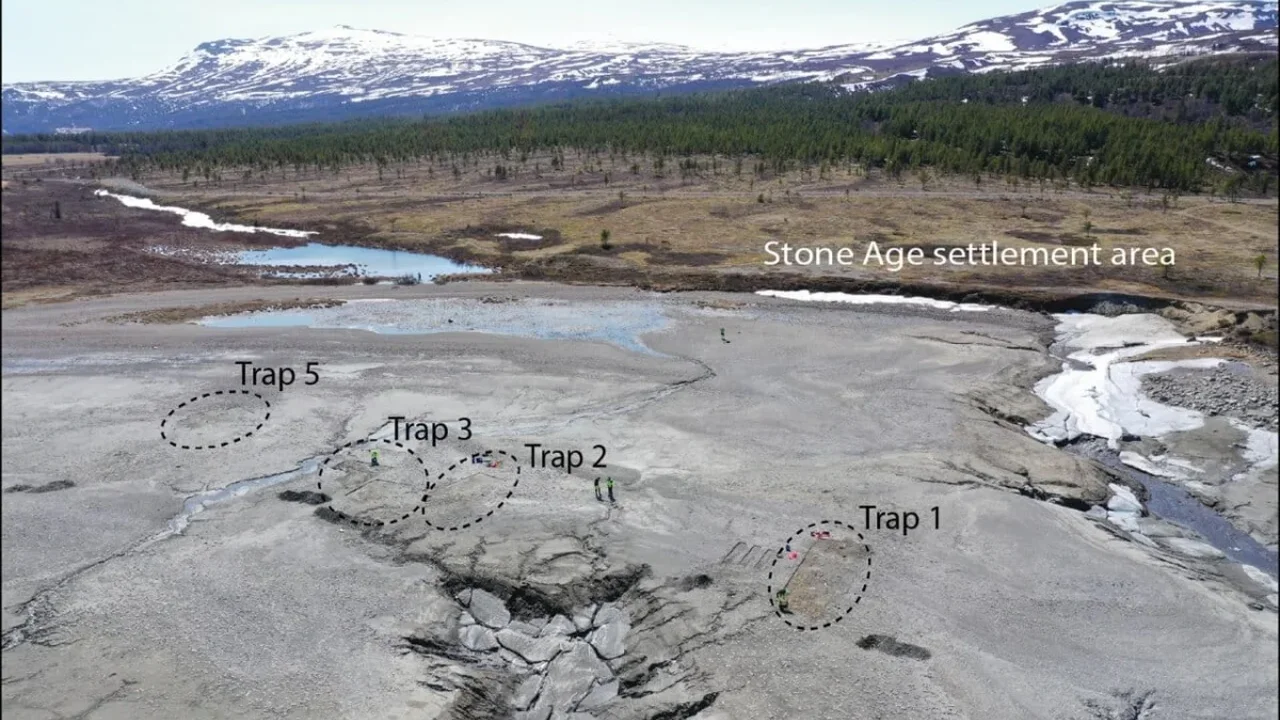
Lake Tesse sits at about 854 meters above sea level, where natural barriers would have made it difficult for trout to arrive on their own after the Ice Age. Yet excavations uncovered wooden fish traps showing that a stable trout population was already established by the time Stone Age communities were harvesting it.
The evidence came to light when exposed lakebed poles were noticed in 2022, after seasonal water-level changes revealed the remains. Archaeologists returned in 2023 and documented four trap systems, collecting 113 wood samples and identifying 73 poles. The best-preserved structure included 46 poles arranged into a circular catch area and a guiding fence that likely directed fish inward.
Radiocarbon dating placed the earliest construction around 5000 BCE, while tree-ring analysis showed later repairs and replacements. Together, the findings suggest that the fishery remained active for at least 2,300 years.
Planning for the future
Researchers believe the trout were introduced intentionally, not by chance. The study points to a long-term strategy: move fish into a suitable lake, allow the population to grow, and return later for a reliable harvest. That approach may have helped communities reduce dependence on unpredictable large-game hunting in the mountains.
The discovery also broadens the picture of Stone Age innovation. Long before farming became established in the region, these communities were already managing resources with foresight, patience and ecological knowledge. As archaeologists continue to uncover similar evidence, the story of early human adaptation may look increasingly sophisticated--and more connected to the future than the past.