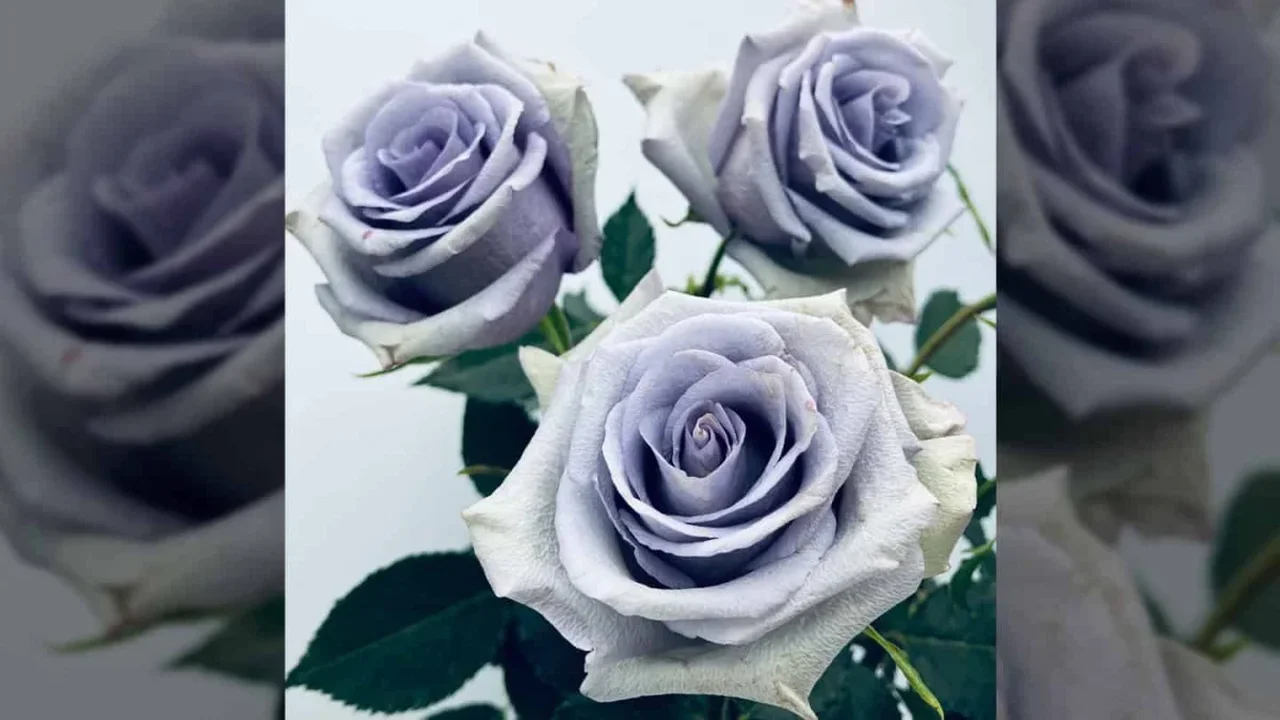
For centuries, a naturally blue rose has remained one of horticulture's most elusive goals. Researchers at Japan's Suntory Global Innovation Center have now developed roses with a more convincing violet-blue tone by redesigning not only their pigments, but also the chemistry surrounding them.
Beyond the Blue Pigment
Roses do not naturally produce delphinidin, a pigment associated with many blue and violet flowers. Earlier genetic engineering efforts enabled roses to create this pigment, yet the blooms typically appeared lavender or purple rather than distinctly blue.
The new approach recognizes that flower color depends on more than pigment alone. In naturally blue flowers, pigments interact with nearly colorless supporting compounds called copigments. These molecules can stabilize pigments and shift their visible color toward blue.
The team introduced four genes into a light-pink rose variety. One enabled production of delphinidin-related pigments, while the others supported the formation of flavone C-glycosides, a class of copigments that roses do not ordinarily produce.
A More Complete Color System
The strongest blue shift was observed when malvidin, a pigment, accumulated alongside the copigment isoorientin. By creating both components within the petals, the researchers achieved flowers classified as violet-blue on standard horticultural color charts.
The color remained consistent through seven years of greenhouse cultivation in Japan and three years of field trials in Colombia. The work was presented by Suntory researchers at the 32nd International Horticultural Congress in Kyoto.
While the blooms have not yet reached the deep azure tone seen in some naturally blue flowers, the research demonstrates that flower-color engineering can focus on an entire chemical environment rather than a single pigment. This strategy may shape future advances in ornamental plant breeding, offering growers and designers a broader palette of sustainable floral colors.