In a remarkable advancement, a team of researchers led by Artemis Tsantiri, a postdoctoral fellow at the University of Regina, has successfully replicated a rare cosmic reaction for the first time. This groundbreaking study, conducted at the Facility for Rare Isotope Beams (FRIB), involved directly measuring how arsenic-73 captures a proton to form selenium-74. This achievement provides new insights into the formation and destruction of the lightest p-nucleus in the universe.
The findings, published in Physical Review Letters, represent the collaborative efforts of over 45 scientists from 20 institutions across the United States, Canada, and Europe. Understanding the origins of elements, especially those heavier than iron, is a central goal in nuclear astrophysics. While many such elements are formed through neutron-capture processes, the creation of a special group of proton-rich isotopes, known as p-nuclei, remains a mystery.
Exploring the Gamma Process
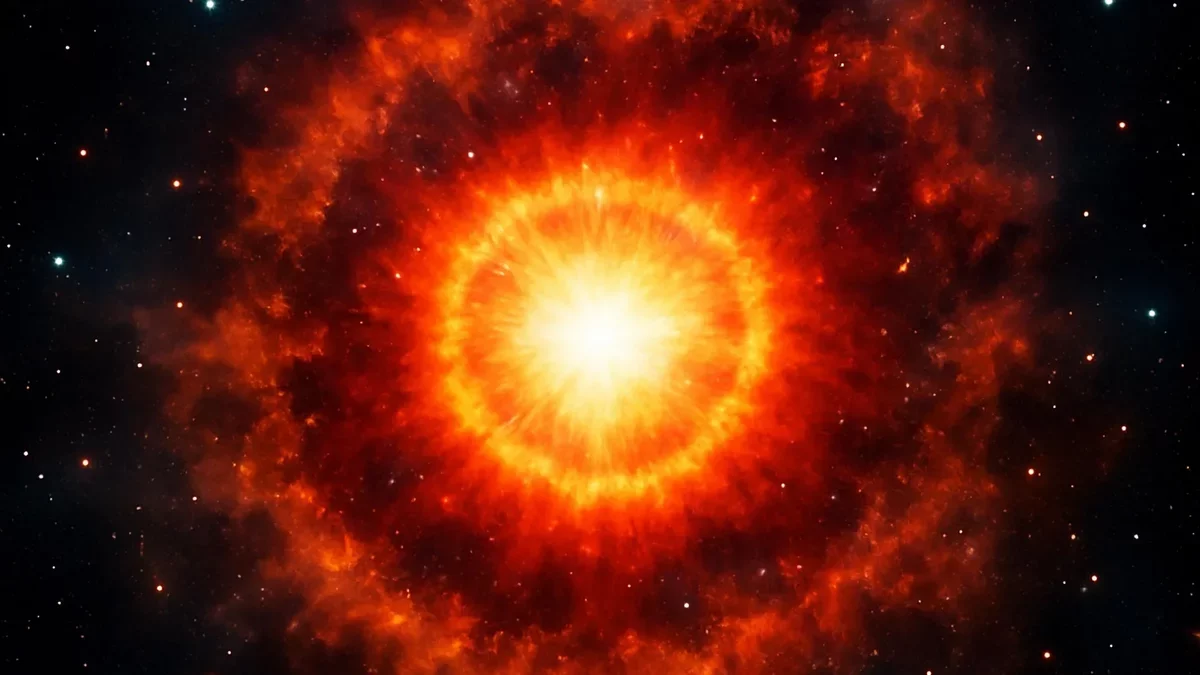
One prominent theory regarding the creation of p-nuclei is the gamma process, which occurs during specific types of supernova explosions. In these extreme environments, the intense heat generates gamma rays that strip neutrons and particles from existing heavy nuclei. This results in nuclei that contain a greater number of protons than neutrons. Over time, some of these protons are converted into neutrons, leading to the formation of p-nuclei.
The isotopes involved in this process are often short-lived and challenging to produce in laboratory settings. Consequently, researchers have primarily relied on theoretical models, as direct measurements have been scarce. Tsantiri remarked, "Despite over 60 years of study, significant measurements of reactions involving short-lived isotopes have been nearly non-existent. Facilities like FRIB are now making such experiments possible."
Recreating Stellar Conditions
In this innovative study, the team successfully recreated a pivotal step in the nuclear reaction process by observing the proton capture on arsenic-73. They generated a specialized beam of arsenic-73, directing it into a chamber filled with hydrogen gas, which served as a proton source. This experiment showcased the versatility of FRIB's ReA accelerator in producing and studying rare isotopes.
During the reaction, arsenic-73 absorbs a proton and transforms into an excited state of selenium-74, subsequently releasing a gamma ray to achieve stability. The researchers focused on the reverse reaction, which plays a crucial role in the gamma process within stars, allowing them to measure the rate of this transformation.
Advancing Astrophysical Models
By incorporating their measurements into existing astrophysical models, the team was able to halve the uncertainty surrounding the predicted abundance of selenium-74. While this marks a significant step forward in understanding the production of this isotope, discrepancies between the models and natural observations indicate that further refinements may be necessary regarding supernova conditions.
"These results bring us closer to unraveling the origins of some of the rarest isotopes in the universe," stated Artemis Spyrou, a professor at FRIB and Michigan State University. This research exemplifies the collaborative spirit essential for advancing the field and highlights the professional growth opportunities available for emerging researchers at FRIB.
Support and Collaboration
This research was partially funded by the U.S. Department of Energy Office of Science and other significant organizations, showcasing the importance of collaborative efforts in scientific discovery.