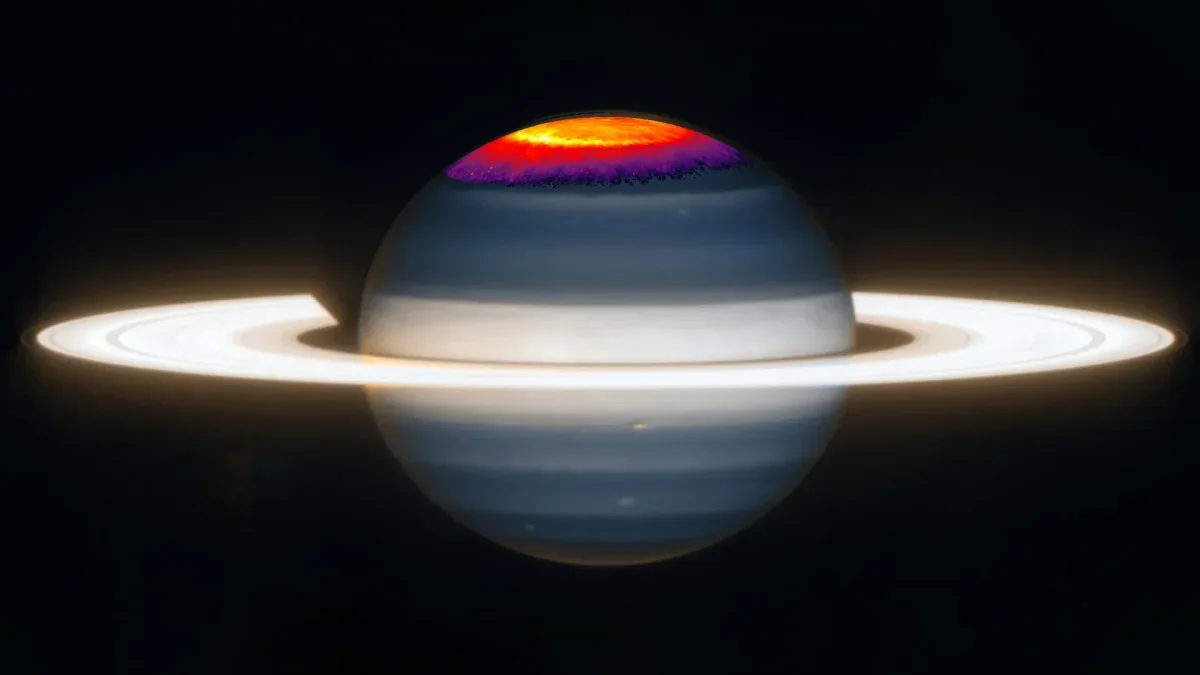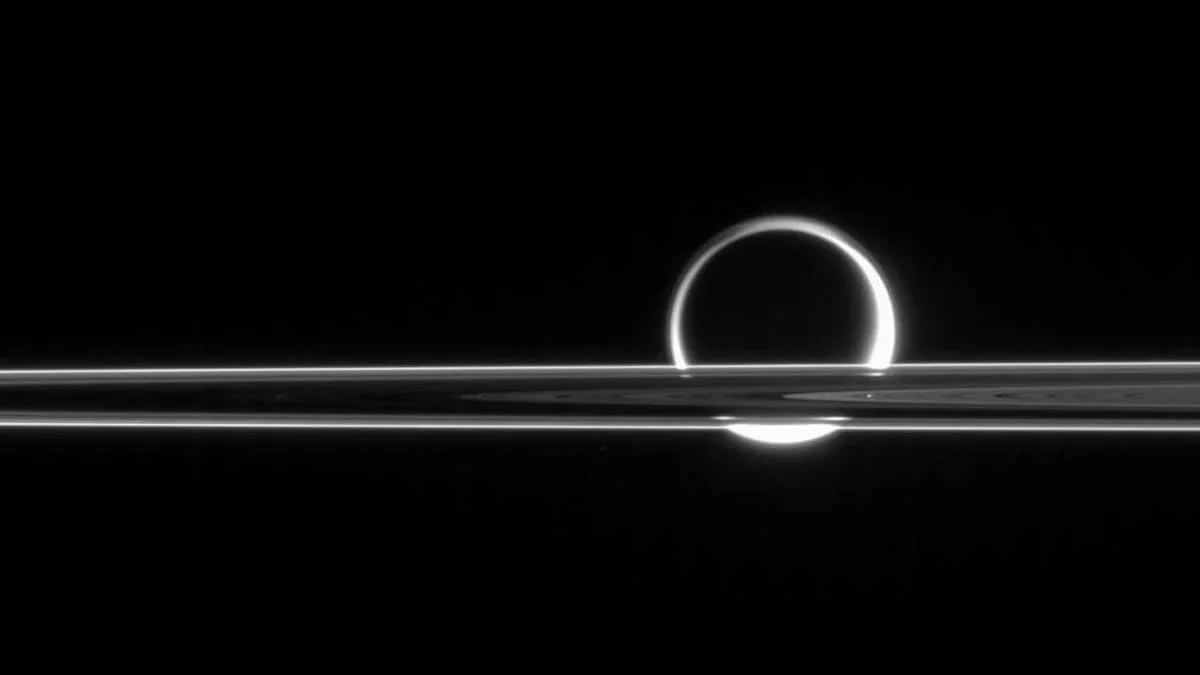
The solar system is often viewed as a stable environment, where the movements of planets, moons, and other celestial bodies follow predictable patterns. This predictability has shaped our understanding of gravity and the internal structures of these bodies. However, recent research has uncovered some intriguing inconsistencies regarding Saturn and its moons, suggesting that significant changes may have occurred relatively recently.
Among the mysteries are the youthful appearance of Saturn's rings, the peculiar orbit of its moon Hyperion, and Titan's expanding, noncircular path. These anomalies have prompted scientists to explore potential explanations. A recent study published in the Planetary Science Journal by researchers from the SETI Institute, led by astrophysicist Matija Ćuk, proposes a cohesive theory that ties these phenomena together.
According to Ćuk, "The expansion of Titan's orbit is the driving force behind these changes." As Titan orbits, it interacts with other moons, leading to significant disruptions. The most notable event in this model is a collision between Titan and a hypothesized moon, referred to as proto-Hyperion. This impact is believed to have generated the debris that formed Saturn's rings and contributed to the unique characteristics of Hyperion itself.
Furthermore, the collision may have influenced the formation of Titan's dense atmosphere and altered Saturn's axial tilt. The researchers suggest that these events occurred within the last billion years, a relatively short timeframe in cosmic history.
Understanding Orbital Dynamics
Astrophysicist Melaine Saillenfest from the Institute of Celestial Mechanics and Computation of Ephemerides highlights that giant planets typically start with minimal axial tilt. He notes that the rapid expansion of Titan's orbit likely pushed Saturn's spin axis into resonance with Neptune's orbit, creating a wobbling effect that impacts not only the planet but also its moons.
Resonances between moons and their host planets can lead to complex orbital dynamics. For instance, Jupiter's moons exhibit a stable resonance that influences their orbits, while other resonances can destabilize moons, potentially ejecting them from their paths.
Ćuk emphasizes that Saturn's wobble is connected to gravitational forces from both Titan and the Sun. As Titan's orbit expanded, it increased Saturn's wobble, locking it into a resonant relationship with Neptune's orbit. This interaction necessitated a tilt in Saturn's axis to maintain stability.
While the findings of Ćuk and his team are compelling, they also spark discussions within the scientific community regarding the age of Saturn's rings and the nature of its moons. The ambition to weave these various phenomena into a unified model is what distinguishes this research.
As our understanding of celestial dynamics evolves, the implications of these findings could reshape our comprehension of planetary systems and their developmental histories, shedding light on the intricate dance of celestial bodies in our solar system.