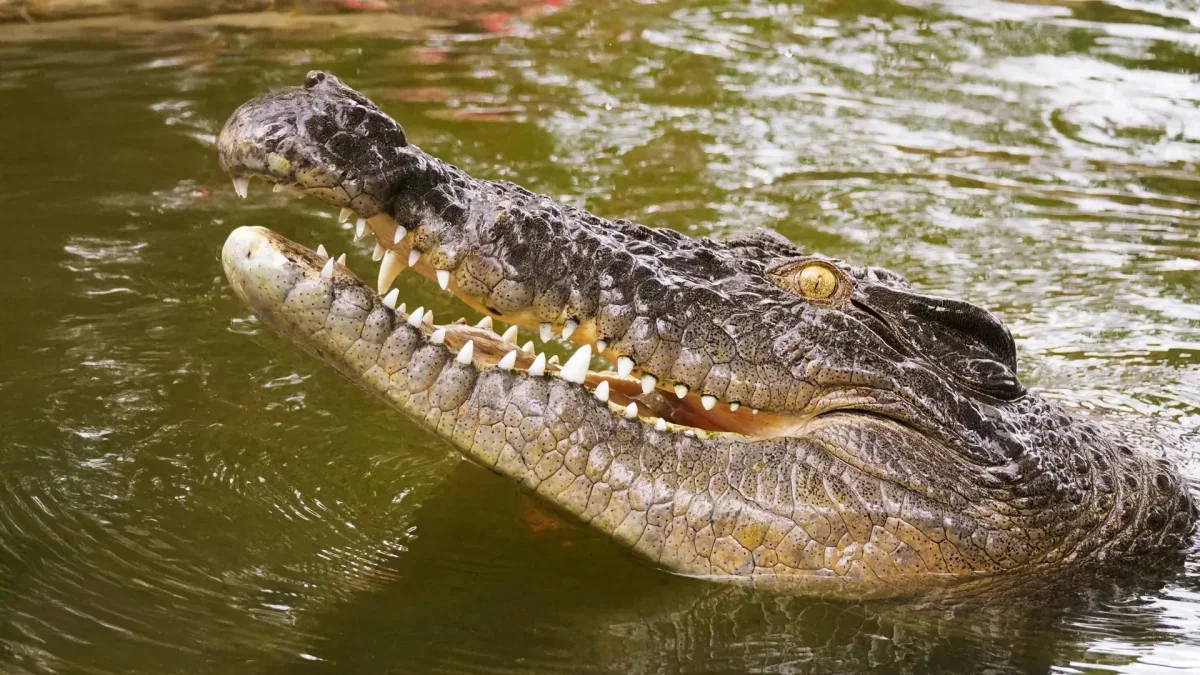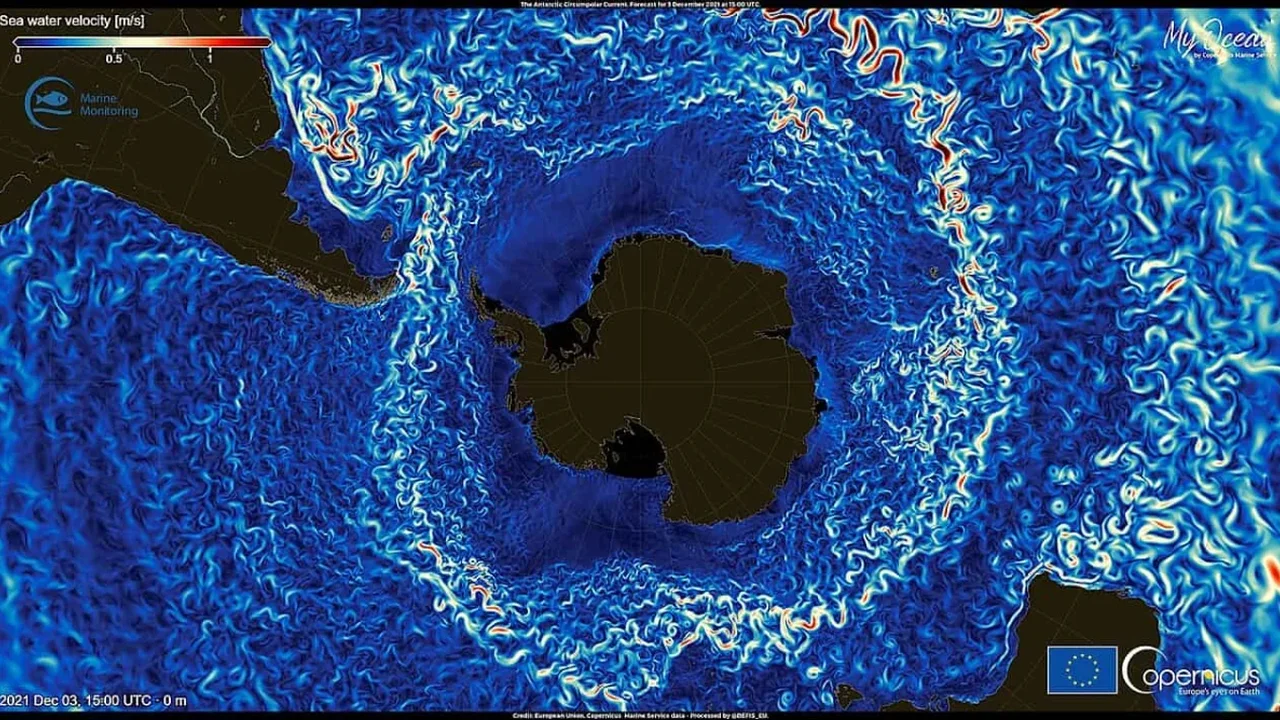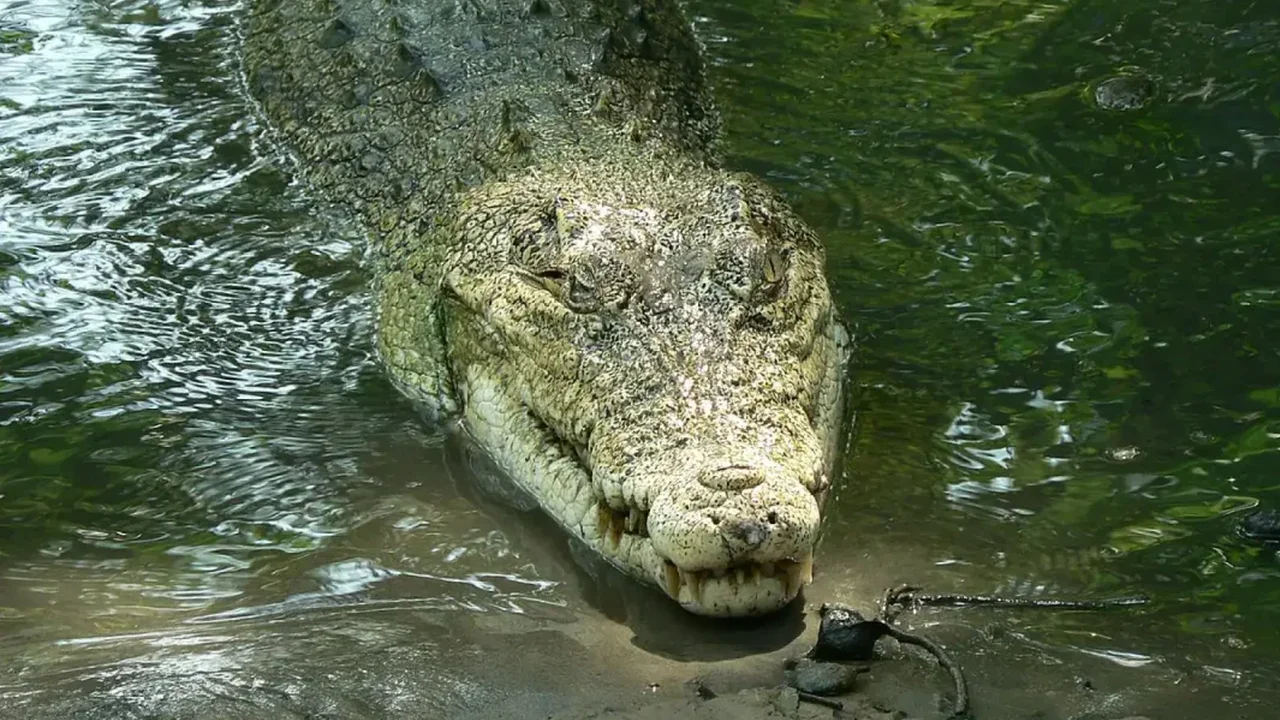
New research is revealing an unexpected side of the saltwater crocodile: the species can use ocean currents almost like a natural transport system. Instead of relying on constant swimming, these reptiles time their movements with tides and flow patterns to travel long distances more efficiently.
Current-Driven Travel
In northern Australia, scientists tracked adult crocodiles with acoustic transmitters and found that several individuals made extended journeys toward river mouths and coastal waters. Their movement was not random. When the tide shifted in their favor, the animals stayed near the surface, where the current was strongest. When the flow reversed, they paused, moved ashore, or settled lower in the water until conditions changed again.
One male, measuring 3.84 meters, covered at least 590 kilometers along the western coast of Cape York. Another traveled more than 400 kilometers in under three weeks, switching direction as coastal currents changed. The pattern suggests a highly efficient strategy: the ocean provides the push, while the crocodile chooses the timing.
Navigation Beyond the Tide
Researchers also explored how these reptiles find their way home. In one experiment, three large males were moved to unfamiliar release sites by helicopter. All eventually headed back toward their original capture areas, including one crocodile that had to travel around the Cape York Peninsula because land blocked a direct water route.
Scientists think the animals may combine several cues, such as sunlight, coastal landmarks, scent, waves, current direction, and possibly Earth's magnetic field. The exact system remains unknown, but the evidence points to a surprisingly advanced sense of orientation.
A Wider Historical Range
DNA analysis of museum specimens has also expanded the picture of the species' past. Researchers confirmed that crocodiles once living in the Seychelles belonged to Crocodylus porosus, showing that the species' historical range stretched across more than 12,000 kilometers from the Pacific to the Indian Ocean.
That does not mean a single crocodile crossed all that distance in one trip. Instead, it suggests that rare ocean journeys may have helped the species spread across islands and coastlines over generations.
The study highlights a reptile that is far more adaptable than its size suggests. By reading tides, currents, and environmental cues, saltwater crocodiles turn the sea into a route rather than a barrier. In the future, such discoveries may reshape how scientists understand animal navigation and long-distance movement across changing oceans.