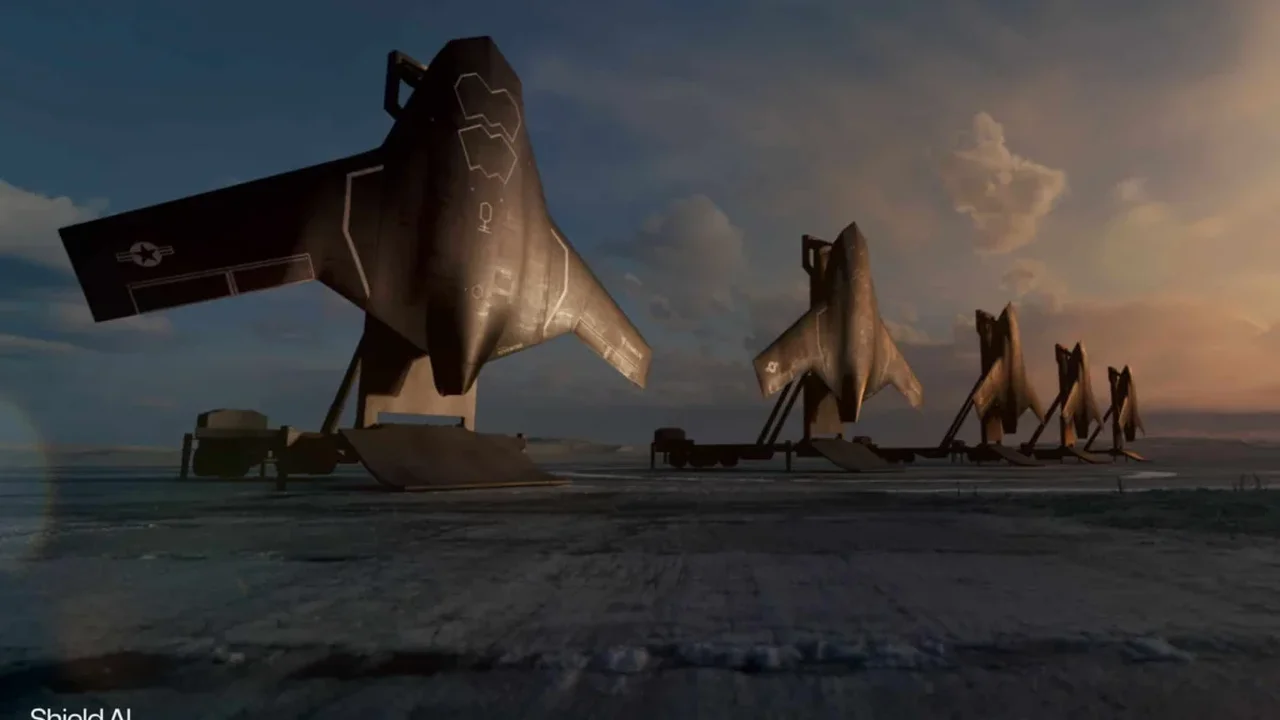
Shield AI and GE Aerospace have completed a key propulsion milestone for X-BAT, an autonomous strike aircraft designed for vertical takeoff and landing. The test brings the project closer to a planned first flight later this year and highlights a new direction in aircraft mobility.
Vertical Flight, Reimagined
At GE Aerospace's test facility in Peebles, Ohio, engineers evaluated the aircraft's swiveling exhaust system, known as the Axisymmetric Vectoring Exhaust Nozzle or AVEN. The nozzle can redirect engine thrust, giving the aircraft the control it needs to rise and descend without a runway.
The system was integrated with GE's F110-GE-129E engine, followed by functional checks and an engine light-off test. In practical terms, this confirmed that the engine, nozzle and control hardware can operate together as a single propulsion package.
Shield AI says the design is built around flexibility: X-BAT is intended to launch and recover from locations that do not require traditional airbases. The aircraft also uses the company's Hivemind software, which supports autonomous flight and mission coordination without constant human input or GPS dependence.
A New Model for Aircraft Deployment
Runways have long defined where fighter aircraft can operate, but VTOL systems open the door to a more distributed approach. By reducing reliance on fixed infrastructure, aircraft like X-BAT could expand operational options and make deployment more adaptable.
The nozzle technology itself has roots in earlier experimental work dating back to the 1990s, including thrust-vectoring research on F-16-based test platforms. Shield AI says the adapted hardware has already logged extensive flight experience before being reworked for X-BAT.
According to the company, the next steps include additional ground testing before the propulsion system is installed on the prototype. The aircraft still needs to demonstrate vertical lift, transition to forward flight and safe recovery, but the latest test marks a meaningful step toward that goal. If successful, this approach could influence the next generation of autonomous aviation and reshape how aircraft are designed for the future.