Rome has opened the Museo delle Terme di Traiano, unveiling an underground gallery beneath the Baths of Trajan on Oppian Hill. The newly accessible space brings together rare remains from the city's imperial past, including the largest surviving wall mosaic in the Roman world.
A monumental work beneath the baths
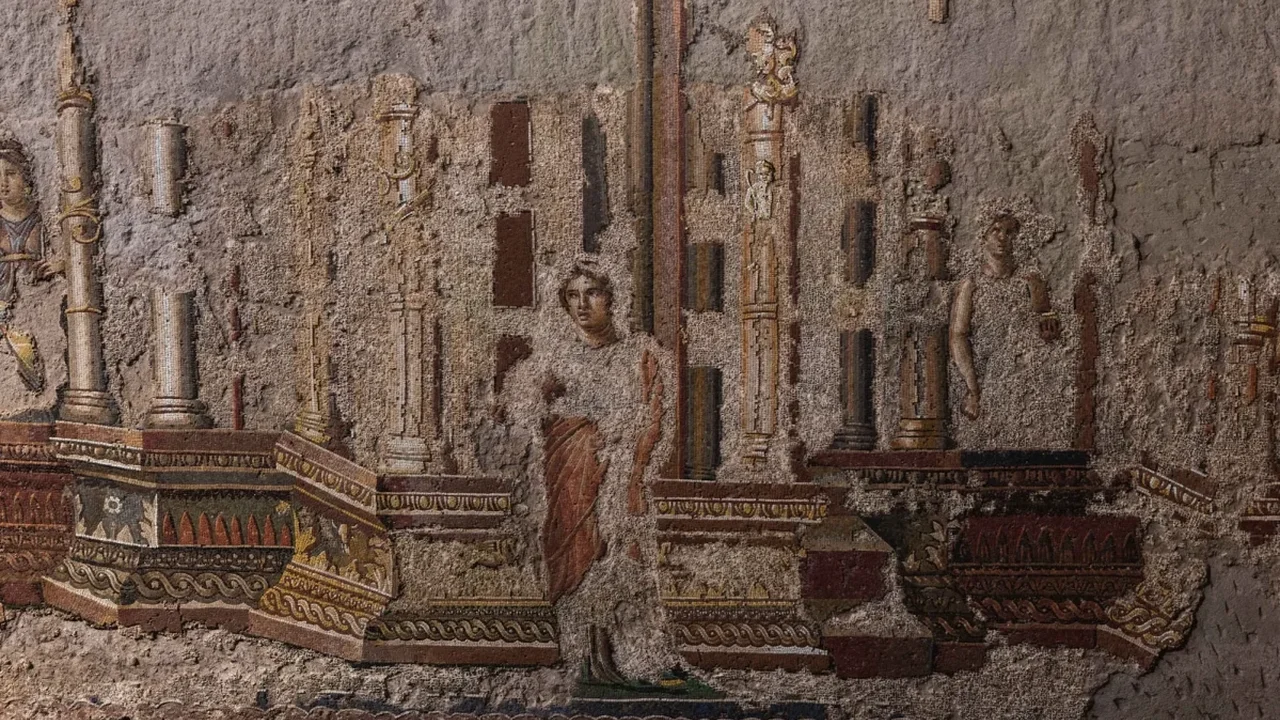
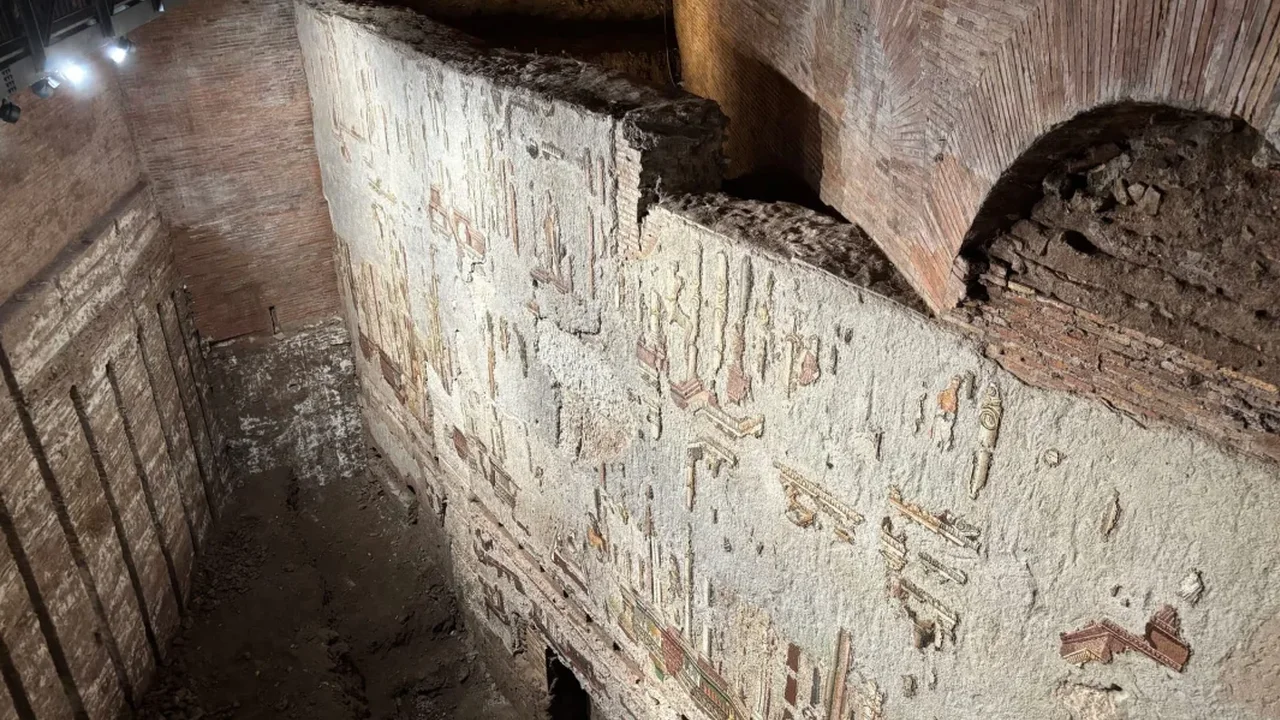
Discovered during excavations in the late 1990s, the mosaic decorates two sides of a vast ancient hall estimated at around 10 by 15 metres. Its walls once rose nearly 12 metres high, while the original floor remains below the current excavation level.
Only about 20% of the mosaic survives, yet its scale and artistic ambition remain striking. The composition uses illusionistic architectural elements, slender columns and elaborate capitals to create a theatrical setting. Within this framework are painted-style figures, including a centaur, sculptural imitations and expressive portraits.
Known as the Mosaic of the Muse and the Philosopher, the work is believed to date from between the reigns of Nero and Domitian, after 64 CE and before 96 CE. Archaeologists suggest the hall may have served as a grand imperial reception space or a nymphaeum, a room associated with water and decorative fountains.
A painted city from antiquity
At the far end of the gallery, visitors can also explore a large fresco fragment known as the Painted City. Created in roughly the same period, it presents a detailed bird's-eye view of an ancient urban landscape, including fortified walls, a gateway, residential structures, a temple, porticoes and a covered theatre.
The identity of the city remains uncertain. It may represent an imagined Mediterranean settlement, offering researchers a rare perspective on how Roman artists visualised architecture, trade and urban life.
The museum also preserves eight large lead pipes marked THERM TRAIANI, connecting the gallery directly to Trajan's bath complex, inaugurated in 109 CE. By making these archaeological layers accessible together, Rome adds a new dimension to its living cultural landscape. This opening may inspire future heritage projects that combine conservation, research and public access in increasingly immersive ways.