A groundbreaking study by scientists from the Excellence Cluster ORIGINS at Ludwig Maximilian University of Munich (LMU) and the Max Planck Institute for Extraterrestrial Physics (MPE) reveals that moons orbiting rogue planets could sustain liquid water oceans for up to 4.3 billion years. The research indicates that a combination of dense hydrogen atmospheres and tidal heating may create conditions favorable for life to develop over extensive periods.
The Nature of Rogue Planets
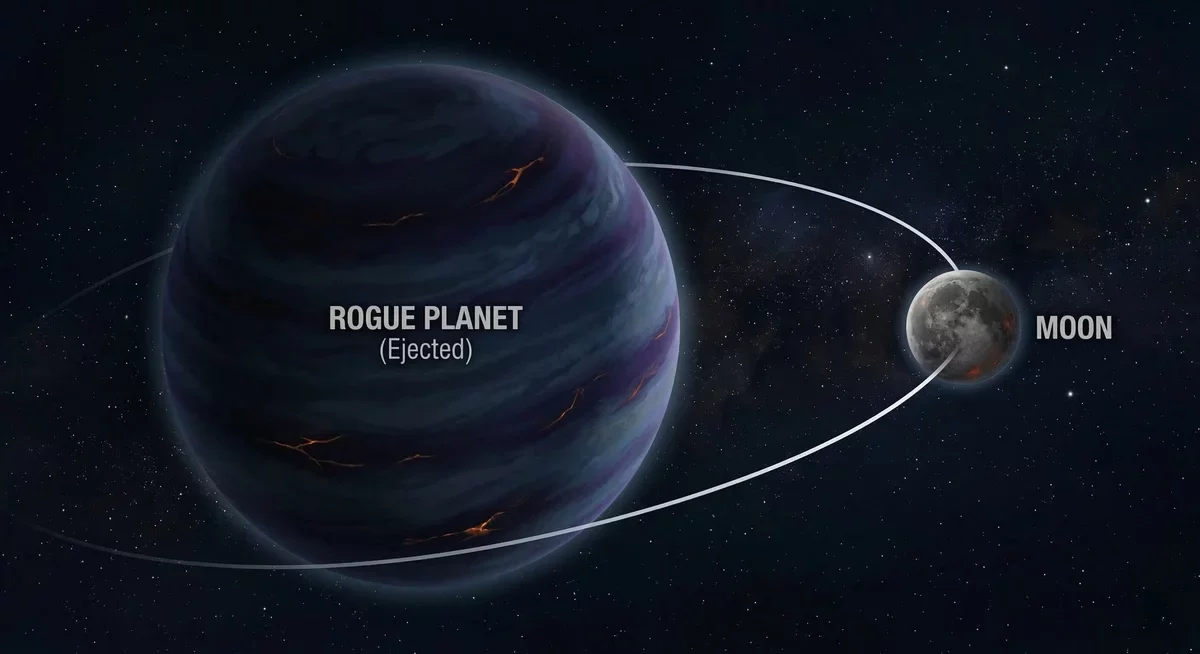
Planetary systems often evolve in tumultuous conditions. During their formative stages, massive planets can come perilously close to each other, leading to the ejection of neighboring bodies from their solar systems. These expelled entities, known as free-floating planets or rogue planets, traverse the galaxy without a stellar anchor.
Previous studies led by LMU physicist Dr. Giulia Roccetti have shown that even after being cast into the void of space, giant planets may retain some of their moons. However, these moons can experience significant changes in their orbits, shifting from nearly circular paths to highly elongated trajectories.
The Role of Tidal Heating
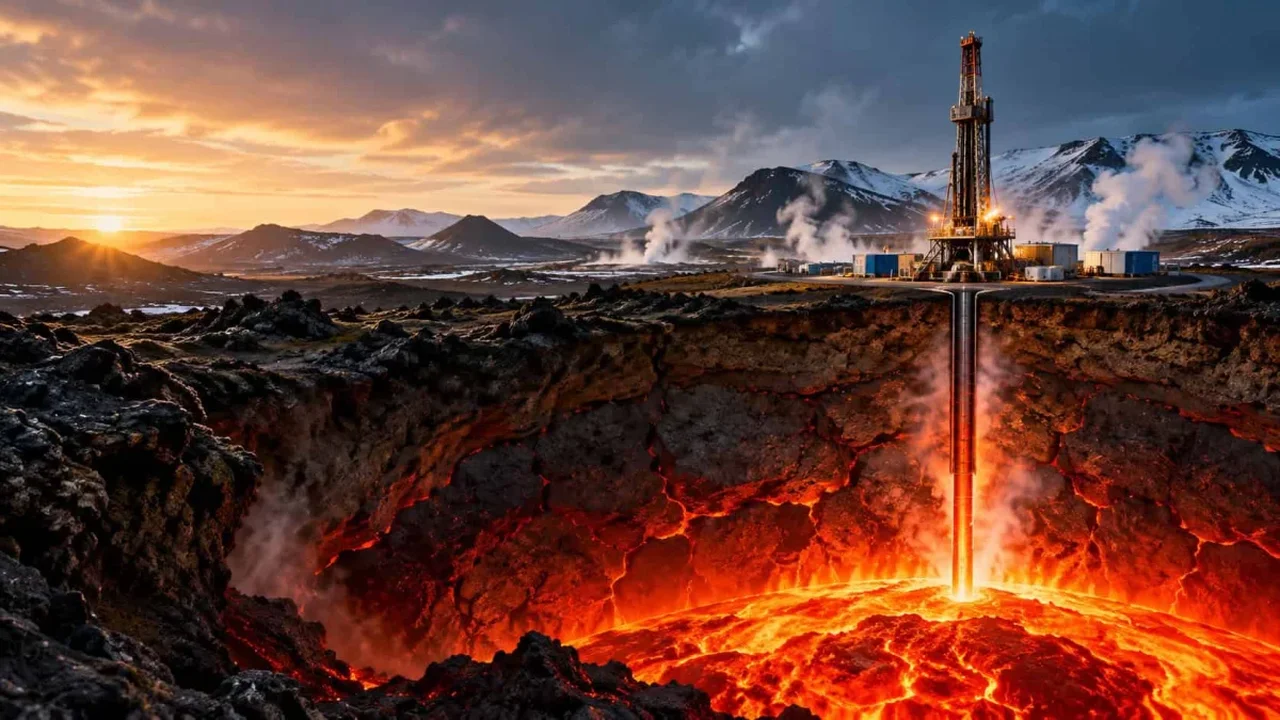
As these moons orbit their planets, they are subjected to powerful gravitational forces that stretch and compress them, generating internal heat through a process termed tidal heating. This heat can prevent surface oceans from freezing, even in the frigid reaches of interstellar space devoid of sunlight.
The retention of this heat is significantly influenced by the moon's atmosphere. On Earth, carbon dioxide serves as a crucial greenhouse gas, helping to maintain warmth. Earlier research suggested that carbon dioxide-rich atmospheres could sustain habitable conditions on exomoons for approximately 1.6 billion years. However, in the extreme environments surrounding rogue planets, carbon dioxide may condense, diminishing its warming capacity.
Hydrogen as an Insulator
To address this challenge, the researchers explored atmospheres dominated by hydrogen. Under high pressure, hydrogen molecules can engage in temporary interactions that absorb and trap thermal radiation, a phenomenon known as collision-induced absorption. This unique property allows hydrogen to function effectively as an insulating layer, enabling moons to retain heat for billions of years.
Insights into Life's Origins
The findings may also provide valuable insights into the origins of life on Earth. David Dahlbüdding, a doctoral researcher at LMU and the study's lead author, noted, "Our collaboration with Professor Dieter Braun's team highlighted that the cradle of life does not necessarily need sunlight." The research suggests a potential link between these distant moons and early Earth, where high hydrogen concentrations from asteroid impacts might have created conditions conducive to life.
Moreover, the study posits that tidal forces could drive essential chemical reactions, creating wet-dry cycles that facilitate the formation of complex molecules vital for life.
Exploring New Frontiers
Astronomers speculate that rogue planets are abundant in the Milky Way, with estimates suggesting their numbers could rival those of stars. If many of these planets host moons, the potential environments for life could be far more extensive than previously imagined. This research indicates that habitable worlds may exist even in the darkest corners of the universe, challenging our understanding of where life might thrive.