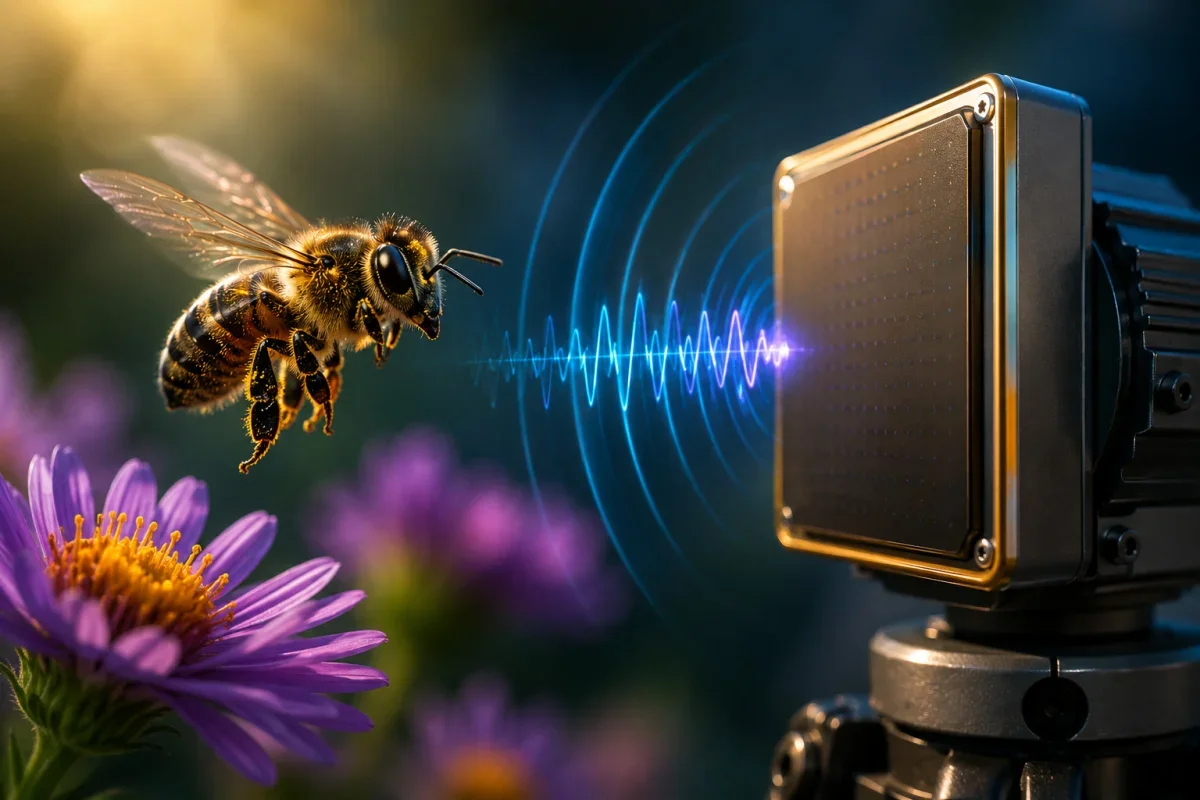
As global ecosystems face challenges from declining pollinator populations, innovative solutions are emerging. A recent study conducted by researchers in Europe has demonstrated a groundbreaking approach using radar technology to identify pollinating insects such as bees and wasps. This advancement could significantly enhance our ability to monitor these vital species, which are crucial for the reproduction of over 87% of flowering plants.
Traditionally, tracking pollinators has been labor-intensive and often harmful, requiring the capture and identification of insects by specialists. Camera-based systems have limitations, struggling with varying light conditions and environmental clutter. However, the new study introduces a method akin to aircraft identification, utilizing millimeter-wave radar and machine learning to distinguish between different species based on their unique wingbeat patterns.
In this proof-of-concept study, researchers successfully identified five species, including honeybees and bumblebees, by analyzing the subtle radar signals generated by their wingbeats. The radar system captured these signals over time, allowing for the extraction of intricate features that differentiate species. Initial results indicated an impressive accuracy rate of 85% at the species level, showcasing the potential of this technology in ecological research.
Challenges and Future Prospects
While the study's findings are promising, researchers acknowledge that the current results were obtained in a controlled laboratory setting. The next steps involve field trials with free-flying insects to validate the technology's effectiveness in natural environments. The adaptability of radar technology offers several advantages, including its independence from lighting conditions and the ability to avoid harmful capture methods.
Ultimately, the goal is to develop a comprehensive database of insect radar signatures paired with environmental data, enabling scientists to monitor not only pollinators but also pests and invasive species. This innovation could transform how we approach ecological monitoring, providing critical data to support biodiversity and food security.
As researchers continue to refine this technology, it holds the promise of becoming a vital tool in the quest to protect pollinators and, by extension, the ecosystems that depend on them.