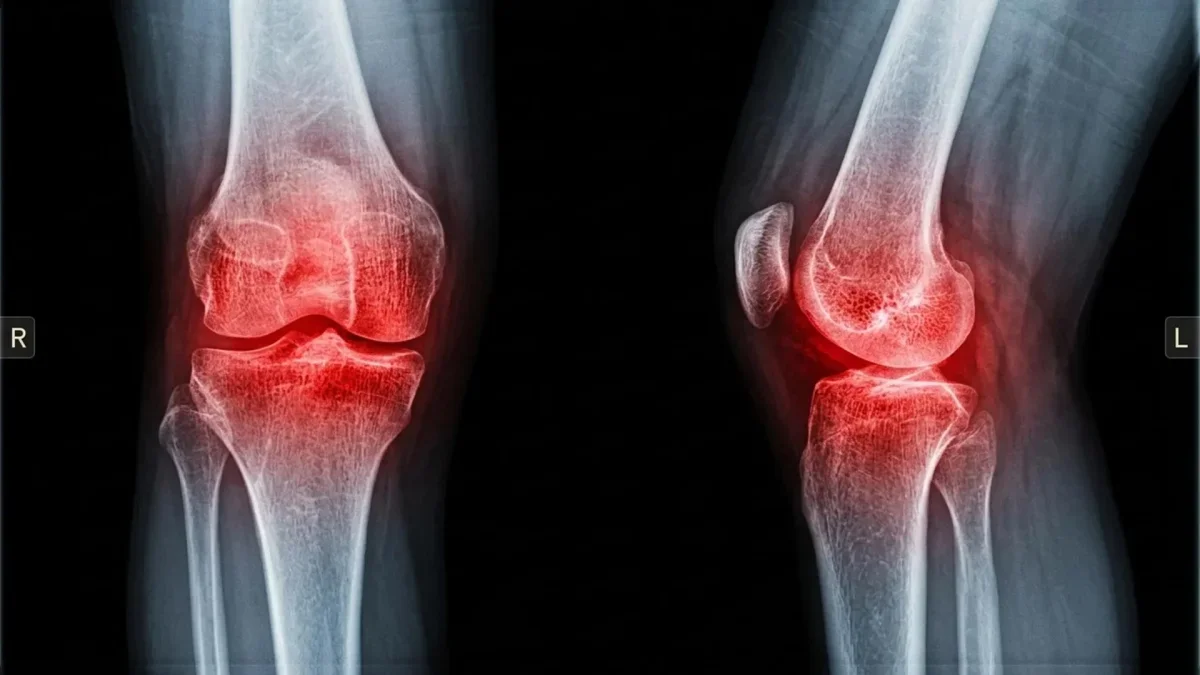
Recent findings from a clinical trial involving researchers from the University of Utah, New York University, and Stanford University reveal an innovative approach to alleviating knee osteoarthritis pain: modifying one's walking style.
Personalized Gait Adjustment
In a year-long randomized controlled trial, participants with knee osteoarthritis were taught to make subtle adjustments to the angle of their feet while walking. Remarkably, those who underwent this tailored gait retraining reported pain relief similar to that achieved through medication, and MRI results indicated less deterioration of knee cartilage compared to those in the placebo group.
This pivotal study, published in The Lancet Rheumatology, was co-led by Scott Uhlrich from the University of Utah's John and Marcia Price College of Engineering. It marks the first placebo-controlled investigation demonstrating that a biomechanical adjustment can effectively alleviate symptoms of osteoarthritis and potentially slow joint damage.
"We understand that excessive loads on the knee can accelerate osteoarthritis progression, and changing foot angle can alleviate this load," explained Uhlrich, an assistant professor of mechanical engineering. "While the concept of biomechanical interventions isn't new, this is the first randomized, placebo-controlled study proving their efficacy."
Individualized Treatment Approach
The trial specifically targeted individuals with mild to moderate osteoarthritis in the inner compartment of the knee, which typically bears more weight. However, the optimal adjustment in foot angle varies among individuals--some benefit from turning their toes slightly inward, while others find relief in pointing them outward. Incorrect adjustments could potentially exacerbate knee stress.
"Previous studies applied a uniform intervention, which led to mixed results regarding joint loading," Uhlrich noted. "Our personalized approach significantly improved participants' ability to reduce knee load, contributing to the positive outcomes we observed."
As related research evolves, it increasingly supports the notion that foot angle modifications can influence knee forces differently based on individual characteristics. A 2024 study in Bioengineering highlighted that variations in foot rotation impact knee loading patterns without significantly affecting ankle mechanics.
Trial Methodology
Participants underwent initial MRIs and walked on a pressure-sensitive treadmill while their gait mechanics were analyzed. This data enabled researchers to determine the most beneficial foot angle adjustments for each individual. Those unlikely to benefit from the intervention were excluded from the trial.
Out of 68 participants, half received the personalized gait retraining, while the others experienced a sham treatment. Both groups attended six weekly sessions, utilizing vibration feedback to maintain their assigned foot angles during walking.
After a year, participants reported significant reductions in knee pain, comparable to the effects of over-the-counter painkillers, while MRI scans revealed slower cartilage degradation in the intervention group.
A Sustainable, Drug-Free Solution
This approach offers a compelling alternative to medications and invasive procedures, appealing to those who prefer a natural solution. As Uhlrich noted, many individuals may experience osteoarthritis long before they qualify for joint replacement, making this intervention a valuable tool for pain management.
Future iterations of this research aim to simplify the process for clinical application, potentially integrating mobile technology for personalized gait training outside laboratory settings.
"We envision using mobile sensors and smart technology to deliver this intervention effectively in a clinical environment," Uhlrich stated. Continued studies will be essential to make this innovative treatment widely accessible.
The study, titled "Personalised gait retraining for medial compartment knee osteoarthritis: a randomised controlled trial," underscores the potential of personalized medicine in transforming arthritis treatment.