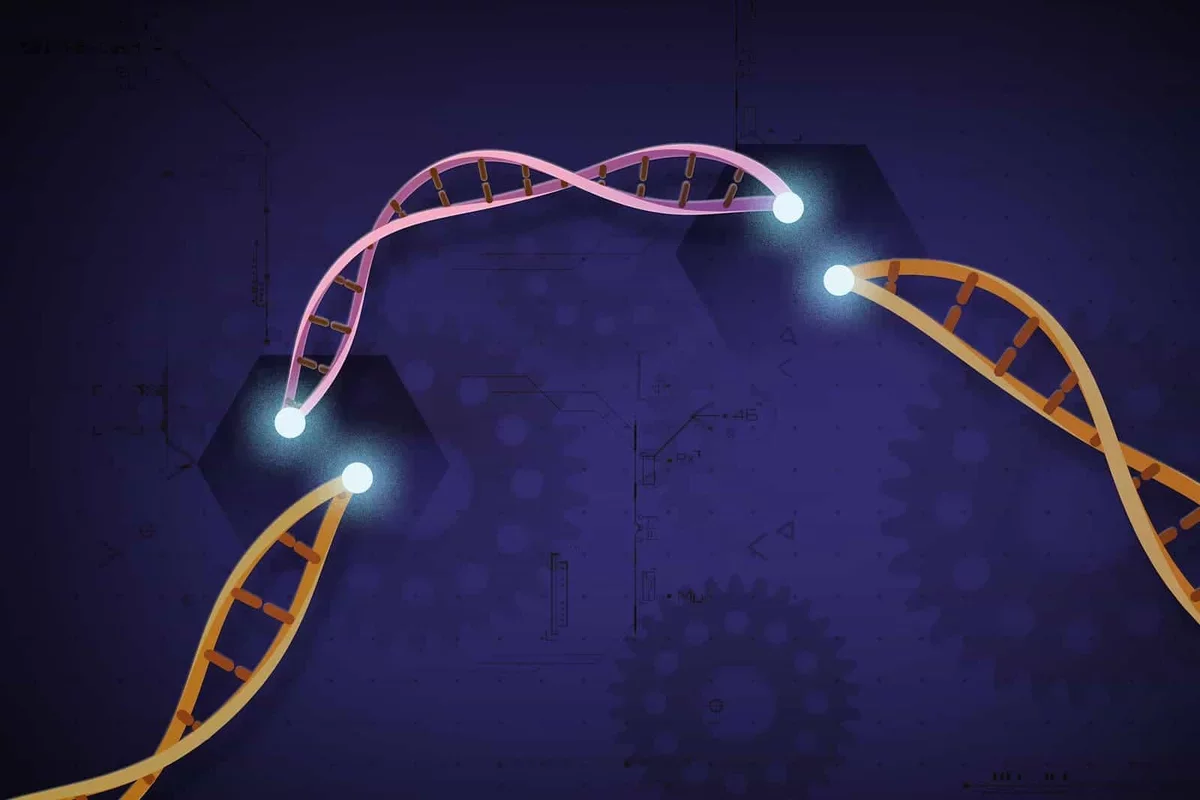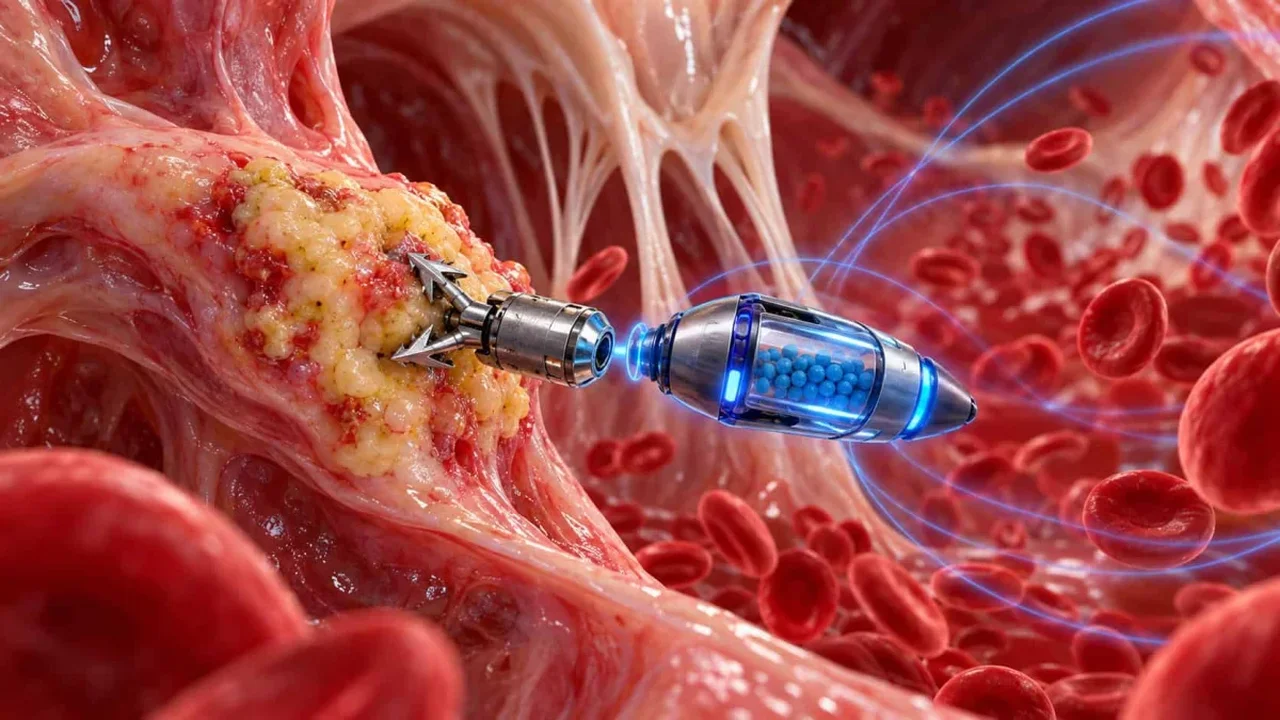
Detecting cancer at its earliest stages is crucial for effective treatment, yet this is often a challenging task. Cancer cells release tiny genetic clues, known as biomarkers, into the bloodstream, which are difficult to identify with current medical technology. A team from Shenzhen University has harnessed the power of CRISPR, often referred to as "genetic scissors," to create a groundbreaking tool for early disease detection.
Unprecedented Sensitivity
The sensitivity of this new method is remarkable, achieving a Limit of Detection (LOD) at 168 zeptomolar--akin to dissolving a single grain of sugar in the vast waters of the Great Lakes. This level of sensitivity approaches the physical limits of detection.
This innovation employs a technique called Second-Harmonic Generation (SHG). When light interacts with certain materials, it can create "double-energy" photons, allowing for highly sensitive monitoring of surface changes. The researchers utilized Molybdenum Disulfide (MoS2), a two-dimensional material, to facilitate this reaction, enhanced by DNA origami structures that hold Quantum Dots at optimal distances to amplify light signals.
The CRISPR Mechanism
In this approach, CRISPR-Cas12a is not used for gene editing but as a structural trigger. The sensor is designed to detect specific cancer biomarkers, such as miRNA-21. When these biomarkers are present in a patient's blood, the CRISPR enzyme recognizes them, causing Quantum Dots to detach and resulting in a measurable dimming of light. This dimming indicates the concentration of cancer RNA in the sample.
Clinical Validation
To validate their technology, the team conducted tests using blood samples from lung cancer patients and healthy individuals. The new SHG sensor demonstrated superior sensitivity compared to the traditional Reverse Transcription Quantitative Polymerase Chain Reaction (RT-qPCR) method. The SHG sensor exhibited a significant signal shift, ranging from 11% to 54%, compared to just 0.36% to 8.64% with RT-qPCR.
This enhanced "signal-to-noise" ratio is vital for accurate diagnoses, minimizing uncertainty and the need for retesting. Moreover, as a blood test, this method could replace invasive biopsies, making it a less painful option for patients.
Another exciting aspect is the adaptability of the sensor. By modifying the guide RNA within the CRISPR system, it could potentially be reconfigured to detect other conditions, such as Alzheimer's or heart disease, without needing to alter the hardware.
In essence, this innovative CRISPR-based sensor may revolutionize early cancer detection, offering a promising future for diagnostics and treatment.