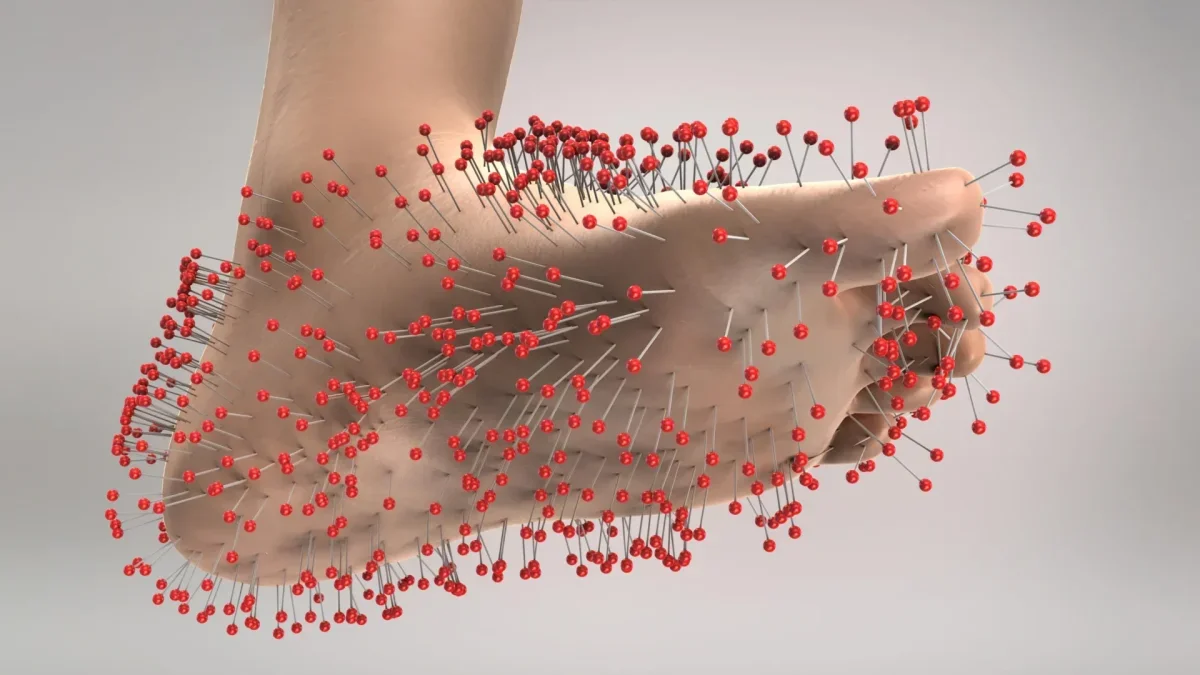
Researchers at Duke University School of Medicine have unveiled a promising new strategy for alleviating chronic pain by revitalizing damaged nerves through the restoration of healthy mitochondria.
In a groundbreaking study published in Nature, the team explored the effects of replenishing mitochondria in both human tissue and mouse models. Their findings revealed that this innovative treatment significantly alleviated pain associated with diabetic neuropathy and nerve damage from chemotherapy, with some patients experiencing relief lasting up to 48 hours.
Unlike traditional methods that merely block pain signals, this approach aims to tackle the root causes of chronic nerve pain by enhancing the energy supply essential for nerve cell functionality.
"By supplying damaged nerves with fresh mitochondria or facilitating their own production, we can mitigate inflammation and promote healing," stated Dr. Ru-Rong Ji, the study's senior author and director of the Center for Translational Pain Medicine at Duke. "This method could revolutionize pain management."
The Role of Mitochondria in Nerve Recovery
The research contributes to an emerging body of evidence suggesting that cells can transfer mitochondria among themselves, a process increasingly recognized as a natural support mechanism that may influence various health conditions, including obesity, cancer, stroke, and chronic pain.
The Duke team focused on satellite glial cells, which provide essential support to sensory neurons. Their research identified a novel function for these cells: they appear to transfer healthy mitochondria into sensory neurons via structures known as tunneling nanotubes.
When this mitochondrial transfer falters, nerve fibers can deteriorate, leading to symptoms such as pain, tingling, and numbness, particularly in the extremities. "By sharing energy reserves, satellite glial cells may protect neurons from pain," explained Ji, who holds professorships in anesthesiology, neurobiology, and cell biology at Duke.
In experiments where mitochondrial transfer was enhanced in mice, pain-related behaviors decreased by up to 50%.
Identifying Key Mechanisms
The researchers further investigated a more direct approach by injecting isolated mitochondria from both humans and mice into the dorsal root ganglia, clusters of nerve cells responsible for transmitting sensory information to the brain.
The effectiveness of this method was contingent on the quality of the mitochondria used; healthy mitochondria from donors successfully reduced pain, while those from diabetic individuals did not yield any positive effects.
Additionally, the team pinpointed a protein named MYO10 as essential for forming the tunneling nanotubes that facilitate mitochondrial movement between cells.
A New Frontier in Chronic Pain Treatment
While further research is necessary, including advanced imaging techniques to elucidate the mechanics of mitochondrial delivery in living nerve tissue, these findings illuminate a previously unrecognized communication pathway between nerve and glial cells. This could pave the way for innovative treatments that address chronic pain at its source, rather than simply masking its symptoms.