The United States and Europe face a significant challenge regarding nickel, a critical mineral essential for various applications, including batteries, electronics, and steel production. Complications in mining and refining processes, primarily due to permitting hurdles and environmental concerns, have hindered progress in these regions.
Currently, Indonesia and China dominate the nickel refining landscape, with Chinese companies controlling approximately 75% of Indonesia's refining capacity, granting them oversight of more than half of the global nickel supply.
In light of deteriorating relations with China, companies are increasingly exploring domestic refining options. Megan O'Connor, co-founder and CEO of Nth Cycle, shared insights on this trend, stating, "Many companies are reevaluating how to refine in the U.S."
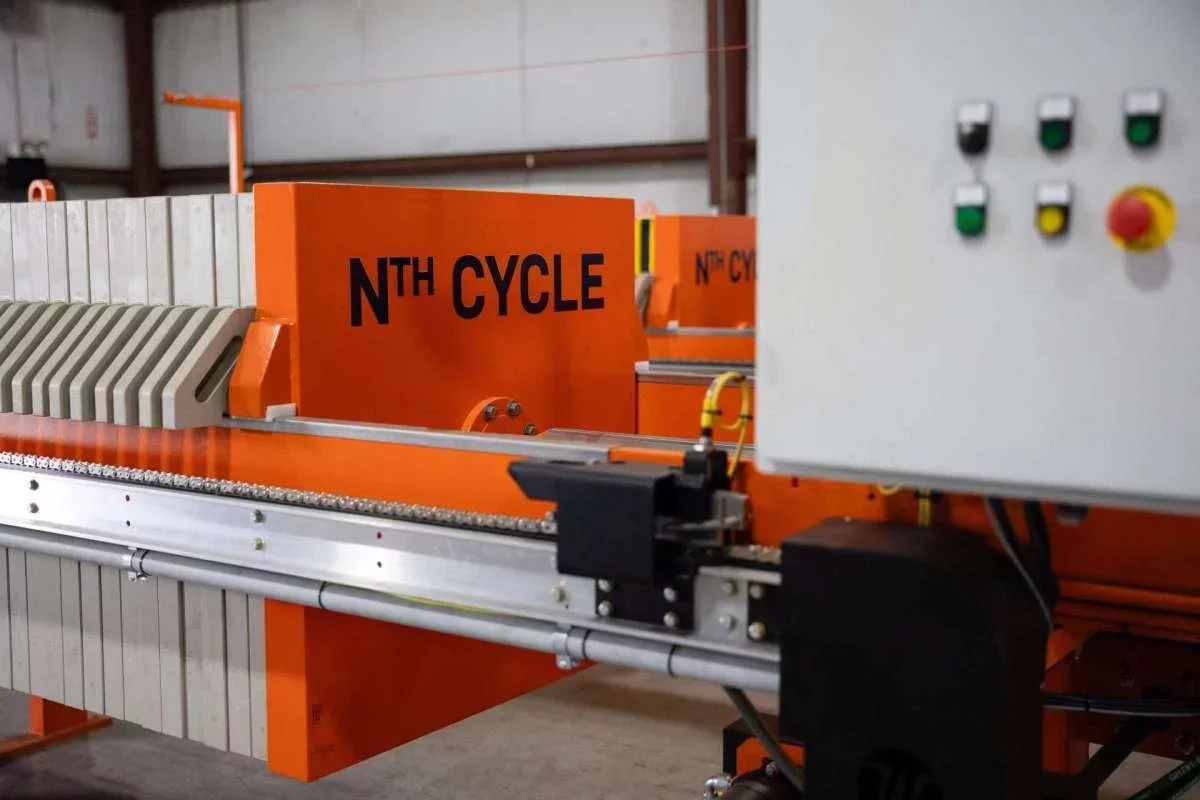
Nth Cycle has been pioneering an innovative electrochemical system for refining nickel along with other essential minerals like cobalt and copper. Recently, the company secured a groundbreaking $1.1 billion deal with commodity trader Trafigura, aimed at quadrupling its processing capacity at its Ohio facility, which currently handles up to 3,100 metric tons of scrap annually.
This agreement marks a pivotal transition in how companies assess their metal supply chains and the role of technology in reshaping these processes.
Today, the recycling of metals, particularly from batteries, is also predominantly conducted overseas. As batteries reach the end of their life cycle, they are often transported abroad for processing. O'Connor emphasized, "These are valuable resources that we are mostly sending to China. We don't want to relinquish that value only to repurchase it later."
O'Connor is not alone in this realization; Westwin Elements, another company with a small refinery in Oklahoma, is also expanding its operations with a new facility in Georgia, despite facing local opposition.
Nth Cycle's vision is to implement a modular electric system that adapts to the U.S. context. O'Connor noted, "Traditional centralized refining models that work well in Asia are too capital-intensive when applied here."
By collaborating with recyclers to source black mass--a combination of metals from shredded batteries--and other nickel sources, Nth Cycle feeds these materials into a compact electrochemical system, which is significantly smaller than conventional refineries. This design not only reduces capital expenditures but also enables quicker profitability.
O'Connor stated, "Our system can operate profitably with as little as 6,000 metric tons per year." This is a crucial figure, especially as the surge of electric vehicle (EV) batteries needing recycling is still on the horizon, expected to peak by the end of the decade.
Confident in the availability of raw materials in the U.S. and Europe, O'Connor revealed plans for two new facilities in South Carolina and the Netherlands, capable of processing a total of 18,000 metric tons of scrap. Nth Cycle's flexibility allows it to adapt to changes in material composition as needed.
O'Connor concluded, "To enhance refining capacity in the U.S., you need to align with the volume of waste produced."