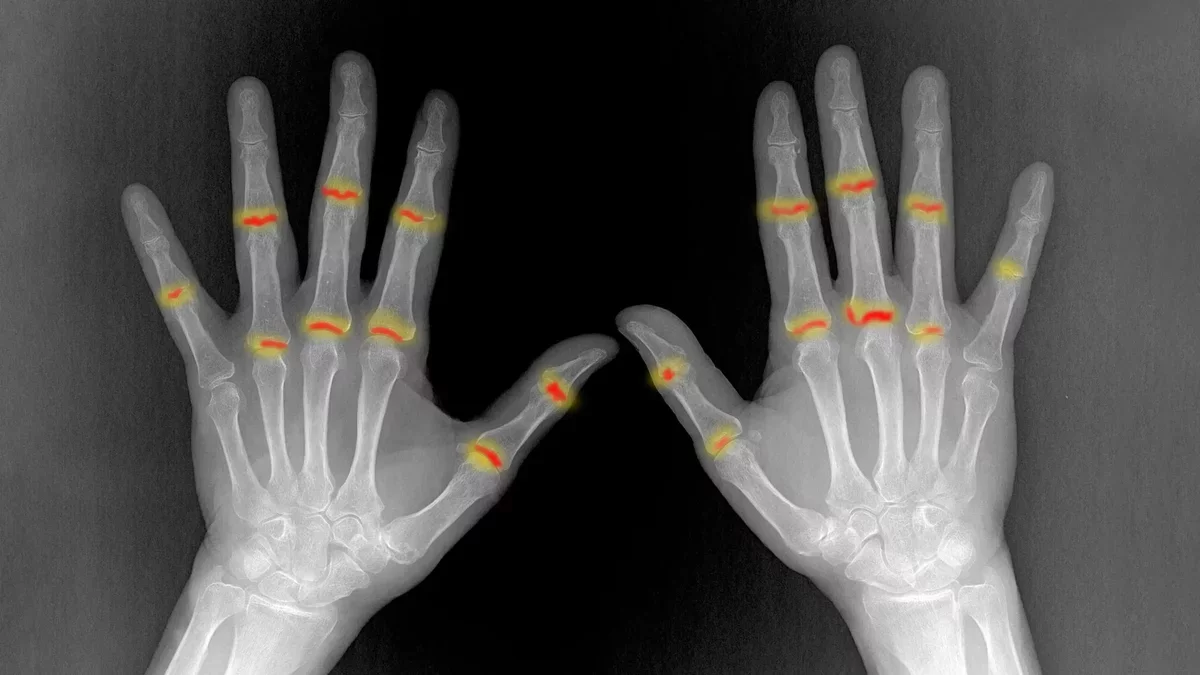
Scientists from the Department of Medicine 3 - Rheumatology and Immunology at Uniklinikum Erlangen, Friedrich-Alexander-Universität Erlangen-Nürnberg (FAU) have made significant strides in understanding the transition of psoriasis to joint disease. Their research has pinpointed the specific immune cells involved and how these cells migrate from the skin to the joints, paving the way for innovative methods to identify and prevent psoriatic arthritis before irreversible joint harm occurs. This groundbreaking study has been featured in Nature Immunology.
Immune Cell Migration Explained
Psoriasis triggers skin inflammation, which gives rise to specialized immune precursor cells. These cells are not limited to the skin; they can enter the bloodstream and subsequently reach the joints. "These cells can migrate from the skin to the bloodstream and then to the joints," states Dr. Simon Rauber, head of the research team. However, he emphasizes that their mere presence does not automatically lead to joint inflammation. "Interestingly, the simple act of immune cells migrating into the joint does not suffice to incite inflammation."
Understanding Joint Inflammation in Certain Patients
The dynamics within the joint are crucial. Once the immune cells arrive, they interact with fibroblasts, which are connective tissue cells essential for joint protection and balance. In individuals who develop psoriatic arthritis, this protective mechanism is compromised.
"In those who progress to psoriatic arthritis, the protective function of these connective tissue cells is significantly diminished," remarks Prof. Dr. Andreas Ramming, deputy head of the department. "Consequently, the inflammatory cells that infiltrate the joint cannot be adequately controlled, leading to an inflammatory response." This breakdown elucidates why joint disease manifests in some psoriasis patients while sparing others.
Detection of Early Warning Signs and Preventative Approaches
The study also revealed that these migratory immune cells can be detected in the bloodstream prior to the onset of joint inflammation, offering a promising avenue for early identification of at-risk patients.
Future treatment strategies may aim to target these immune cells before they reach the joints, potentially halting inflammation before it begins. Such proactive measures could shift the focus from treating existing damage to preventing psoriatic arthritis altogether.
Funding and Support for Research
This important research is supported by the German Research Foundation (DFG) through the CRC/TRR 369 - "DIONE: Degeneration of bone due to inflammation," the European Research Council (ERC) for the "Barrier Break" project, and the Interdisciplinary Center for Clinical Research in Erlangen (IZKF) as part of the "Tissue imprinting of skin-derived immune cells in psoriatic arthritis" initiative.