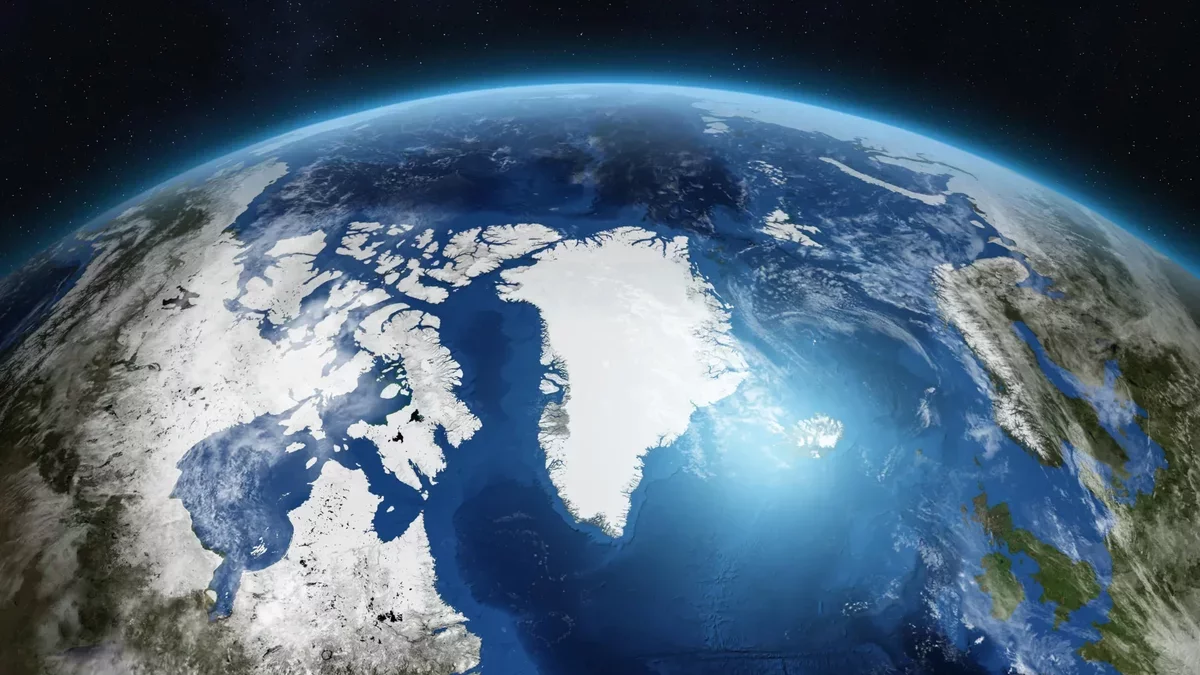
Recent evaluations have relied on comprehensive climate records, particularly focusing on annual autumn snow cover measurements in the Northern Hemisphere, gathered by the U.S. National Oceanic and Atmospheric Administration (NOAA) since the 1960s.
The Significance of Snow Cover in Climate Dynamics
Snow cover indicates the extent of Earth's land surface that is covered in snow. Its role in temperature regulation is crucial, as snow reflects a significant portion of incoming solar energy back into space. While bare soil and vegetation reflect less than 50% of this energy, snow can reflect around 80%.
"Snow cover is vital due to its positive feedback mechanism in climate," states Aleksandra Elias Chereque, a PhD candidate in the Department of Physics at the Faculty of Arts & Science.
"This phenomenon, known as the snow-albedo effect, describes how snow loss reduces albedo, resulting in increased energy absorption, which subsequently accelerates snow loss. This process contributes to 'Arctic amplification,' explaining the heightened warming observed in the Arctic compared to other global regions."
In essence, as snow diminishes, darker land surfaces absorb more heat, leading to further snow melt and a rapid increase in temperature in the Arctic.
Concerns Regarding NOAA's Snow Data
For years, some climate scientists have raised questions about the reliability of NOAA's snow cover data. They observed inconsistencies between the dataset trends and other observations, urging caution in interpreting the results.
Elias Chereque and her team revisited the NOAA data to explore these inconsistencies. Their analysis indicates that previous concerns were indeed warranted.
Initially, NOAA data suggested an increase in autumn snow cover in the Northern Hemisphere by approximately 1.5 million square kilometers per decade, roughly equivalent to one and a half times the size of Ontario. However, the updated findings reveal a decline, with snow cover decreasing by about half a million square kilometers per decade, or about half the size of Ontario.
How Satellite Advancements Altered the Perception
The researchers concluded that technological advancements in satellite instruments and data collection methods have made the system more adept at detecting thin layers of snow. Enhanced detection capabilities allowed satellites to identify lighter snow cover that previous instruments may have overlooked, creating a misleading impression of expanding snow coverage.
"It's as if the satellite's 'vision' improved over time," remarks Elias Chereque. "It appears that there's more snow now than before, but that's simply due to the satellites receiving better 'prescriptions.' The reality is that the actual snow coverage did not increase."
Elias Chereque leads the study titled 'Determining the cause of inconsistent onset-season trends in the Northern Hemisphere snow cover extent record,' published in Science Advances. Her co-author from the University of Toronto, atmospheric physicist Paul Kushner, serves as the chair of the Department of Physics, with additional collaborators from the Climate Research Division of Environment and Climate Change Canada.
Stronger Evidence of Declining Arctic Snow
The revised results reinforce the conclusion that snow cover is diminishing throughout the year, bolstering confidence in this trend. Elias Chereque notes, "We understand that anthropogenic warming influences snow loss, which in turn enhances warming through the snow-albedo feedback mechanism, giving us deeper insights into Arctic amplification."
She further states, "Clarifying how and why the previous snow cover trend was inaccurate aids us in utilizing this dataset effectively for estimating historical conditions and predicting future trends, which is crucial for evaluating the accuracy of climate models."
"Developing such tools enhances our comprehension of climate dynamics and improves our ability to forecast future scenarios."