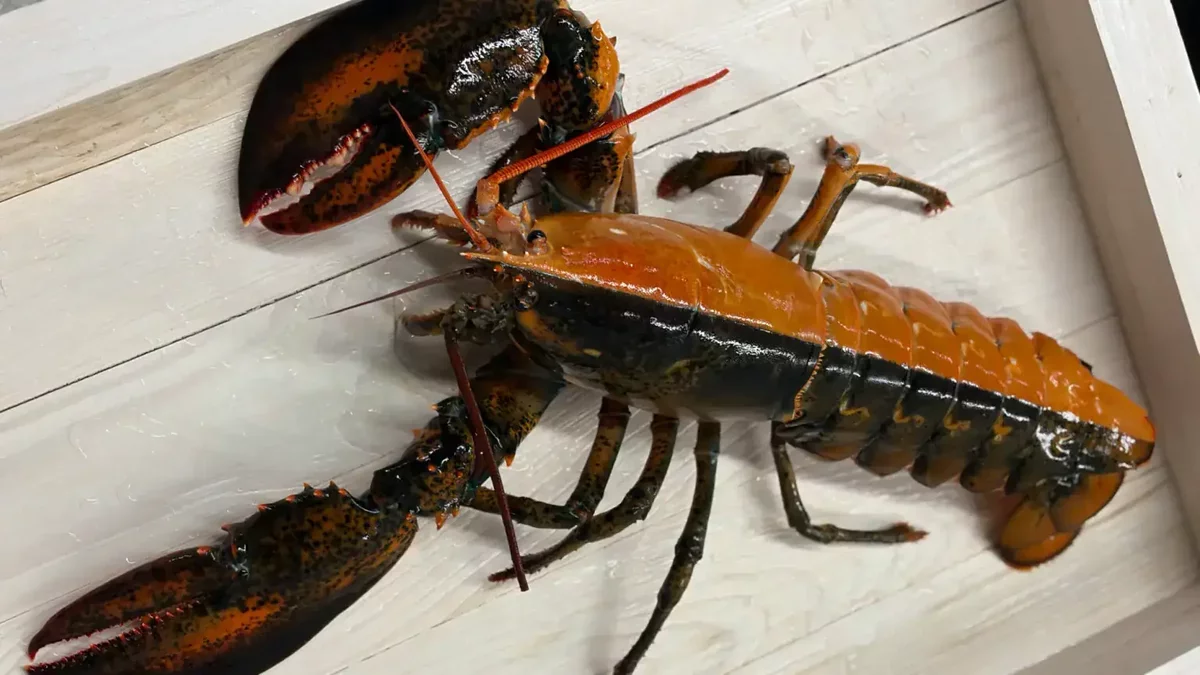
A remarkable lobster, discovered in the chilly waters of Cape Cod, showcases an extraordinary split coloration that seems almost surreal. On April 16, fishermen aboard the vessel Timothy Michael caught this unique crustacean, which features a vibrant orange-red hue on one side and a deep brown on the other, perfectly dividing its body from head to tail.
Instead of selling this unusual specimen, the Wellfleet Shellfish Company chose to donate it to the Woods Hole Science Aquarium, where it will serve as a fascinating exhibit showcasing one of nature's most intriguing phenomena: a single organism with two distinct genetic identities.
A Unique Phenomenon
Typically, lobsters exhibit a uniform coloration, but this specimen is estimated to be one in 50 million. It presents a striking contrast, with one side designed for camouflage against the ocean floor and the other radiating the bright color usually associated with cooked lobsters. This extraordinary appearance is due to a rare genetic occurrence known as chimerism.
According to aquarium biologist Julia Studley, chimerism occurs when two fertilized eggs merge, leading to a lobster that possesses two sets of genetic information and can display different color pigments on each side. The pigments, such as astaxanthin, can manifest in various shades, contributing to the lobster's distinctive look.
A Resilient Survivor
While bright colors may attract attention on land, they can pose significant risks in the wild. Typically, lobsters blend seamlessly into their surroundings, but this particular lobster's vibrant orange side reduces its ability to hide from predators. Remarkably, this lobster has thrived, weighing over three pounds, a testament to its resilience.
Dan Brandt, Chief Operating Officer of Wellfleet Shellfish Company, emphasized the importance of sharing such a rare find with the community. He noted that the lobster's survival through multiple molts, a vulnerable stage in its life, underscores its exceptional nature.
The Future of the Unique Lobster
Currently, the lobster is under observation in holding tanks at the Marine Biological Laboratory, as the Woods Hole Science Aquarium undergoes renovations. It is yet to be named, as staff members wish to study its behavior before making a decision. With a lifespan that can exceed 100 years, there is ample time to choose an appropriate name.
Once the aquarium reopens in early 2027, this extraordinary lobster is expected to be among the first exhibits, captivating visitors and offering insights into genetics and marine biology. As it explores its temporary habitat, it serves as a vivid reminder of the wonders of nature and the genetic diversity present within our oceans.