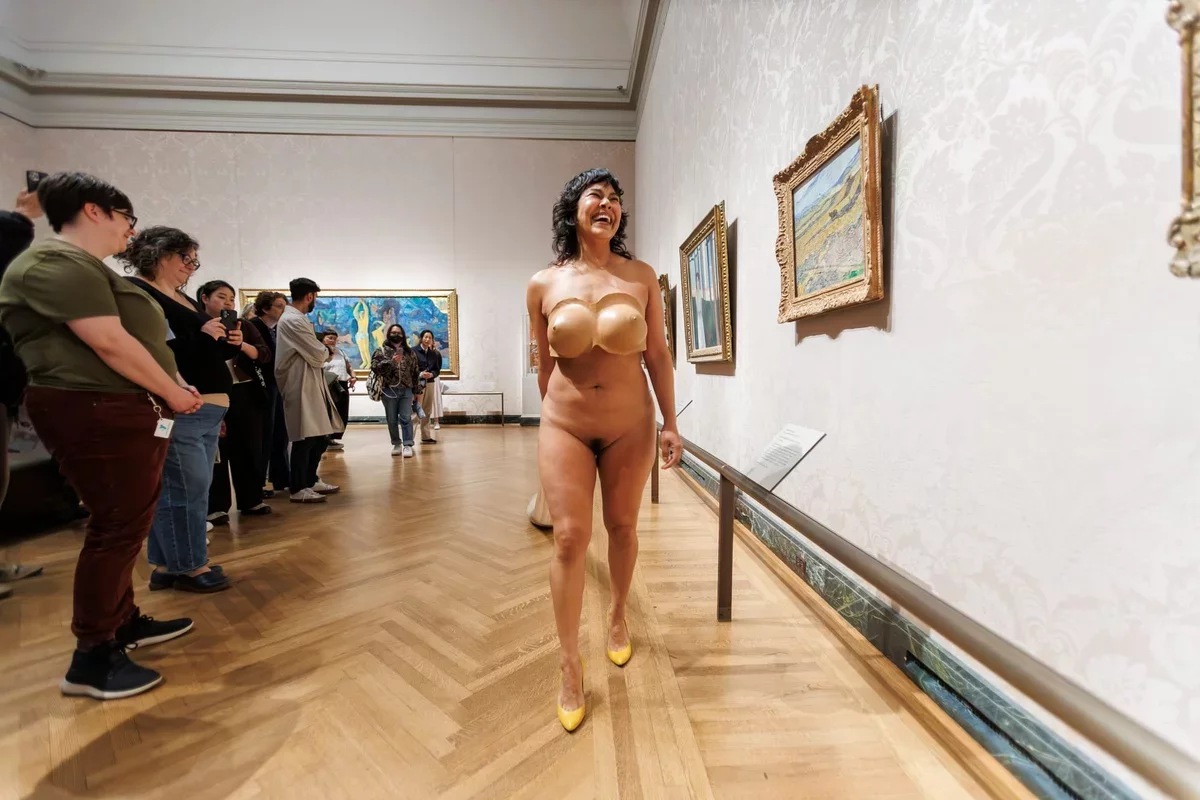
In a bold exploration of artistic expression, Xandra Ibarra's recent performance at the Museum of Fine Arts (MFA) Boston redefined the perception of the nude female form, confronting longstanding societal norms. The performance, titled Nude Laughing, took place on April 16 and left a lasting impression on attendees and online audiences alike.
Ibarra's act was part of the exhibition Subvert, Repair, Reclaim: Contemporary Artists Take Back the Nude, which features twelve artists who challenge the entrenched racial and gender hierarchies within Western art history. During her performance, Ibarra engaged with the museum's spaces, dressed in a breastplate and yellow heels, while dragging a stocking filled with exaggerated feminine props, described by the artist as "white lady accoutrements."
The performance began quietly as Ibarra moved through the galleries, her laughter echoing against the walls as she interacted with the artworks around her. At one point, she dramatically collapsed in front of Paul Gauguin's Where Do We Come From? What Are We? Where Are We Going?, enveloping herself in the nylon sack, a gesture that sparked discussions about consent, viewer engagement, and the representation of the human body.
Curator Carmen Hermo noted that the performance was a significant moment in art history, emphasizing the need for museums to confront their colonial legacies. Ibarra articulated her views on the complexities of museum spaces, suggesting that they are not merely about collections but involve intricate historical and political narratives.
Online reactions were mixed, with some praising the performance as a vital commentary on societal norms, while others expressed discomfort. Despite the polarized opinions, only a few complaints were lodged with the museum, indicating that the majority of viewers were open to engaging with the challenging themes presented.
As Ibarra's performance continues to resonate, it highlights the evolving conversation around art, identity, and societal expectations. This event not only reclaims the narrative of the nude in art but also encourages a broader dialogue about how we perceive and engage with the human form in contemporary society.
As we look to the future, performances like Ibarra's may pave the way for more inclusive and thought-provoking explorations in the art world, challenging viewers to reflect on their perceptions and the cultural narratives that shape them.