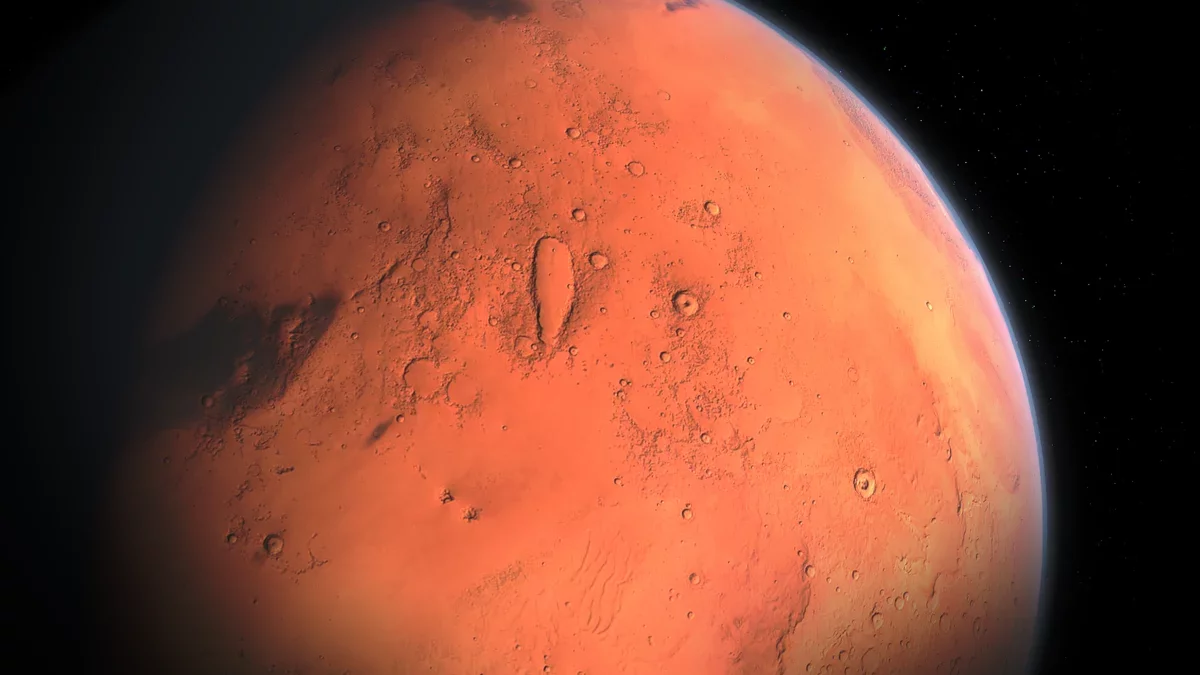
As space agencies gear up for crewed missions to Mars, a recent study indicates that astronauts may encounter a previously underestimated risk: potential kidney damage that could become apparent only when it is too late to address effectively.
Conducted by researchers at University College London and published in Nature Communications, the study investigates the impact of spaceflight on kidney health--organs essential for regulating water, salt, calcium, and waste in the body. The findings raise concerns that during extended missions beyond Earth's protective magnetic field, kidneys may be susceptible not just to microgravity but also to galactic cosmic radiation.
The comprehensive research involved over 40 institutions worldwide and analyzed more than 40 low-Earth-orbit missions with humans and mice, along with 11 ground-based simulations in rodents. These simulations exposed the animals to radiation levels similar to what astronauts might face on long Mars missions.
Your Kidneys in Space
Since the 1970s, it has been acknowledged that space travel can lead to various health issues, including bone mass loss, cardiovascular changes, vision problems, and kidney stones. These complications are generally attributed to microgravity and exposure to space radiation, such as solar winds.
Most astronauts have operated in low Earth orbit, particularly on the International Space Station, while only Apollo astronauts ventured beyond Earth's magnetosphere for short lunar missions. Consequently, there is limited direct evidence regarding the effects of prolonged deep-space travel on human organs.
Keith Siew, the study's lead author from the London Tubular Centre at UCL, noted, "While we know the short-term health issues astronauts face, we lack understanding of the long-term implications for missions to Mars."
The study revealed that both human and animal kidneys undergo significant changes in space. Specific kidney tubules responsible for managing calcium and salt balance exhibited shrinkage after just a few weeks in microgravity. While microgravity is likely the cause, further research is needed to determine if radiation exacerbates these alterations.
"Without new protective measures for the kidneys, astronauts could face severe health challenges on the return journey from Mars," Siew cautioned. "Kidneys show radiation damage late, and once apparent, it may be too late to prevent failure, jeopardizing mission success."
The Mars Challenge
This study is crucial as it indicates that kidney stones in space may not solely stem from bone loss but could also arise from changes in kidney function, making it a primary concern. Structural changes in the nephron, particularly in the distal convoluted tubule, which is vital for salt and calcium regulation, further complicate the risk of kidney stones and long-term kidney health.
Galactic cosmic rays pose a significant challenge, as they are high-energy particles that are difficult to shield against. Although thick materials can offer some protection, they can also generate secondary radiation, complicating the issue.
Worryingly, mice exposed to radiation for extended periods showed permanent kidney damage and diminished function.
Looking Ahead
Despite these findings, a Mars mission remains feasible. The study does not represent a clinical trial in astronauts, and animal studies cannot perfectly predict human outcomes. However, it emphasizes that kidney health must be a primary focus in mission planning.
Stephen B. Walsh, a senior author of the study, stated, "Our findings underscore the importance of kidney health in space missions. While shielding from radiation is ineffective, advances in renal biology may lead to new protective technologies or pharmaceuticals."
Such advancements could also benefit Earthbound patients undergoing cancer treatments, where radiation exposure poses similar risks. Overall, this research adds a new layer of complexity to the ambitious goal of sending humans to Mars, highlighting that astronauts must carry not only their technology but also their health across the vastness of space.