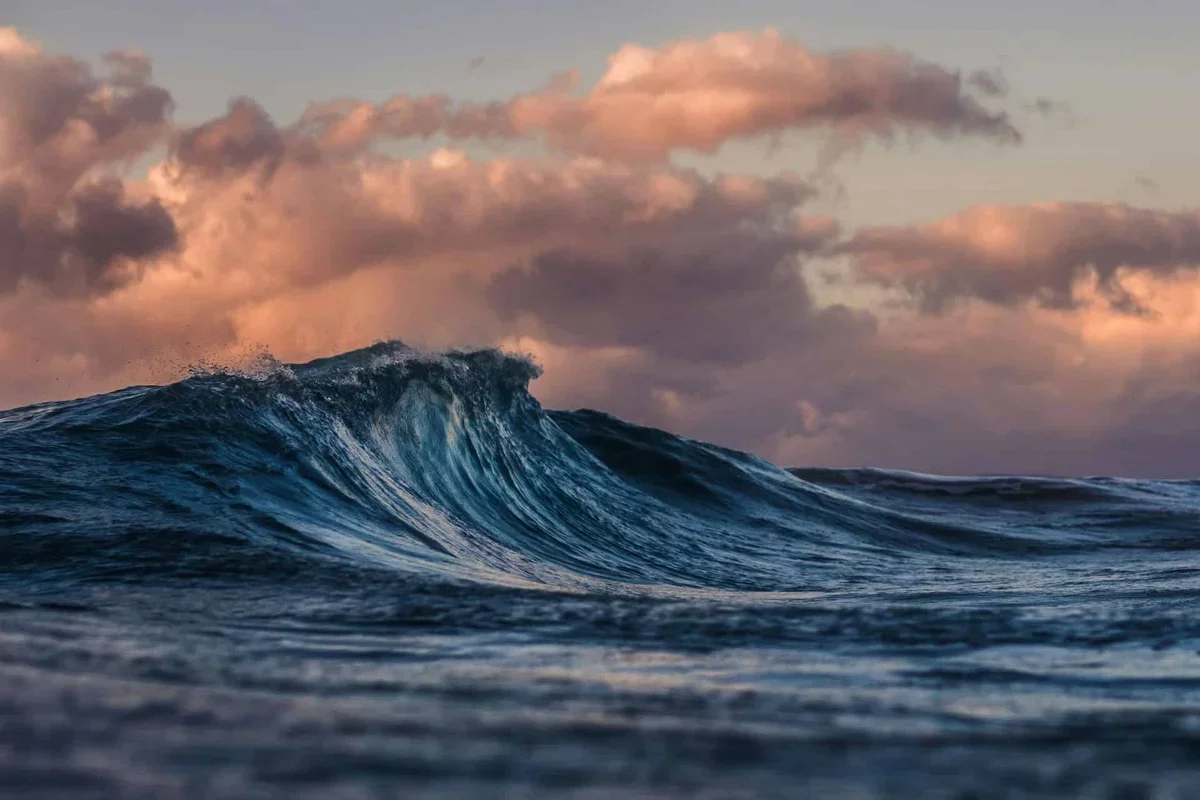
While a soft breeze on Earth barely disturbs a calm lake, on Titan, Saturn's largest moon, the same wind could generate waves towering as high as two stories. This intriguing disparity is the subject of a groundbreaking study that explores why wave behavior varies so significantly beyond our planet.
Scientists have long sought to understand how waves might form on extraterrestrial bodies, where factors like gravity, air pressure, temperature, and the nature of the liquid itself differ greatly from Earth. Waves are not just water movers; they play a crucial role in reshaping shorelines, transporting sediments, and mixing fluids, all of which provide insights into the climatic and geological history of different worlds.
Waves in Alien Environments
Traditionally, research on extraterrestrial waves focused primarily on gravity, which limited the understanding of wave dynamics. However, a wave's behavior is influenced by multiple factors: the density and viscosity of the liquid, the atmospheric conditions, and how effectively wind can transfer energy to the surface beneath.
To address these complexities, researchers developed a novel model named PlanetWaves. This model integrates various elements, including gravitational forces, atmospheric conditions, and liquid characteristics like density and surface tension.
"The spectral wave model developed for this paper, PlanetWaves, produces a four-dimensional spectrum of liquid surface elevations in response to an applied wind climate. This physics-based model can be applied to any planet," the study authors noted.
The research team aimed to determine what occurs when wind interacts with a still alien lake, including how much force is necessary to initiate wave formation and the potential size of these waves.
Exploring Waves from Earth to Titan
Initially, the researchers tested the PlanetWaves model using two decades of buoy data from Lake Superior, ensuring it accurately reproduced wave heights and wind thresholds on Earth. They then applied the model to Titan, where lakes are composed of liquid methane and ethane. The unique combination of low gravity and atmospheric pressure allows for wave formation even with gentle breezes, potentially generating waves up to 10 feet high.
Additionally, the model was used to investigate ancient Martian lakes, particularly in Jezero Crater, where decreasing atmospheric pressure over millennia would have required increasingly strong winds to create similar wave patterns.
As the research extended beyond our solar system, the challenges intensified. For example, on the exoplanet LHS 1140 b, greater gravity limits wave growth, while on Kepler-1649b, dense sulfuric acid lakes resist motion, complicating wave formation. Conversely, on 55 Cancri e, where oceans may consist of molten rock, even hurricane-force winds yield minimal wave activity.
"On Earth, we get accustomed to certain wave dynamics. But with this model, we can see how waves behave on planets with different liquids, atmospheres, and gravity, which can challenge our intuition," explained Andrew Ashton from the Woods Hole Oceanographic Institution.
Implications of the PlanetWaves Model
The PlanetWaves model not only enhances our understanding of wave dynamics but also serves as a tool for future planetary exploration. For instance, missions targeting Titan's lakes will need to account for the unique wave conditions to ensure the safety of their instruments. Moreover, the model could shed light on the enigmatic landscapes of celestial bodies, offering explanations for the absence of delta formations on Titan.
As we continue to refine this model and compare its predictions with real-world measurements, the potential for groundbreaking discoveries about extraterrestrial environments grows, paving the way for a deeper understanding of our universe.