In a remarkable demonstration of international collaboration in the restitution of stolen cultural treasures, Portugal has returned three pre-Columbian artifacts to Mexico. This marks the first instance where Portugal has repatriated unlawfully acquired antiquities to Mexico.
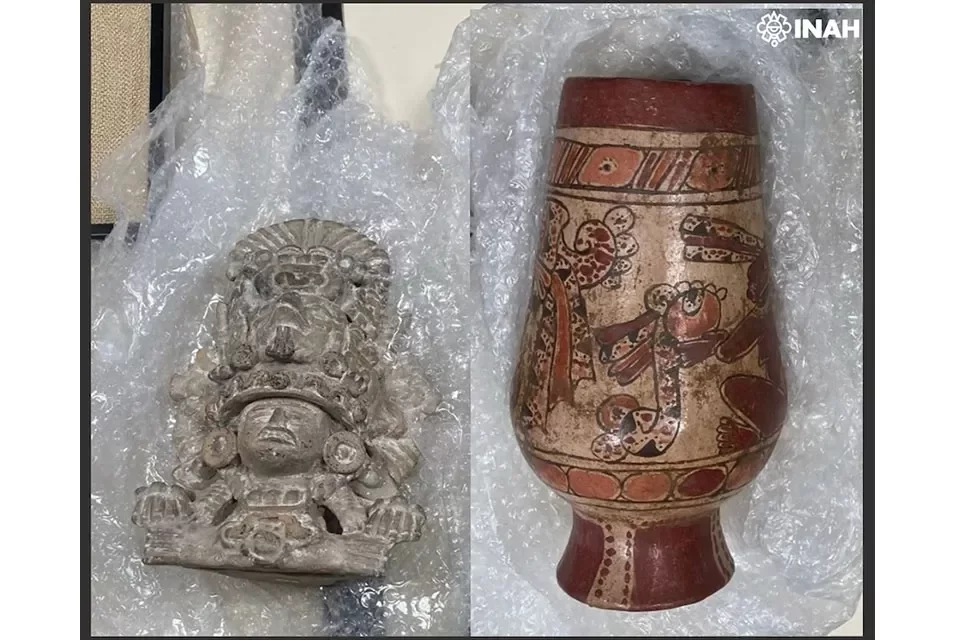
The returned items represent various pre-Hispanic cultures and periods, including a female figure from the Shaft Tomb Culture, a painted vessel from the Maya civilization, and a funerary urn from the Zapotec tradition.
The transfer occurred at the Mexican embassy in Lisbon on February 12, as confirmed by a statement from Mexico's Ministry of Foreign Affairs. The artifacts are expected to arrive in Mexico in the upcoming weeks.
Claudia Curiel de Icaza, Mexico's Secretary of Culture, expressed, "This return confirms that international cooperation protects who we are. Each restitution restores memory and identity to Mexico and reaffirms the shared commitment to combating the trafficking of cultural property."
The Mexican embassy in Portugal played a crucial role in identifying these artifacts, alerting Portuguese authorities to their existence. Experts from the National Institute of Anthropology and History (INAH) evaluated photographs provided by Portuguese officials, leading to the involvement of agencies like the Judicial Police. A subsequent on-site inspection by Mexican archaeologist Aline Lara Galicia verified the authenticity of the items.
Among the treasures, the female figure stands out as particularly significant. Crafted from clay in the elegant Tala-Tonalá style of the Shaft Tomb Culture, it dates back to between 300 and 600 CE. The kneeling figure, which is associated with fertility rituals, features a skirt, a headdress, and distinct scarification patterns on her shoulders. Originally slated for auction in 2024, this artifact prompted an investigation by the Lisbon Public Prosecutor's Office.
The second artifact is a vessel from the Maya Classic period (600-900 BC), adorned with figures and glyphs. Likely originating from southeastern Mexico, it may have served a ceremonial purpose, possibly for consuming beverages such as cacao. This piece was also seized by the Public Prosecutor's Office in Guimarães.
The final artifact is a Zapotec funerary urn from Oaxaca, dating between 600 and 1200 CE. This urn represents Cocijo, the Zapotec deity of rain and thunder, and was confiscated by the Public Prosecutor's Office of Évora-Estremoz.
This repatriation underscores Mexico's ongoing efforts to identify and reclaim trafficked artifacts, aiming to halt their illegal trade and facilitate their return through legal and diplomatic channels. Since 2018, Mexico has successfully recovered over 16,000 artifacts, although challenges remain, particularly in negotiations with countries like France.