Researchers at the University of Konstanz have identified an enzyme that can break down certain biodegradable plastics--and, in laboratory experiments, also inactivate antibiotics including penicillin.
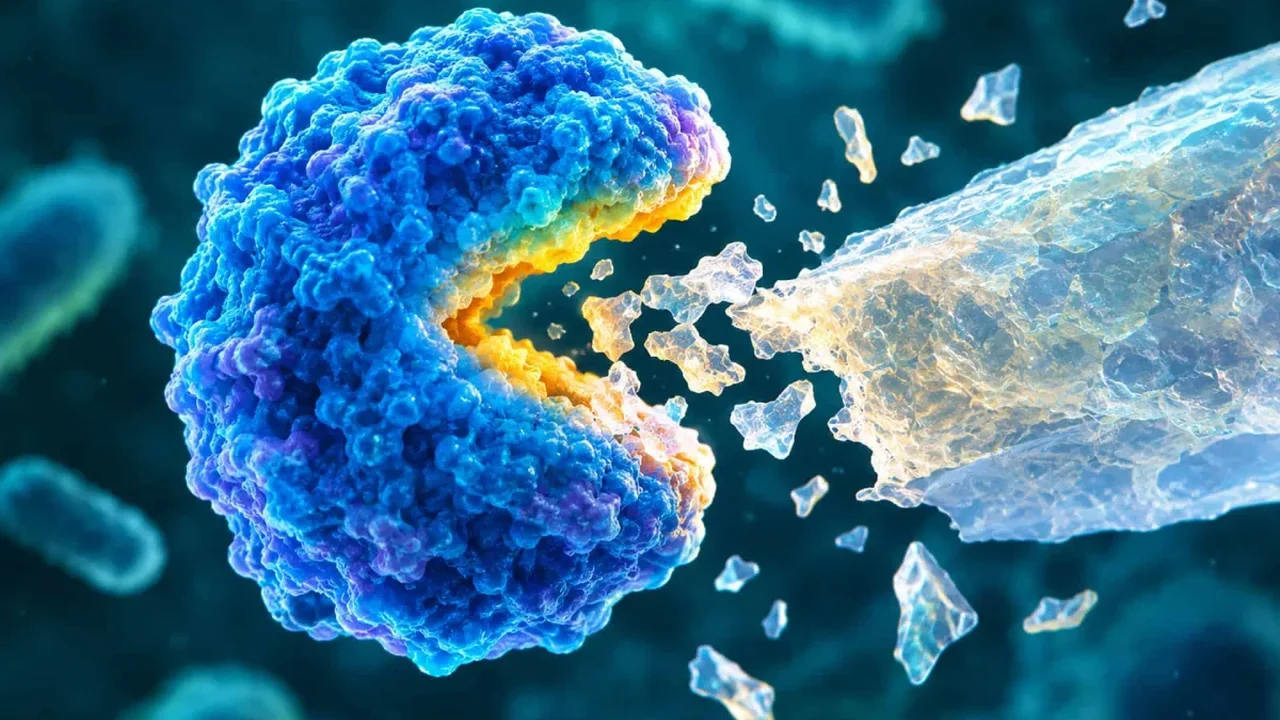
Named LCPH1, the enzyme was found while scientists investigated how soil microbes interact with long-chain aliphatic polyester (LCAP), an experimental biodegradable plastic. Its broad, open active site inspired the nickname "Pac-Man enzyme."
One enzyme, two activities
Soil tests showed that some biodegradable plastics can be consumed by microorganisms, though the rate varied by material. Two experimental LCAP formulations were almost completely broken down over eight to eleven months. By contrast, conventional high-density polyethylene remained virtually unchanged.
In laboratory tests using a modified, soluble form of LCPH1, penicillin G was almost completely degraded after 24 hours. The enzyme-treated ampicillin also lost its ability to inhibit bacteria in the experiment.
The findings, published in The ISME Journal, point to a possible link between microbial plastic breakdown and antibiotic activity. However, they do not establish that LCPH1 causes antibiotic resistance in natural environments. The researchers also note that the enzyme targets specific chemical bonds, so it cannot break down all plastics.
The discovery may help guide the design of biodegradable materials and further research into microbes living on plastic. Understanding these interactions could support more carefully engineered materials and environmental monitoring in the future.