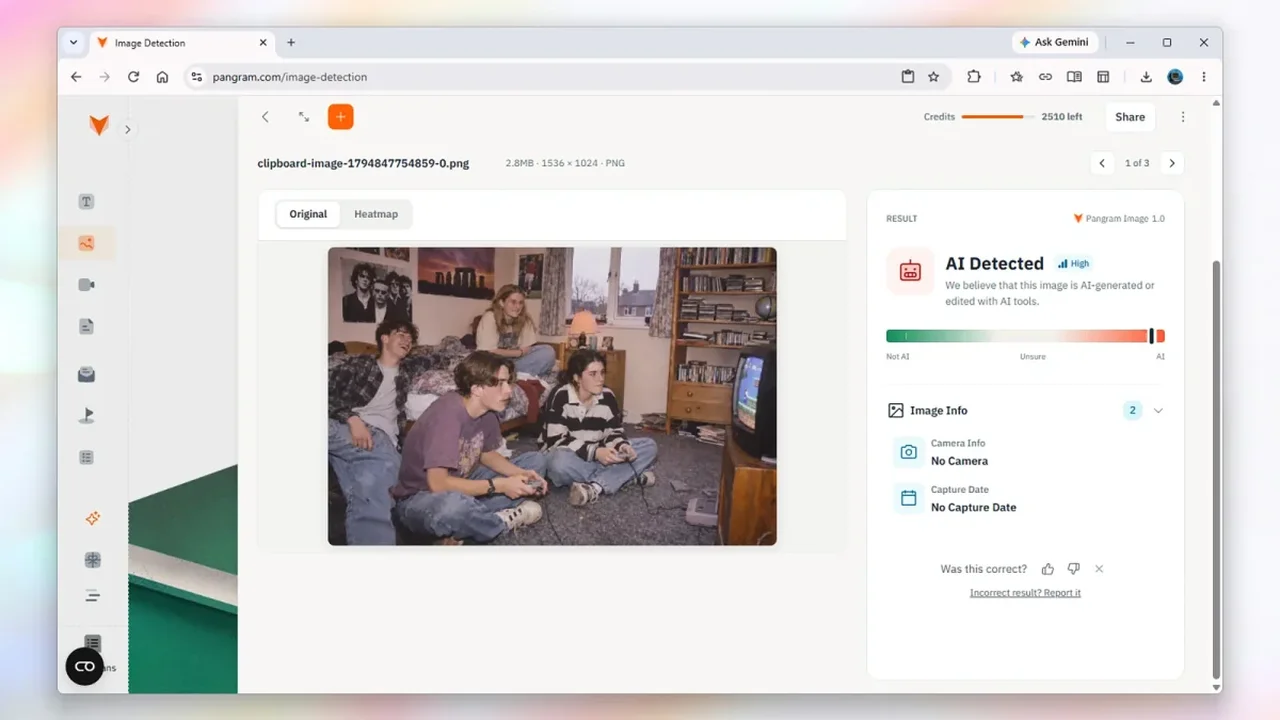
A hands-on test of Pangram found that its detector correctly identified 10 human-written articles and 10 AI-generated pieces. The human samples were written by the tester, while the AI examples were produced by ChatGPT, Gemini and Claude using matching headlines and similar lengths.
The text was pasted into Pangram rather than uploaded as a file, limiting the information available from metadata. In this sample, the tool classified every article correctly and generally expressed high confidence in its assessments.
Results were less precise when human and AI writing were combined. Text containing roughly equal portions of each was still identified as AI-generated, but Pangram's estimate of the AI-written share was often lower than the actual proportion. This suggests that blended material can make the detector less certain.
What the test shows
The findings offer a positive snapshot, not a guarantee of accuracy across every writing style or use case. The test covered a limited set of samples, and mixed-origin writing proved harder to assess than wholly human- or AI-produced text.
As AI tools become more embedded in everyday writing, detectors such as Pangram may help readers and publishers assess how content was created. Their results are best treated as one useful signal, rather than a final verdict.