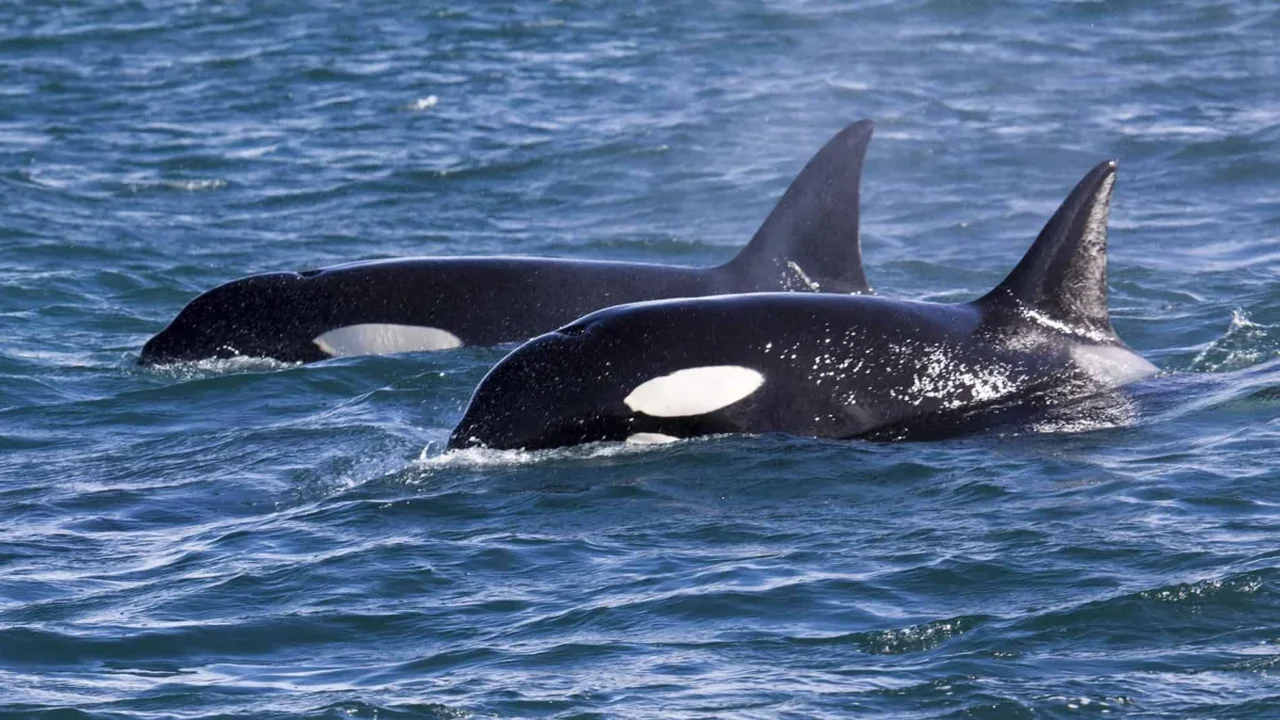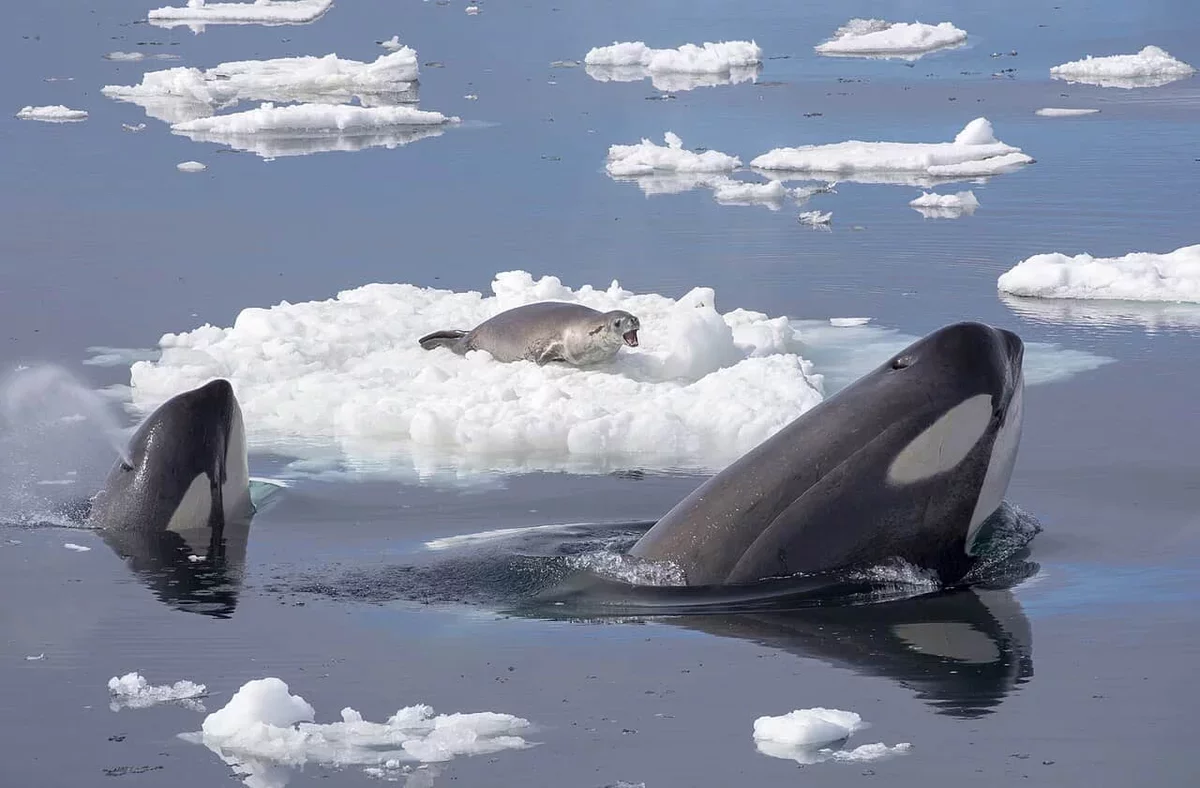
Seals resting on Antarctic ice floes may appear safe, but orcas have developed a remarkable strategy to hunt them. Instead of relying solely on physical force, these intelligent marine mammals collaborate to create powerful waves that dislodge seals from their icy perches.
A recent study published in the Journal of Fluid Mechanics explores how orcas, also known as killer whales, utilize a specific swimming posture to generate significant waves. By raising their heads and angling their bodies while pushing their tails downward, they create a deep "depression wave" that can crack large ice floes or wash over smaller ones, sending seals into the water.
The researchers observed that groups of orcas swim rapidly toward ice floes, producing a depression wave in mere seconds. "We noted that the orcas' synchronized swimming generates a powerful disturbance in otherwise calm waters," the study highlights.
The Physics Behind Orcas' Wave-Creation
This behavior, known as "wave-washing," has been documented in nature but the mechanics behind it were less understood. The study reveals that it is not merely speed that creates the effective waves, but the posture of the orcas as well.
To investigate, the research team constructed a model of an orca pod and tested it in a towing tank. By adjusting the angle of the model's body and tail, they found that the most potent waves occurred when the body was pitched upward and the tail angled downward. This configuration allowed the water flow to stay attached longer, creating a deeper trough.
The mechanics are akin to bending a board; if enough force is applied on one side while the other resists, the board will snap. Similarly, the orcas' waves create a dip that can cause ice floes to crack or tilt, ultimately dislodging seals.
The study also underscores why orcas often hunt in groups. While a single orca can create surface disturbances, a pod working together amplifies the effect, generating a broader and more forceful wave that is tailored to disrupt the seals' icy refuge.
Though the model used in the study simplifies the complex behaviors of real orcas, it still offers valuable insights into their intelligence and the innovative ways they manipulate their environment. Orcas are not just powerful hunters; they are adept at using the physics of water to enhance their hunting strategies.
This discovery not only highlights the sophisticated hunting techniques of orcas but also opens doors to understanding animal intelligence and cooperation in the natural world. As we continue to learn from these remarkable creatures, we may uncover more about the intricate relationships between species and their environments.