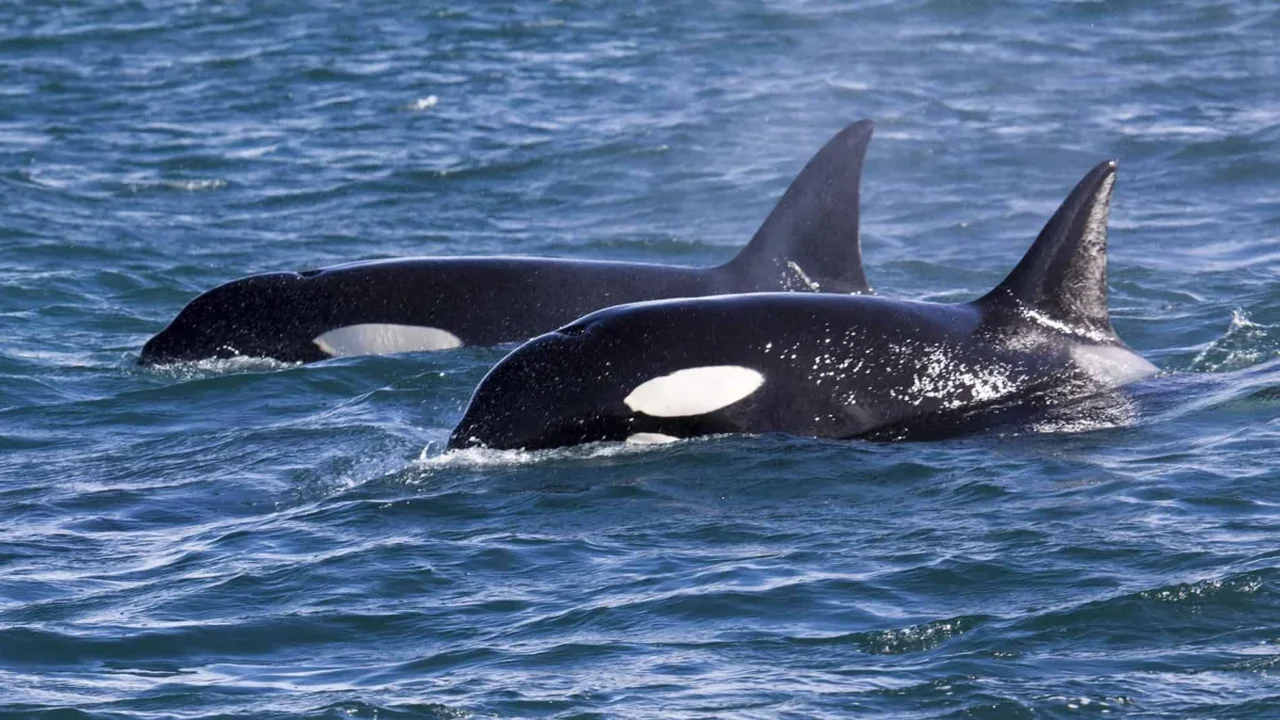
Researchers have identified a striking new behavior among orcas in the Gulf of California: one whale grips a dead sunfish while another charges in at speed, breaking the fish into smaller pieces. The method, now described as a hold-to-ram technique, was observed in two separate encounters and appears to help the pod process unusually large prey.
A rare feeding strategy
The behavior was documented in a study published in Frontiers in Ethology by marine biologist Kathryn Ayres and colleagues from Beneath The Waves. In both recorded cases, the sunfish was already dead before the impact, suggesting the whales were not hunting to kill but rather to fragment the carcass into manageable portions.
Sharp-tail sunfish can grow to nearly 10 feet and weigh up to 4,400 pounds, making them difficult for younger orcas to handle. By breaking the fish apart, adults may be making food easier to share with calves and juveniles. That fits with what scientists know about orcas as highly social animals that often divide prey within the group.
Researchers also note another possibility: the sunfish's gelatinous outer layer carries a distinctive microbial community, which could interact with the orcas' feeding process in ways that may offer nutritional or immune advantages. And, as Ayres points out, the simplest explanation may be that orcas are also capable of playful experimentation.
What makes the finding especially notable is that this tactic has only been observed with sharp-tail sunfish so far. Scientists say the fish's tissue structure may respond in a unique way to high-speed impact, creating the dramatic breakup seen in the field.
As more observations come in, this discovery adds another layer to what is already one of the ocean's most inventive predators. It suggests that orcas continue to refine their behavior in ways that blend intelligence, cooperation, and adaptability -- a reminder that marine life still holds many surprises for future science.