Olayami Dabls emphasizes the difference between material culture and fine art. After his tenure as an artist and curator at the Charles H. Wright Museum of African American History in the 1970s, Dabls embarked on a new journey by establishing the MBAD African Bead Museum in 1994. His goal was to reintegrate African culture and healing practices within the Detroit community.
Observing that many artifacts in African American museums were often viewed with apprehension and misunderstanding--filtered through a colonial perspective--Dabls dedicated himself to creating a space that honors ancestral traditions. He aimed to provide a genuine experience devoid of European influences, focusing on the healing aspects of creation rather than profit or entertainment.
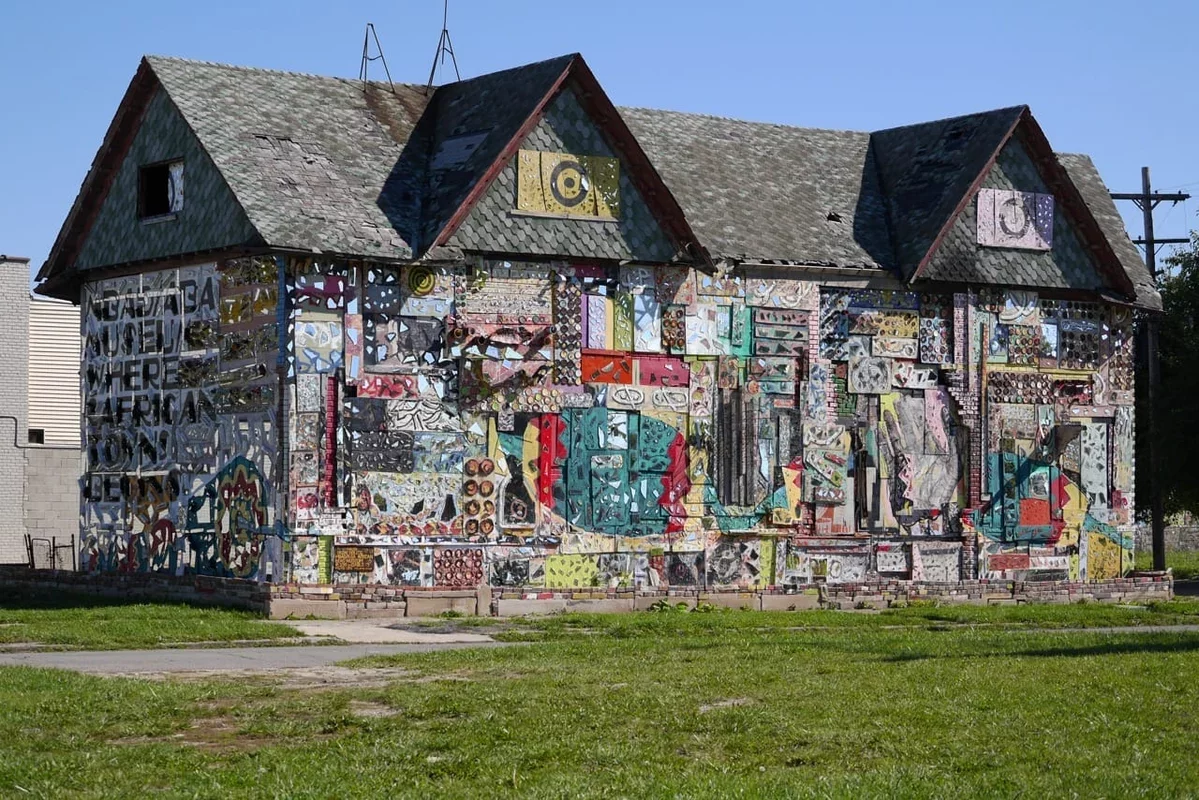
The MBAD features an expansive outdoor project that spans two blocks at the intersection of Grand River and West Grand Boulevard. This installation showcases various assemblages and emphasizes four materials prevalent in Detroit's industrial past: iron, stone, wood, and mirrored glass. Each material holds a spiritual significance; iron and stone connect us to the Earth, mirrors reflect our inner selves, and wood embodies the strength of nature.
Among the standout pieces is the "Nkisi House," part of the Iron Teaching Rocks How to Rust series. Nkisi objects, originating from the Congo Basin, are believed to house spirits and were brought to the Americas through the transatlantic slave trade. The "Nkisi House," adorned with mirrored shards and painted panels, serves as both a captivating structure and a spiritual invitation.
Dabls views public art as an underappreciated means of healing in Western society, where symptoms are often treated without addressing their root causes. He believes that initiatives like MBAD can evoke forgotten memories and profound realizations, fostering connections among visitors and with their ancestors. He states:
"Our African ancestors used material culture to convey information about themselves, their identity, and to send messages for healing and protection. Material culture was used to share stories from the past to the present. It was used to heal, the same way we go to a doctor or psychiatrist today."
Unlike traditional museums that often separate exhibitions from gift shops, Dabls integrates the bead store with the exhibits, allowing visitors to create and take home a piece of their experience.
Next month, the Museum of Contemporary Art Detroit will host Detroit Cosmologies, showcasing 45 years of Dabls' artistic journey, from site-specific installations to found object assemblages. This retrospective aims to redefine how museums can preserve history and community while highlighting MBAD as a vibrant space for cultural expression and remembrance.
MBAD is part of a growing movement of artist-led environments in Detroit that are receiving institutional acknowledgment, similar to Tyree Guyton's acclaimed Heidelberg Project.
Detroit Cosmologies will be open from April 25 to July 12. Discover more about MBAD and Olayami Dabls through their website.