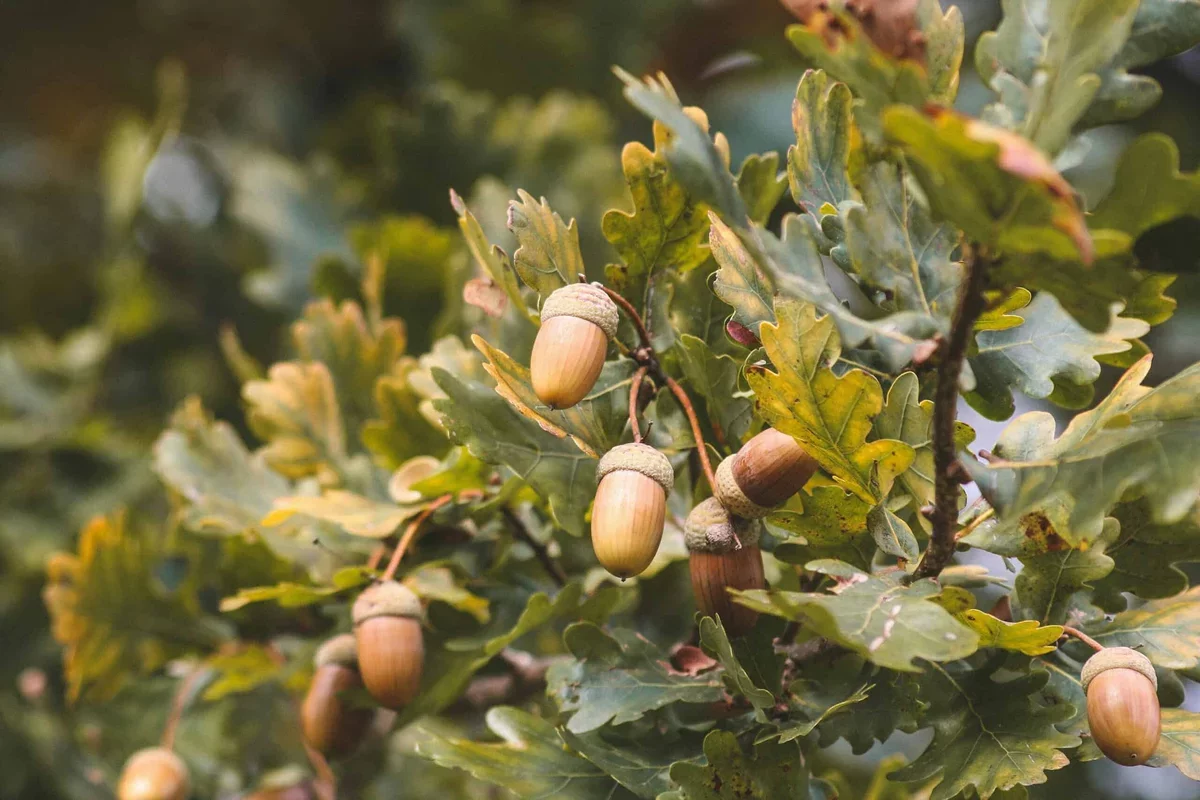
As spring unfolds, not all forests spring to life immediately. A recent study reveals that oak trees, when faced with caterpillar infestations, can strategically postpone the emergence of their leaves. This slight delay, lasting approximately three days, can significantly disrupt the feeding schedule of hungry caterpillars, resulting in a reduction of leaf damage by over 50%.
These findings highlight the remarkable adaptability and proactive nature of trees, challenging the notion that they are merely passive organisms within their ecosystems.
"This discovery fundamentally changes our previous understanding of the onset of spring in the forest," stated Soumen Mallick, the study's lead author and a postdoctoral researcher at the University of Würzburg.
Understanding Caterpillar Impact on Oak Trees
Traditionally, it was believed that the timing of leaf emergence, referred to as spring phenology, was primarily influenced by temperature. Warmer conditions typically lead to earlier leaf growth. However, this study suggests that past caterpillar damage plays a critical role in delaying leaf emergence, even in favorable weather.
Utilizing advanced satellite technology, researchers monitored a vast forest area of approximately 2,400 square kilometers in northern Bavaria, Germany. By employing data from Sentinel-1, a radar-based satellite system, they were able to observe intricate changes in tree cover over multiple seasons.
Over a span of five years, the team gathered an impressive 137,500 data points, providing a comprehensive view of how oak trees respond over time to various environmental pressures.
"The radar sensors recorded exactly which trees were stripped bare and how they reacted in the following year," remarked Jörg Müller, a co-author of the study and a professor at the University of Würzburg.
How Trees Outsmart Caterpillars
In 2019, a significant outbreak of gypsy moths led to extensive defoliation of oak trees. The following spring, trees that had been previously attacked showed a consistent delay in leaf emergence, which proved to be a successful survival strategy. This delay meant that many caterpillars were unable to find the tender leaves they rely on, resulting in a 55% decrease in leaf damage.
This timing tactic is notably more efficient than traditional defense mechanisms, such as producing bitter compounds, which demand significant energy and resources from the trees.
"Achieving a 50 percent reduction in herbivory through chemical defense would require a six-fold increase in tannin concentration," the study authors explained, emphasizing the effectiveness of this adaptive strategy.
Rethinking Forest Ecosystems
This revelation encourages a reevaluation of how we perceive forest ecosystems, urging us to recognize trees as active participants rather than passive entities. The interplay between climate factors and biological interactions is crucial for understanding seasonal changes.
Moreover, this study opens up discussions about evolutionary dynamics, as trees face conflicting pressures from climate change and herbivory. Their ability to adjust leaf timing offers a distinct advantage, as caterpillars struggle to adapt to these changes.
While the mechanisms behind these adaptive responses remain unclear, future research will delve into how trees recall past threats and whether similar strategies are employed by other species.
The findings, published in Nature Ecology & Evolution, signify a transformative perspective on forest dynamics and the intricate relationships within ecosystems.