Nvidia's latest earnings have sharpened a new view of the company: its strength is no longer limited to graphics chips. As artificial intelligence systems grow into gigawatt-scale operations, the real challenge is not only processing power, but also how efficiently entire data-center systems are coordinated.
That shift matters because modern AI infrastructure depends on more than GPUs alone. Nvidia is building the surrounding hardware and software layers that help move data, manage memory, and keep large-scale compute running smoothly. In a market where efficiency is becoming as valuable as raw speed, those system-level capabilities are gaining attention.
Beyond the Chip
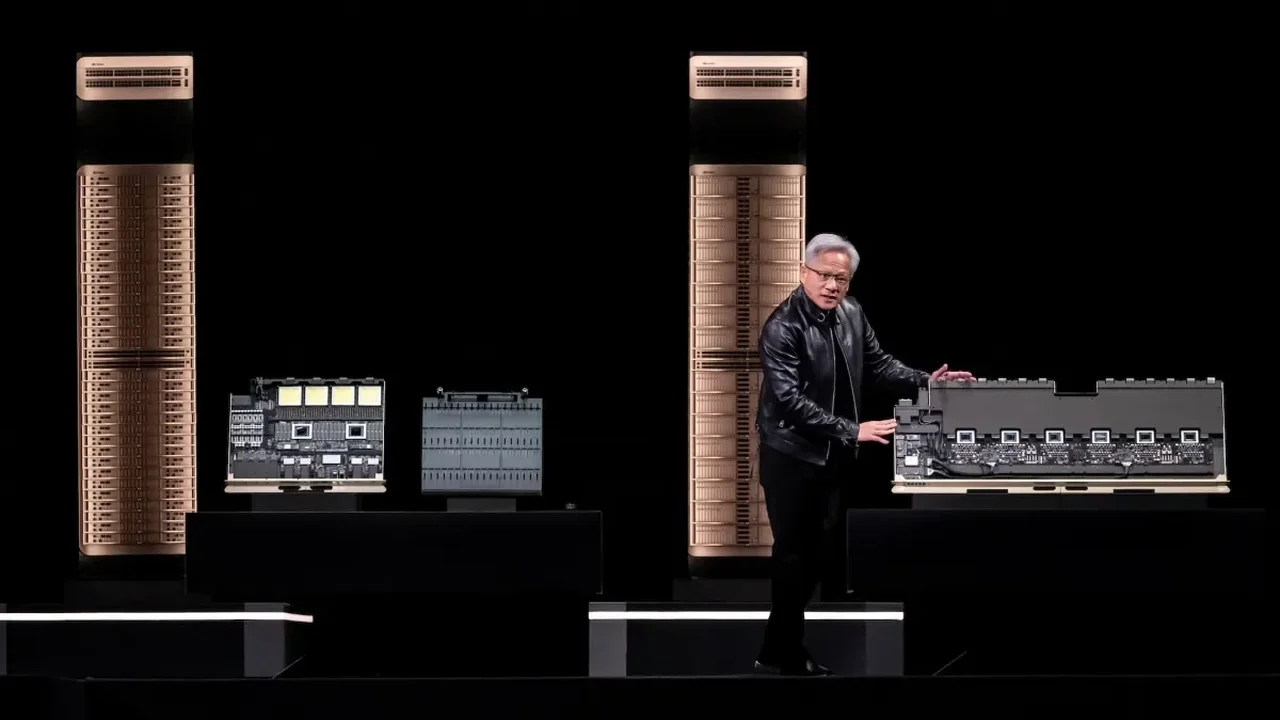
Nvidia's Vera Rubin architecture reflects this broader strategy. The platform combines the Rubin GPU with components such as the Vera CPU and specialized racks for storage and networking. Together, these parts are designed to reduce bottlenecks and improve how data flows through the system.
According to Nvidia's storage technology leadership, the Vera CPU is especially important because memory capacity in a single server is limited. As AI workloads expand, directing information at the right moment becomes a major performance factor. Nvidia says this approach has delivered up to 3x improvement in certain operations by helping flash storage reach its full potential without slowing the system.
The same logic is shaping the wider AI industry. OpenAI's Jalapeño chip, for example, was designed to reduce data movement and keep workloads inside one connected system. The common goal across these efforts is clear: smarter orchestration can unlock better performance than simply adding more compute.
That makes the competitive landscape more layered. Chipmakers are now competing not only on processor design, but also on how effectively they can build complete AI platforms. Nvidia still appears to hold a strong early lead in this broader race, especially as demand grows for efficient, large-scale infrastructure.
As AI continues to scale, the companies that master system-wide efficiency may define the next chapter of computing.