Northrop Grumman has completed another step in orbital servicing as its Mission Extension Vehicle detached from an Optus communications satellite after more than a year of support in space.
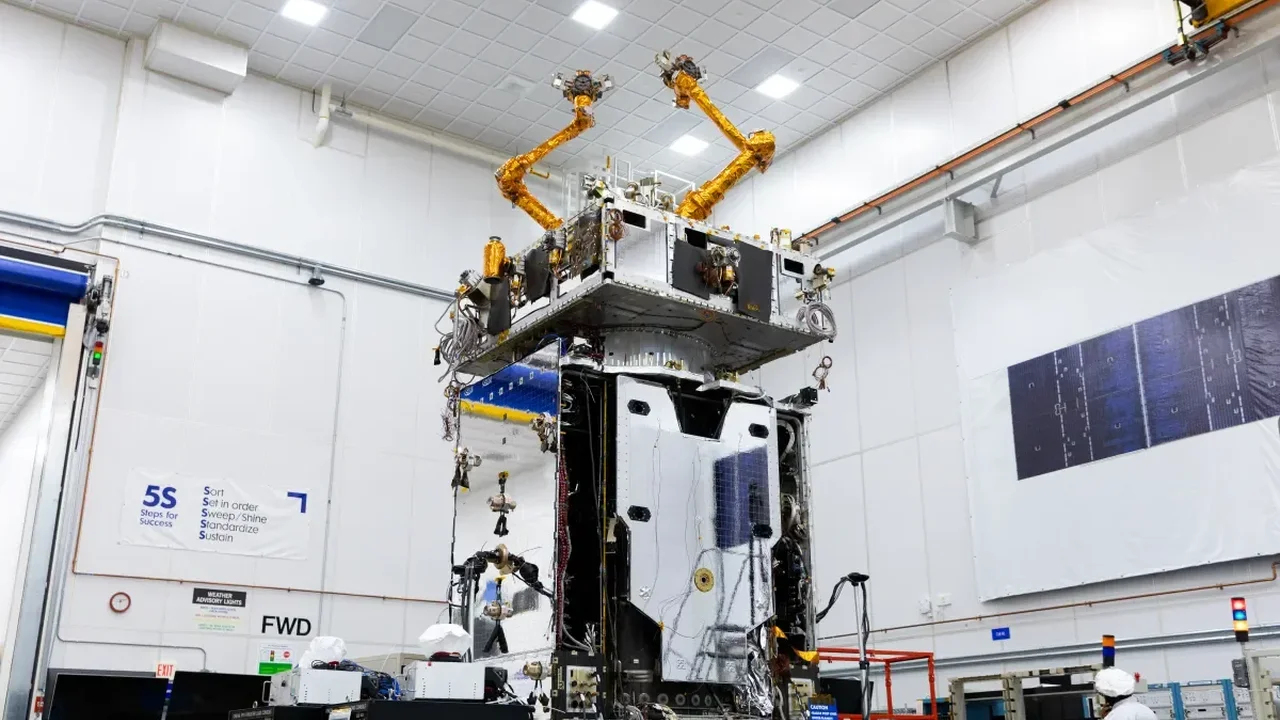
The handoff makes room for a new generation of servicing spacecraft. In July, Northrop sent four vehicles into orbit aboard a SpaceX Falcon 9 mission: the Mission Robotic Vehicle (MRV), developed with DARPA, and three Mission Extension Pods designed to provide modular propulsion support.
These spacecraft are traveling toward targets about 27,000 miles above Earth. The plan is for the MRV to use its robotic arms in 2027 to attach one of the pods to the Optus satellite, helping it remain operational for years beyond its original schedule.
Satellite servicing is becoming more practical as launch and hardware costs fall. Many spacecraft still end their missions not because their systems fail, but because they run low on fuel needed to hold position in orbit. By adding propulsion and maintenance capabilities, companies can extend the useful life of valuable assets already in space.
Northrop says the model is shifting toward a more sustainable orbital infrastructure, where repairs, upgrades, and life-extension missions become part of routine operations. The company already has two MEVs in orbit, which have supported multiple customers and demonstrated the commercial potential of in-space servicing.
The MRV also stands out for being designed to be refueled in orbit, a feature that could shape future servicing platforms. As satellite networks grow larger and more complex, robotic maintenance may become a key part of how space systems are managed in the decades ahead.
This development points toward a future where orbit becomes not just a destination, but a maintainable and adaptable environment for long-term space operations.