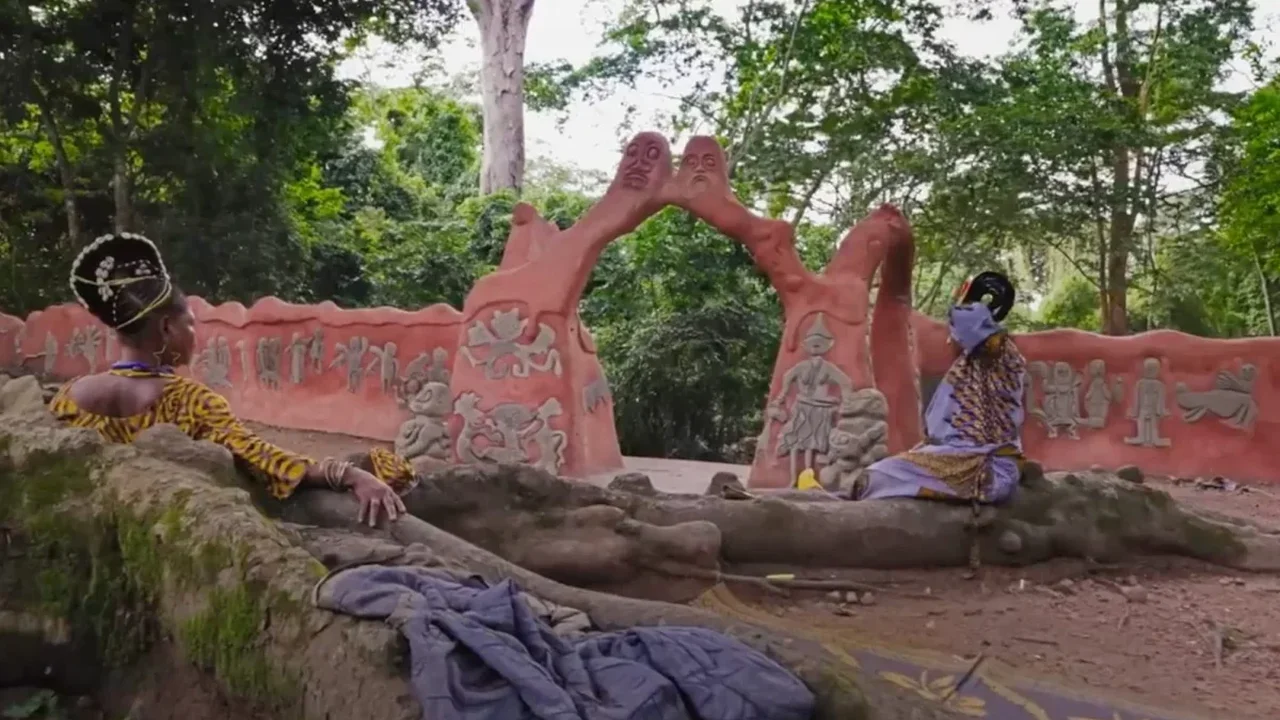
In southwestern Nigeria, the Ọṣun-Òṣogbo Sacred Grove stands as a remarkable meeting point of spirituality, ecology, and artistic expression. Rooted in Yorùbá tradition, the grove is linked to the river goddess Ọ̀ṣun and a centuries-old promise of protection, prosperity, and communal reverence.
Recognized as a UNESCO World Heritage site, the 190-acre sanctuary gained new momentum in the 20th century when artists helped transform it into a living landscape of sacred forms. Their work became known as the New Sacred Art Movement, bringing together carved totems, monumental figures, and earth-based sculptures that reflect the grove's spiritual identity.
A recent documentary by The Met, created in collaboration with the World Monuments Fund and directed by Sosena Solomon, revisits this cultural landmark and the makers who continue to care for it. Among them is Kasali Akangbe Ogun, who helped shape the movement alongside Susanne Wenger and Chief Adebisi Akanji and still passes on his craft to the next generation.
Today, the grove remains active through annual festivals, pilgrimages, and ongoing restoration efforts. Its strength lies not only in preservation, but in continuity: artists, caretakers, and families keep the site evolving while protecting its meaning. As Chief Nike Davies-Okundaye notes, it is a living story.
With its blend of heritage, creativity, and community stewardship, Ọṣun-Òṣogbo offers a model for how cultural spaces can endure and inspire future generations.