Researchers have unveiled a captivating new species of octopus, recently detailed in the journal Zootaxa. This remarkable discovery, made nearly 6,000 feet beneath the ocean's surface, represents a significant contribution to marine biology.
The octopus was initially observed during a deep-sea expedition in 2015, conducted by the exploration vessel E/V Nautilus in collaboration with the Charles Darwin Foundation (CDF) and the Galápagos National Park Directorate. Utilizing a remotely operated underwater vehicle (ROV), scientists explored the seafloor near Darwin Island, situated at the northern edge of the Galápagos archipelago.
Exploring Uncharted Depths
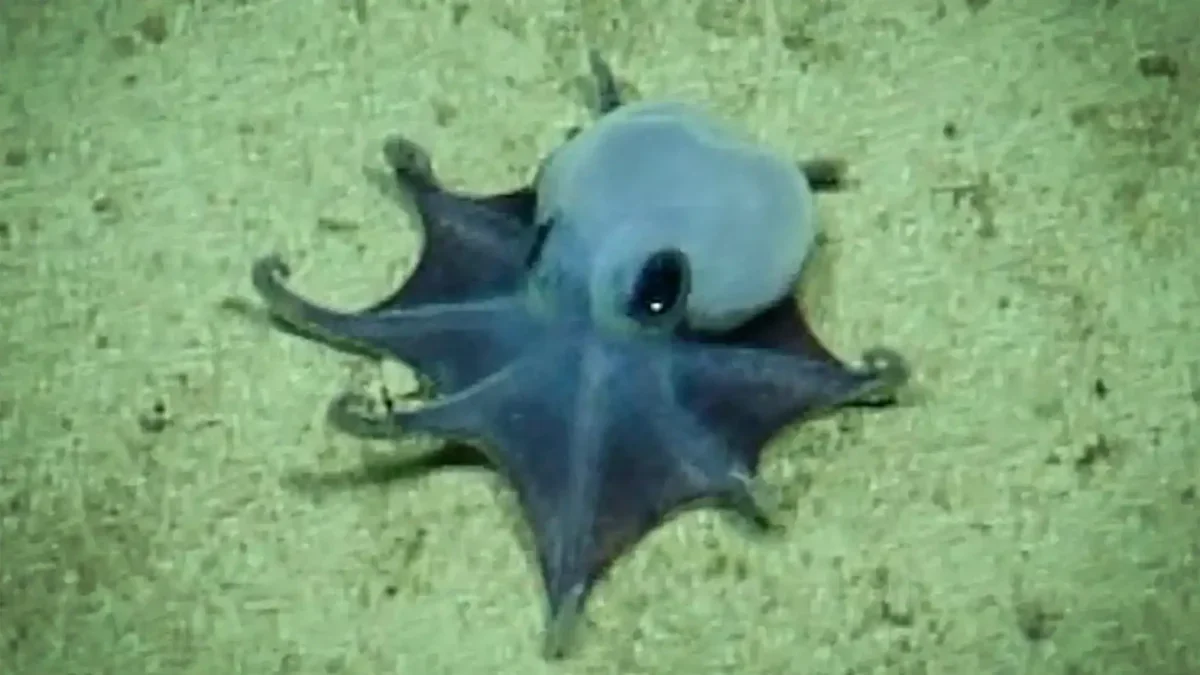
While investigating an underwater mountain approximately 5,800 feet (1,773 meters) down, the ROV team spotted an unusual, vividly blue octopus gliding across the seafloor. The excitement of the scientists was palpable, as captured in the expedition's audio recordings.
"It's tiny!" and "It's blue!" were among their enthusiastic reactions.
After capturing the specimen and documenting additional individuals of the same species, the team returned to the Galápagos and transported numerous deep-sea specimens to the Charles Darwin Research Station for further analysis. The tiny octopus, roughly the size of a golf ball, stood out due to its unique appearance. Researchers contacted octopus specialist Janet Voight, sending her images for identification.
"I immediately recognized it as something extraordinary," Voight, curator emerita of invertebrates at the Field Museum in Chicago and lead author of the study, remarked. "I had never encountered anything like it before."
Innovative Imaging Techniques
The specimen was carefully preserved and shipped to Chicago, where Voight conducted her examination. Traditionally, identifying a new octopus species involves dissection to analyze features such as the mouth and beak. However, with only one specimen available, the researchers sought alternative methods.
Advanced imaging technology came to the rescue. Stephanie Smith, manager of the Field Museum's X-ray computed tomography laboratory, created detailed micro CT scans of the octopus. "CT imaging is non-destructive, which is crucial for rare specimens like this," Smith explained. "It allows us to explore without damaging the specimen."
This innovative approach provided insights into the octopus's internal anatomy, enabling scientists to classify it as a new species and understand its relationship to other octopuses.
Highlighting the Mysteries of the Ocean
The newly identified octopus has been named Microeledone galapagensis. This discovery is particularly significant for Voight, marking her first time leading the description of a new octopus species after over 40 years of research.
"These little octopuses inhabit the deep sea, and few people have ever seen them. I feel fortunate to have worked with them," Voight added. "The oceans are vast, and there remains so much to explore."
Such discoveries are vital for understanding and protecting fragile marine ecosystems that are still largely uncharted. "Every new species enhances our comprehension of these hidden environments and underscores the importance of their preservation," remarked Salome Buglass, a marine scientist and co-author of the study.