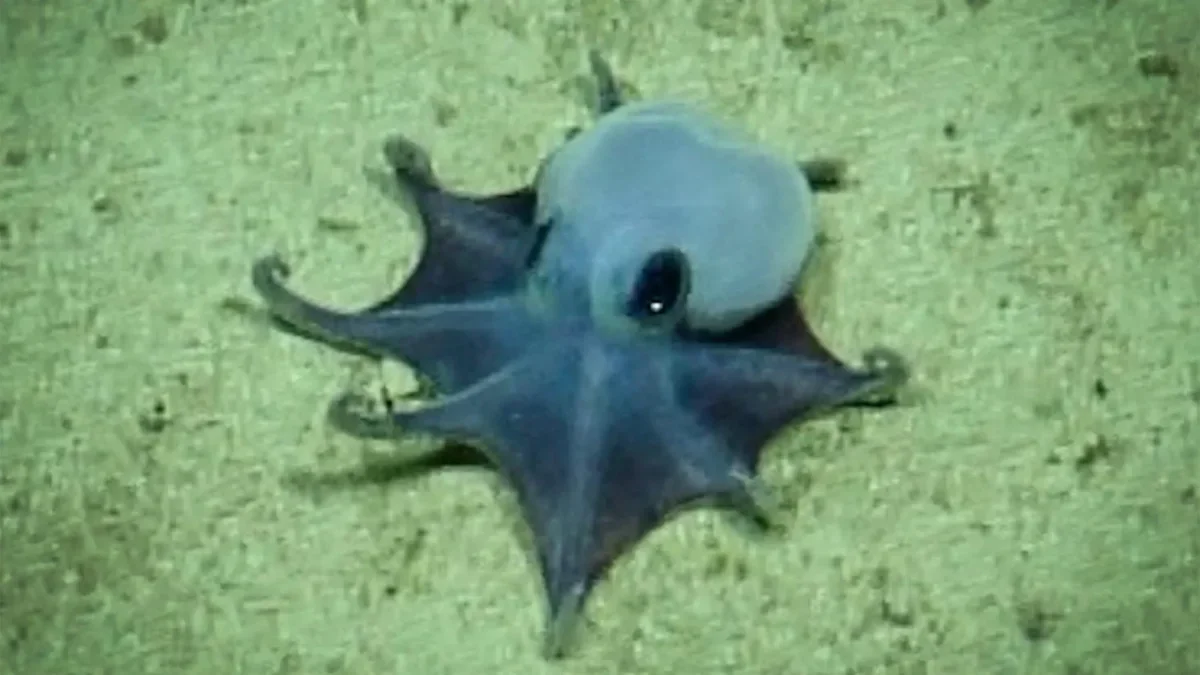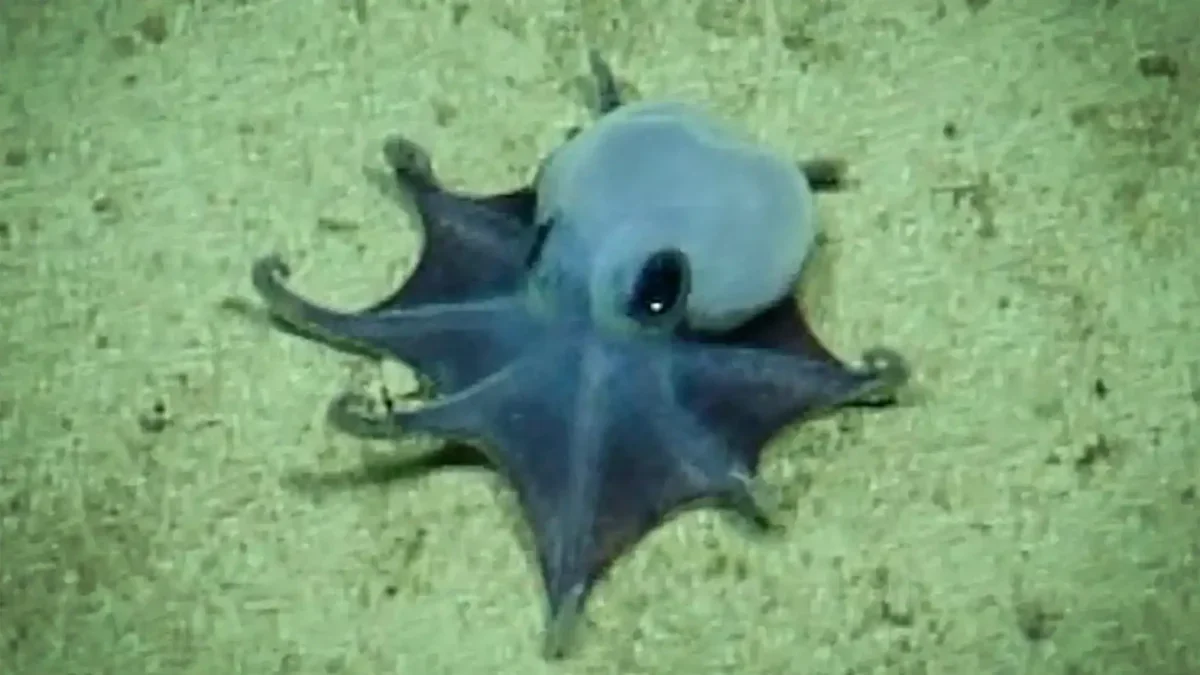
In a remarkable discovery, researchers have named a tiny blue octopus, Microeledone galapagensis, after it was first spotted in 2015 near Darwin Island in the Galápagos. This unique cephalopod, small enough to fit in a hand, was observed crawling on the seafloor at a depth of 1,773 meters during an expedition by the E/V Nautilus.
The octopus features a distinctive body plan with short arms, smooth skin, and an unusual color pattern: a pale upper side contrasted by a darker underside, a phenomenon known as reverse countershading. This adaptation may aid in camouflage within the dimly lit depths of the ocean.
A Unique Find
The specimen was collected during a 10-day survey of the Galápagos Marine Reserve, where researchers also filmed two similar octopuses. The mantle of the creature measures just 31.5 millimeters, and the study reports a fourth specimen found at a neighboring seamount.
Dr. Janet Voight, an expert in cephalopods from the Field Museum in Chicago, expressed her excitement upon seeing the initial images of the octopus. "It was something really special," she remarked, noting its distinct shape and color.
Innovative Research Techniques
Traditionally, describing a new octopus species involves dissection, which can be detrimental to rare specimens. However, the research team employed advanced micro-CT scanning technology to create a detailed 3D model of the octopus without damaging it. This technique revealed the animal's beak, digestive organs, and reproductive system, along with 13 eggs in the female's ovary, indicating it had reached reproductive maturity.
Revising Cephalopod Family Trees
This new species adds complexity to the family tree of octopuses, as Microeledone galapagensis belongs to the Megaleledonidae family, typically associated with larger-bodied octopuses from colder regions. The researchers argue that classifications should focus more on anatomical features rather than geographical location.
The naming of this octopus honors the Galápagos Islands, marking it as only the second known member of its genus. As Dr. Voight highlighted, the vast Pacific Ocean supports a rich diversity of life, and discoveries like this remind us of the importance of exploring its depths.
Moving forward, researchers aim to locate more specimens to better understand the species' distribution and ecological role. The journey of discovery continues, promising further insights into the wonders of marine biodiversity.