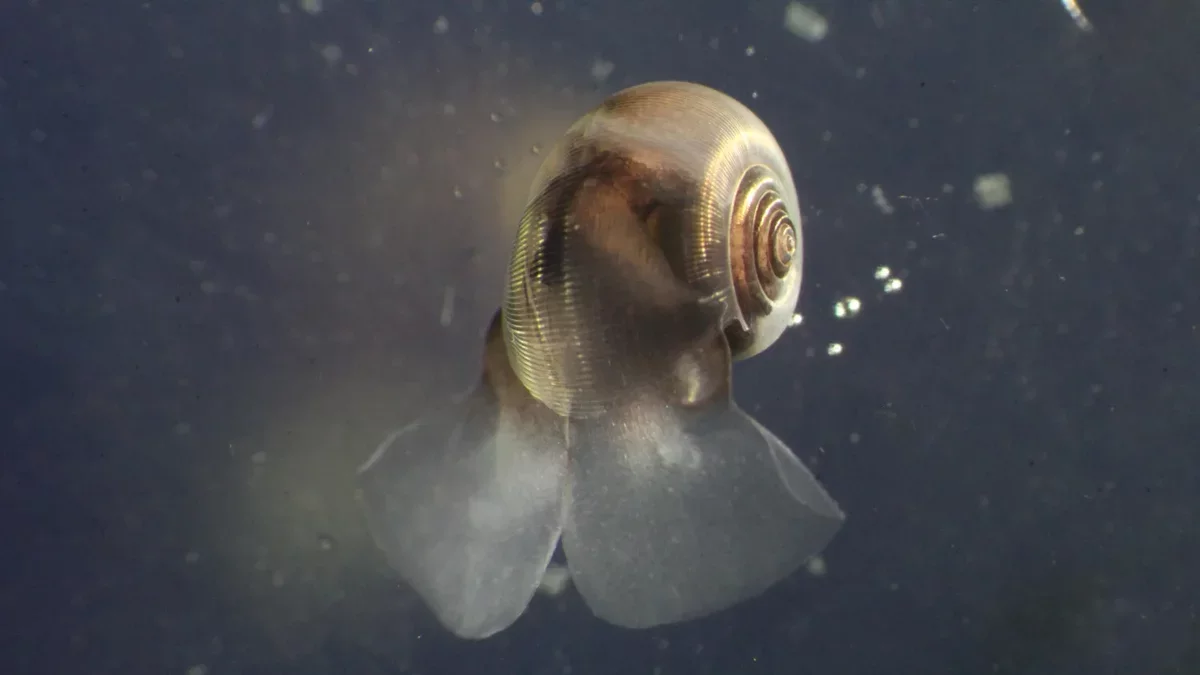
A recent study sheds light on three essential groups of calcifying plankton: coccolithophores, foraminifers, and pteropods. The researchers highlight that existing climate models often overlook or overly simplify these organisms, potentially resulting in an incomplete understanding of the ocean's response to climate change.
Calcifying Plankton's Role in Carbon Dynamics
Omitting calcifying plankton from climate models may lead to significant gaps in understanding the global carbon cycle. These organisms create minute shells composed of calcium carbonate (CaCO3), crucial for oceanic chemistry. The life cycle of plankton facilitates the transfer of carbon from the atmosphere to deeper ocean layers.
This mechanism, referred to as the ocean carbon pump, plays a vital role in stabilizing Earth's climate over extended periods. It also influences seawater chemistry and contributes to sediment formation, which scientists utilize to analyze historical climate patterns.
Patrizia Ziveri, an ICREA research professor at ICTA-UAB and the study's lead author, stated, "Though plankton shells are minuscule, collectively they influence ocean chemistry and global climate. Excluding them from climate models risks missing critical processes that dictate how Earth's systems react to climate change."
The Overlooked Process of Shallow Dissolution
The study reveals that a substantial amount of calcium carbonate generated by plankton does not reach the ocean floor. Instead, much of it undergoes dissolution in the upper ocean, a phenomenon termed "shallow dissolution." This breakdown is influenced by biological activities such as predation, particle aggregation, and microbial respiration.
Shallow dissolution significantly alters ocean chemistry but is often absent from major Earth System Models (like CMIP6) utilized in global climate evaluations. Neglecting this process can lead to inaccuracies in understanding carbon movement within the ocean and the system's reaction to environmental changes.
Distinct Climate Challenges for Various Plankton
The research emphasizes that different calcifying plankton species exhibit varied responses to climate threats. Each group possesses unique traits that determine their habitat, ecological functions, and susceptibility to climate change.
Coccolithophores are the primary producers of CaCO3 but are particularly vulnerable to ocean acidification due to their inability to effectively manage excess acidity. In contrast, foraminifers and pteropods have mechanisms to combat acidity but face other challenges, such as decreasing oxygen levels and increasing ocean temperatures. Together, these organisms play a crucial role in carbon storage and recycling in the ocean, and treating them uniformly may oversimplify the ocean's reactions to climate pressures.
Enhancing Climate Models Through Ocean Biology
The authors advocate for immediate efforts to quantify the calcium carbonate production, dissolution, and export of each plankton group to deeper waters. They argue that integrating these specifics into climate models will enhance predictions regarding ocean-atmosphere interactions, long-term carbon storage, and the interpretation of sediment records for reconstructing Earth's climatic history.
"Disregarding the ocean's smallest organisms could result in overlooking vital climate dynamics," Dr. Ziveri warns. "Incorporating calcifying plankton into climate models may lead to more precise predictions and deeper insights into potential impacts on ecosystems and human societies."
The researchers conclude that addressing these knowledge gaps is crucial for developing the next generation of climate models, which should more accurately represent the biological intricacies of the oceans.