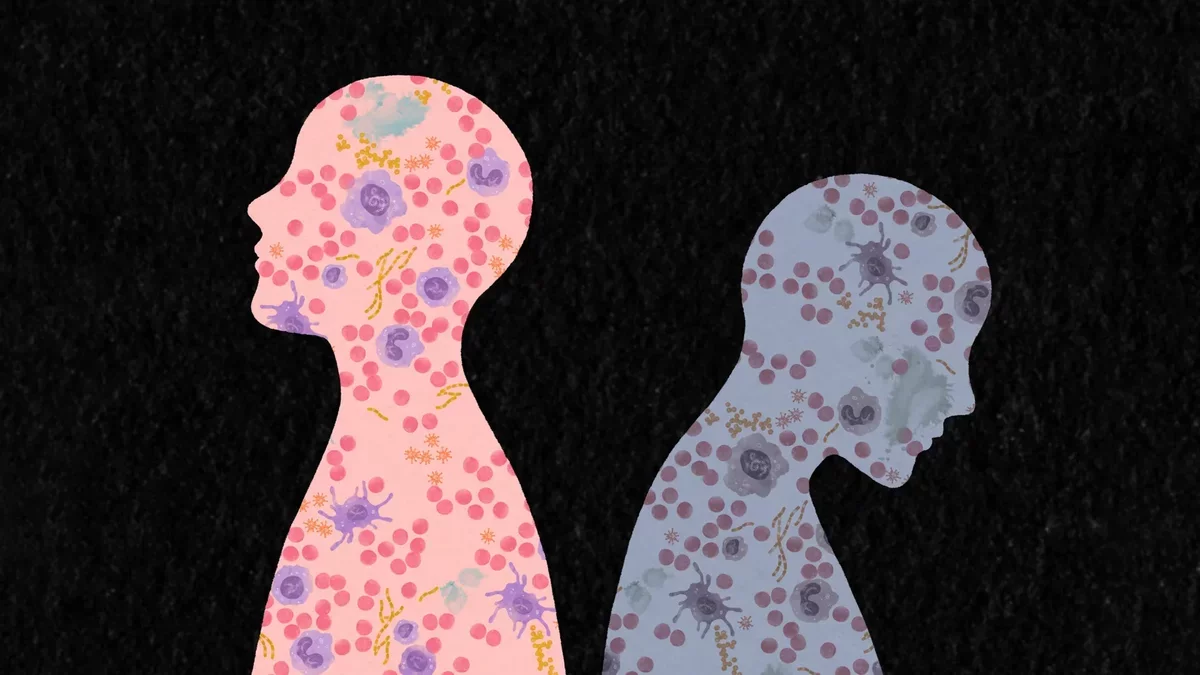
A significant part of understanding our immune system lies in the interplay between genetics and life experiences, such as environmental exposures, infections, and vaccinations. These elements lead to subtle chemical alterations known as epigenetic modifications, which influence cellular behavior without changing the DNA sequence itself.
Researchers from the Salk Institute have developed a comprehensive epigenetic catalog that illustrates how inherited characteristics and personal experiences uniquely affect various immune cell types. This cell type-specific database, published in Nature Genetics, sheds light on the diverse immune responses observed among individuals and suggests potential personalized treatments tailored to individual biological profiles.
"Our immune cells reflect both our genetic makeup and our life experiences, and these two aspects influence the immune system in distinct manners," explains Joseph Ecker, PhD, a senior author and professor at the Salk Institute. "This research reveals that both infections and environmental factors leave lasting epigenetic traces that dictate immune cell behavior. By examining these effects at the cellular level, we can link genetic and epigenetic risk factors to specific immune cells where diseases may initiate."
The Importance of the Epigenome
Each human cell contains identical DNA, yet they can exhibit vastly different characteristics based on their function. This variability is partly driven by epigenetic markers--tiny molecular tags that regulate gene expression in each cell. Collectively, these markers form a cell's epigenome.
Unlike the DNA itself, the epigenome is dynamic and can evolve over time. Some epigenetic patterns are heavily influenced by inherited genetic differences, while others are shaped by life experiences. Although immune cells are affected by both, prior research had not clarified whether these inherited and experiential epigenetic changes impact immune cells similarly.
"The ongoing discussion of nature versus nurture is significant in both biology and society," notes Wenliang Wang, PhD, a co-first author of the study. "We aimed to uncover how both genetic inheritance and environmental factors affect our immune cells and, subsequently, our health."
Molecular Footprints of Life Experiences on Immune Cells
To dissect the influence of genetics and experiences, the research team analyzed blood samples from 110 individuals with varied backgrounds. These samples encompassed a broad spectrum of genetic variations and life exposures, including infections from flu, HIV-1, MRSA, MSSA, and SARS-CoV-2, as well as anthrax vaccinations and exposure to pesticides.
The researchers focused on four primary immune cell types: T cells and B cells, known for their long-term immune memory, and monocytes and natural killer cells, which respond swiftly to threats. By comparing epigenetic patterns across these cell types, the team constructed a detailed catalog of epigenetic markers, also referred to as differentially methylated regions (DMRs), for each immune cell type.
"We discovered that genetic variants associated with diseases often modify DNA methylation in specific immune cell types," states Wubin Ding, PhD, another co-first author. "Mapping these connections allows us to identify which cells and molecular pathways may be influenced by disease risk genes, paving the way for targeted therapies."
Distinguishing Between Inherited and Experience-Driven Changes
A key advancement of this study was the ability to differentiate epigenetic changes linked to genetics (gDMRs) from those associated with life experiences (eDMRs). The findings indicated that these two marker types tend to be located in distinct regions of the epigenome. Genetic changes were predominantly found near stable gene areas, especially in long-lived T and B cells, while experience-related changes clustered in flexible regulatory regions that govern rapid immune responses.
These findings imply that genetics establishes long-term immune frameworks, while experiences fine-tune how immune cells respond to specific challenges. Further research will be essential to fully grasp how these factors influence immune performance in both health and disease.
"Our human population immune cell atlas will serve as an invaluable resource for future mechanistic studies on infectious and genetic diseases, aiding in diagnosis and prognosis," remarks Manoj Hariharan, PhD, a senior staff scientist at Salk. "Often, when individuals fall ill, the cause or severity is not immediately clear; the epigenetic signatures we developed provide a roadmap for classifying and assessing these situations."
Advancing Disease Outcome Predictions and Personalized Care
This research underscores the profound impact that both genetics and life experiences have on immune cell identity and behavior. The new catalog lays the groundwork for creating more personalized treatment and prevention strategies.
Ecker emphasizes that as the database expands with more patient samples, it could enhance our ability to predict individual responses to future infections. For instance, if sufficient data from COVID-19 survivors is collected, researchers might identify a common protective eDMR among them. This could enable doctors to analyze newly infected patients' immune cells to determine if that protective marker is present, allowing for targeted interventions when necessary.
"Our work establishes a foundation for precision prevention strategies against infectious diseases," concludes Wang. "For COVID-19, influenza, and other infections, we may eventually predict how individuals may respond to infections even before exposure, using genomic data to forecast how infections will impact their epigenomes and influence symptoms."