The Artemis II mission, a groundbreaking voyage to the moon, has showcased exceptional engineering thus far. The rocket's launch was seamless, experiments are proceeding as planned, and the crew is capturing stunning views of space.
However, the mission has encountered an unexpected challenge with its 3D-printed titanium toilet, which is currently hampered by a blockage of ice. As a result, astronauts are temporarily relying on "contingency bags" for waste management.
A Unique Challenge
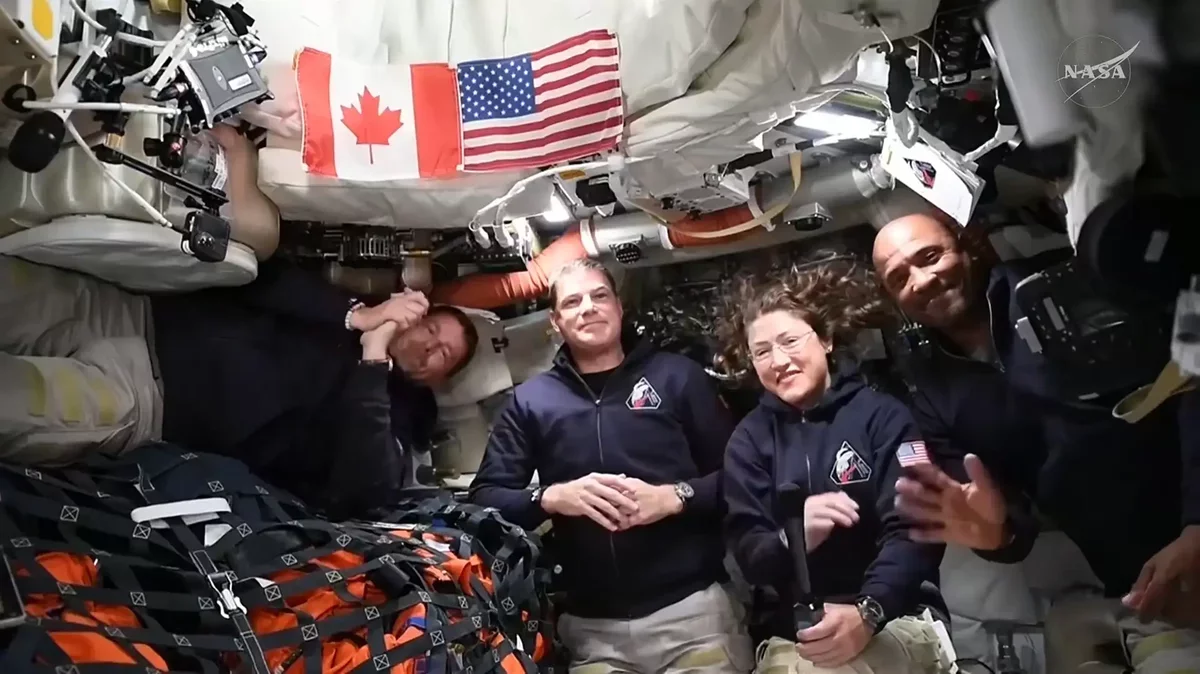
For the crew members aboard Artemis II, their journey to the moon is a blend of awe-inspiring cosmic views and practical challenges. Astronaut Commander Reid Wiseman has described the lunar landscape as "beautiful," yet the spacecraft's plumbing system has proven problematic. Astronaut Christina Koch noted an unpleasant "burning heater smell" emanating from the toilet.
Shortly after launch, the waste management system in the Orion capsule began to malfunction, leading the crew to utilize backup urine collection bags. While the system works for solid waste, liquid waste disposal has become complicated. Engineers suspect that ice is obstructing a vent line, hindering the proper flushing of urine into space.
This intermittent issue, while not catastrophic, presents a notable inconvenience for the astronauts during their 10-day mission. In an innovative attempt to resolve the clog, Mission Control directed the Orion capsule to reposition toward the sun, hoping that solar radiation could melt the obstruction.
More Than Just a Minor Issue
Space toilets have historically been a source of humor, yet they represent a serious technical challenge in space exploration. The difficulties faced by astronauts in managing waste underscore the complexities of long-term space missions.
The current toilet system, the Universal Waste Management System (UWMS), has faced its share of issues, including a previous test on the International Space Station that was cut short due to mechanical failures. As the mission progresses, the functionality of this critical equipment becomes increasingly vital.
A Lesson for Future Missions
Despite the toilet troubles, Koch, who has extensive experience aboard the International Space Station, has taken on the role of troubleshooting the system. She emphasized the importance of the toilet, stating it is "probably the most important piece of equipment on board." A malfunctioning toilet could quickly turn a mission into a health hazard.
The ongoing Artemis II mission serves as a rehearsal for future lunar endeavors, highlighting potential weaknesses before more complex operations. While the current toilet predicament is a minor setback, it emphasizes the need for robust systems as humanity aims for deeper space exploration.
Overall, Artemis II remains a historic mission, paving the way for future lunar exploration. The crew, featuring diverse representation, is set to make significant strides in our understanding of space.