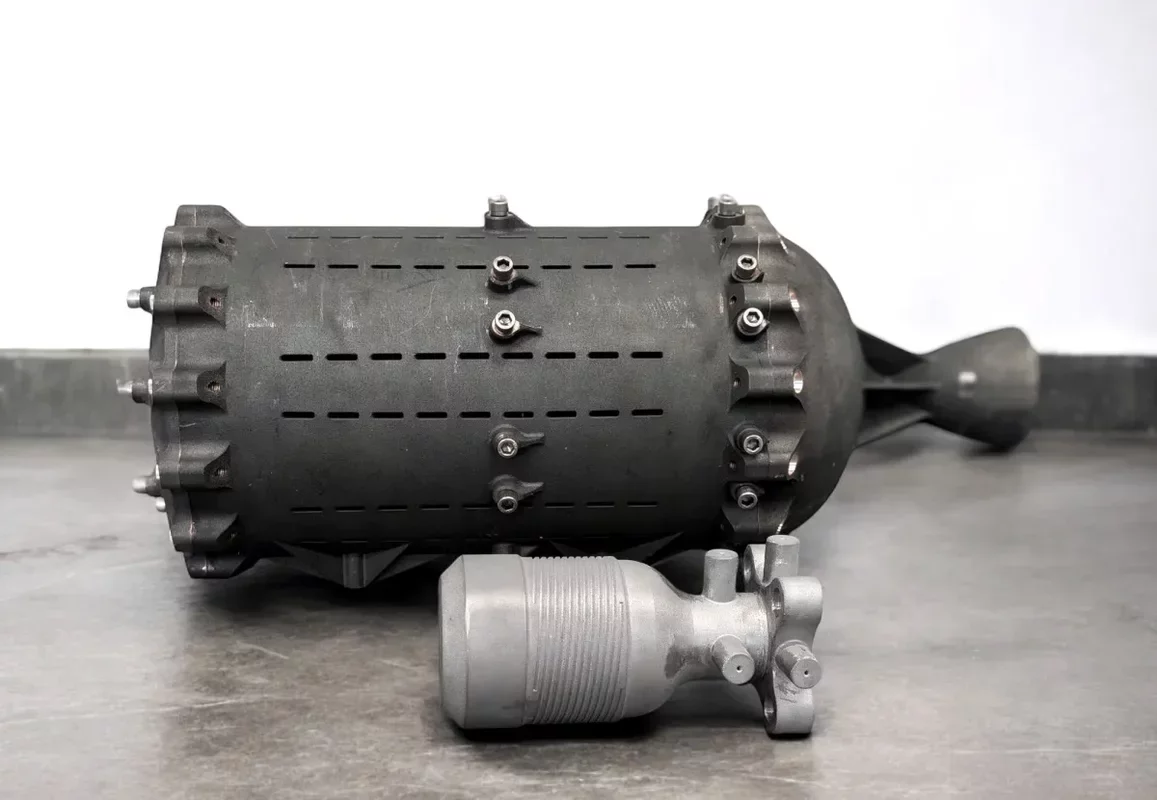
Jeff Thornburg, a key figure behind SpaceX's most advanced rocket engine, is now leading a groundbreaking initiative at his startup, Portal Space Systems. This venture aims to transform a concept previously set aside by NASA into a revolutionary propulsion technology for future spacecraft.
Founded in 2021, Portal recently secured a significant $50 million Series A funding round, valuing the company at $250 million. The investment was spearheaded by Geodesic Capital and Mach33, with participation from Booz Allen Ventures, ARK Invest, AlleyCorp, and FUSE.
Portal is developing an innovative propulsion system known as solar thermal propulsion. Unlike traditional satellite engines that rely on chemical fuels or convert solar energy into electricity for low-powered thrusters, Portal's approach harnesses concentrated solar heat to efficiently heat propellant, propelling spacecraft at unprecedented speeds.
This technology has been explored in government labs since the 1960s, with recent discussions surrounding its potential for interstellar probes. Thornburg and his co-founders, Ian Vorbach and Prashaanth Ravindran, are determined to bring this concept to fruition within the next two years.
Thornburg's impressive background includes a tenure with the U.S. Air Force, where he contributed to the development of advanced rocket engines. He later joined SpaceX at Elon Musk's invitation to help create the Raptor engine for the Starship. After experiences at Stratolaunch and Amazon's Project Kuiper, he returned to his passion for propulsion.
A New Era in Rocket Technology
In Thornburg's perspective, solar thermal propulsion represents the next significant leap in rocket technology. NASA's research in the late 1990s indicated its superior performance, but a lack of demand for in-space mobility halted further development. However, the current landscape, characterized by a surge in satellite launches and military demands for rapid orbital maneuverability, has shifted this paradigm.
"It's no longer acceptable to move slowly in orbit," Thornburg emphasized, highlighting the competitive nature of modern space operations. Portal has already attracted $45 million in strategic funding from the U.S. military, in addition to $67.5 million in private investments, underscoring the military's interest in the technology for potential orbital applications.
As the future unfolds, the increasing number of satellites in orbit will necessitate more cost-effective methods for spacecraft navigation. Aaron Burnett, CEO of Mach33, envisions Portal becoming a leader in space mobility solutions.
The Road to Orbit
To realize its vision, Portal must successfully test its technology in orbit. The company recently launched flight electronics on a preliminary mission, with plans for another prototype spacecraft set to launch in October. The first demonstration of its engine is anticipated with the SuperNova spacecraft--dubbed a "fighter jet for orbit"--expected to debut in 2027.
Advancements in additive manufacturing and materials science have facilitated the development of Portal's unique solar concentrator and nozzle, known as the Hex thruster. While some experts advocate for nuclear-powered rockets as the future of space travel, Thornburg's approach positions Portal as a pioneer in developing a nuclear thermal propulsion system, potentially paving the way for even more advanced technologies.
Thornburg asserts that testing in orbit will expedite the maturation of this technology, offering a faster path to innovation than traditional ground-based facilities. This forward-thinking approach could significantly influence the future of space exploration and mobility.