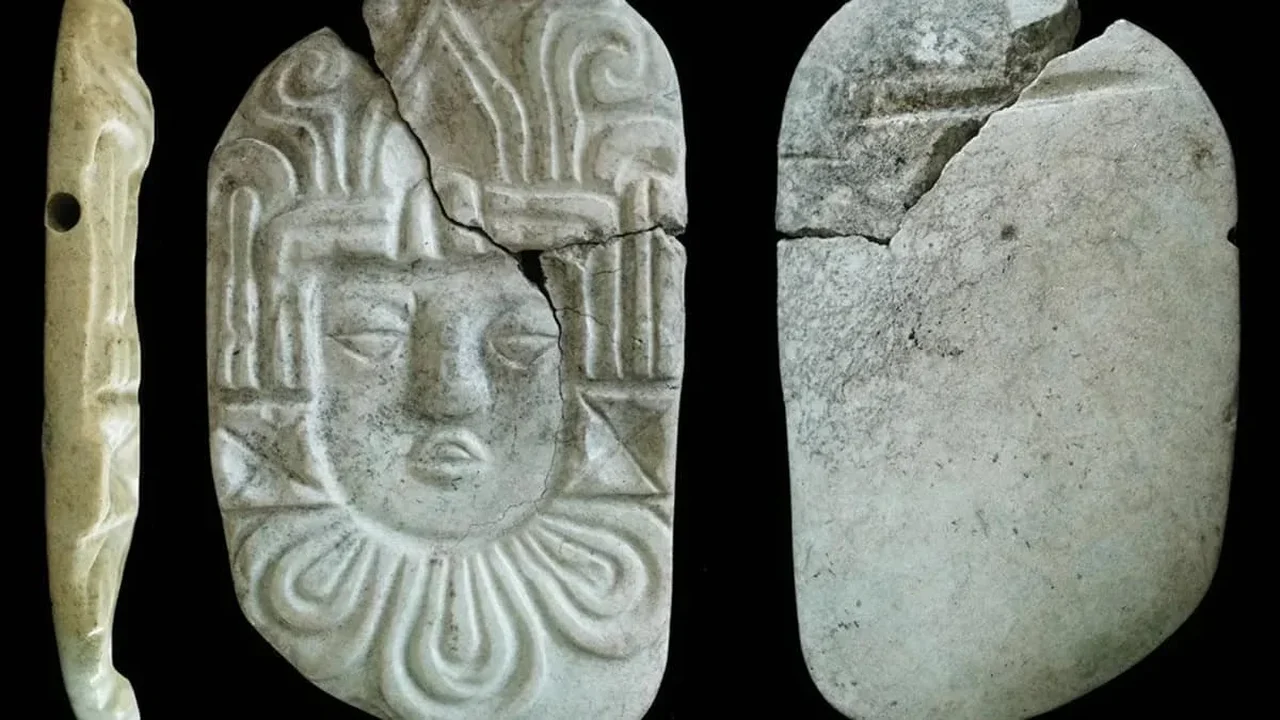
Archaeologists working in Xultun, Guatemala, have identified what may be the first known Classic Maya astronomical calculation directly linked to a named individual. The name recorded in the inscription is Sak Tahn Waax, translated as "White-chested Fox."
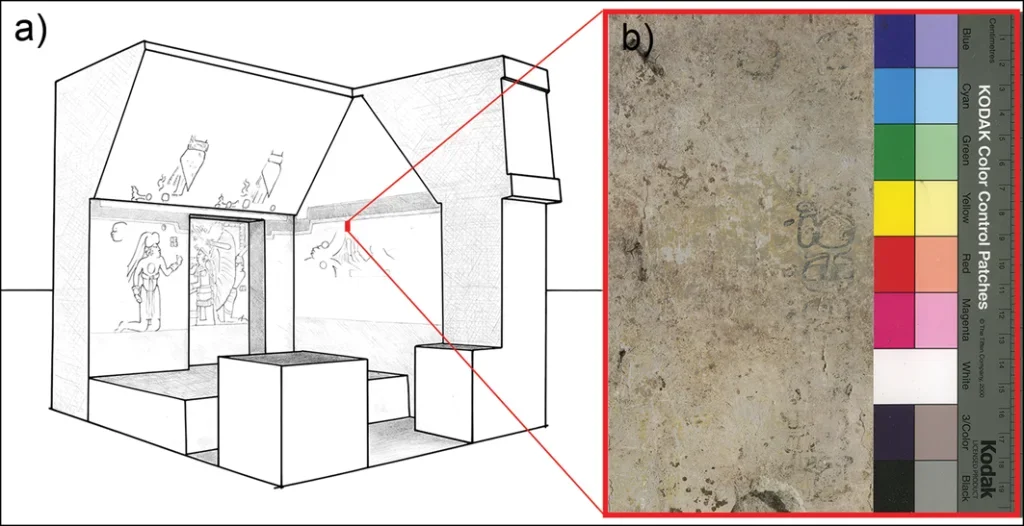
The discovery comes from a small wall text made up of 11 faded glyph blocks. Though modest in size, the inscription preserves a carefully ordered formula tied to Venus, Mars and several Maya calendar systems. Researchers say the closing phrase can be read as a direct attribution, suggesting the work was associated with Sak Tahn Waax in some way, whether as author, compiler or speaker of the calculation.
A Rare Signature in Maya Science
Most surviving Classic Maya inscriptions highlight rulers, deities or major ceremonial moments. Practical mathematical notes are much rarer, and the people behind them usually remain unnamed. This makes the Xultun text especially significant: it places a human identity beside a sophisticated astronomical computation.
The formula spans 2,920 days, a period that matches eight solar years and five Venus cycles. That interval later appeared in the Dresden Codex, but this version is arranged in a more inventive way. Instead of repeating a single pattern, the inscription breaks time into smaller units, including 20, 260, 360, 365, 584 and 780 days.
Those cycles connect to the Tzolk'in calendar, the Haab solar calendar, the Tun count, Venus's synodic cycle and an approximation of Mars's motion. The structure suggests a deliberate and original design rather than a simple copy of a standard table.
What the Inscription Reveals
Researchers believe the text may have been part of a larger scholarly workspace where Maya specialists tracked lunar and planetary patterns. The reconstructed starting point of the formula falls in November 781 CE, showing how advanced and precise these calculations were more than 1,200 years ago.
While the broader purpose of the formula remains open to interpretation, its originality is clear. It reflects a culture in which astronomy, mathematics and calendar science were deeply connected, and where knowledge could be organized with remarkable sophistication.
The survival of Sak Tahn Waax's name offers a rare glimpse of individual authorship in the ancient Maya world. It also highlights how much intellectual history can still be recovered from a few damaged glyphs. Such discoveries may reshape how future generations understand the people behind early scientific thought.