As lunar activity expands, navigation beyond Earth is becoming a major engineering priority. MIT Lincoln Laboratory is developing LightHOUSE, a concept designed to give spacecraft a GPS-like positioning network in the space between Earth and the Moon.
A new layer for cislunar navigation
Today's GPS works because a dense satellite constellation continuously broadcasts signals. In cislunar space, that kind of infrastructure does not yet exist. Spacecraft still rely heavily on Earth-based tracking systems, especially NASA's Deep Space Network, which is highly capable but limited by shared demand and the sheer scale of the Earth-Moon environment.
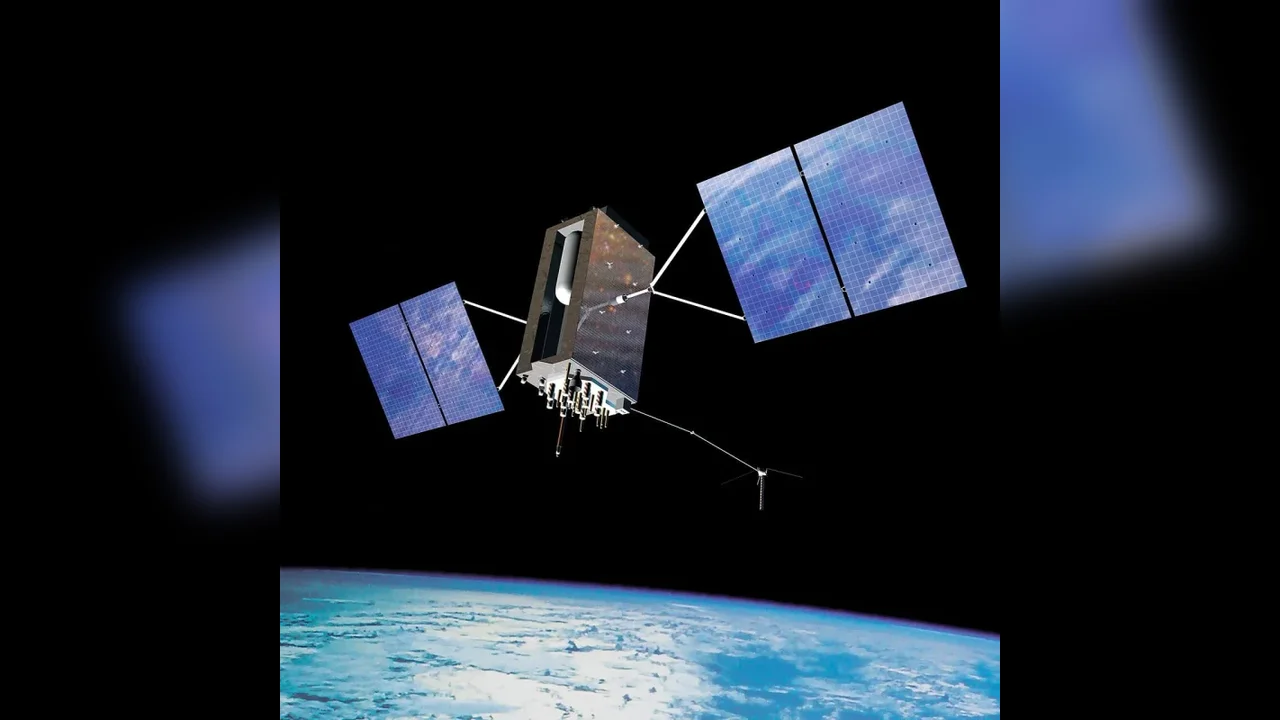
LightHOUSE, short for Light High-Orbit Utility Signal Emitter, would place a small set of satellites in very high orbits, potentially reaching about one million miles. These satellites would act as optical beacons, using laser links and star-based measurements to help spacecraft determine their position and speed more independently.
The concept is built around free-space optical communications. In practice, the beacon satellites would carry larger telescopes and stronger lasers, while spacecraft would need only compact receivers and lower-power transmitters. That balance could reduce the navigation burden on individual missions and improve efficiency for future lunar travel.
Designed for a growing Moon economy
MIT researchers say the system could support missions in lunar orbit, on the Moon's surface, and on the far side, where direct contact with Earth is blocked. It could also help reduce reliance on frequent course corrections, saving propellant and simplifying spacecraft design.
The project is still in the research stage. The team is testing the architecture through simulations and lab work, while building on earlier progress in optical communications, including NASA-supported demonstrations such as TBIRD and O2O. The broader idea is to turn navigation into shared space infrastructure rather than a mission-by-mission challenge.
If developed at scale, LightHOUSE could become a foundational layer for the next era of lunar exploration, making deep-space movement more precise, connected, and accessible.