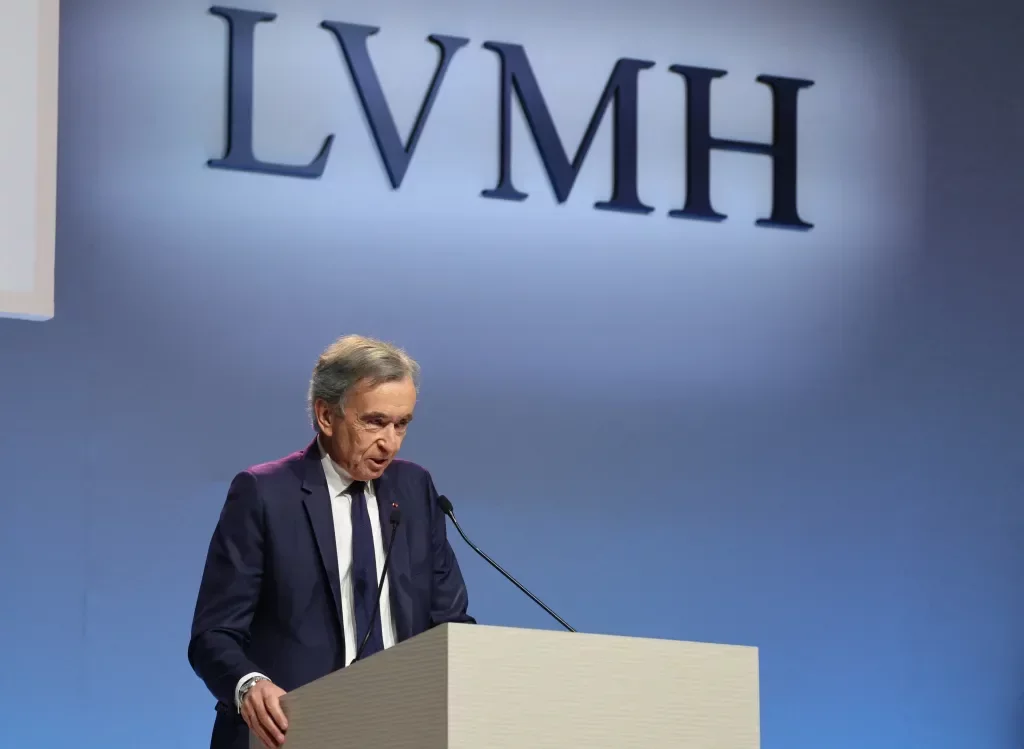
LVMH has experienced a challenging quarter, highlighting the delicate state of the luxury sector as it navigates ongoing geopolitical tensions and cautious consumer behavior. Following the announcement of its fourth-quarter results, shares of the French luxury giant plummeted by approximately 7 percent, reflecting investor concerns over disappointing profit margins and a conservative outlook from the company's leadership.
This decline has had a ripple effect across the luxury market, impacting other major players such as Kering, Moncler, and Hermès, whose shares fell between 2 to 5 percent. LVMH's performance serves as a crucial indicator for the global luxury and fashion industries, as well as the broader cultural economy.
In the latest quarter, LVMH reported a modest 1 percent increase in organic sales, reaching €22.7 billion. However, this growth fell short of expectations, especially in light of more optimistic projections from competitors like Richemont and Burberry. While LVMH did see sales growth in China, analysts described the recovery as underwhelming, dampening hopes for a significant turnaround in the region.
During a press conference, LVMH's chairman and CEO Bernard Arnault expressed a cautious outlook, citing geopolitical crises and economic uncertainty as factors complicating future forecasts. He emphasized the company's commitment to managing costs tightly in 2025, indicating a focus on preservation rather than expansion at this time.
The most significant pressure was observed in LVMH's fashion and leather goods division, which includes renowned brands like Louis Vuitton and Dior. Operating profit in this segment fell by 13 percent, with fashion and handbag sales declining by 3 percent in the fourth quarter. Analysts had anticipated this category to spearhead recovery, but a combination of tariffs, currency fluctuations, and decreasing demand has challenged profit margins across the group.
On a brighter note, the watches and jewelry division, including Tiffany & Co., reported an impressive 8 percent increase in organic sales. However, the wine and spirits segment raised concerns as operating income dropped significantly, primarily due to declining cognac sales in key markets like China and the United States.
LVMH's chief financial officer Cécile Cabanis acknowledged the necessity for further sales growth to restore margins, emphasizing a focus on reviving demand while maintaining cost discipline. As LVMH's shares fluctuate, the impact on auction houses increasingly leaning into the luxury market remains to be seen. Sotheby's reported luxury sales exceeding $2 billion in 2024, marking a significant increase from previous years. Christie's also saw positive results, with substantial earnings from luxury items, indicating a resilient luxury market despite LVMH's challenges.