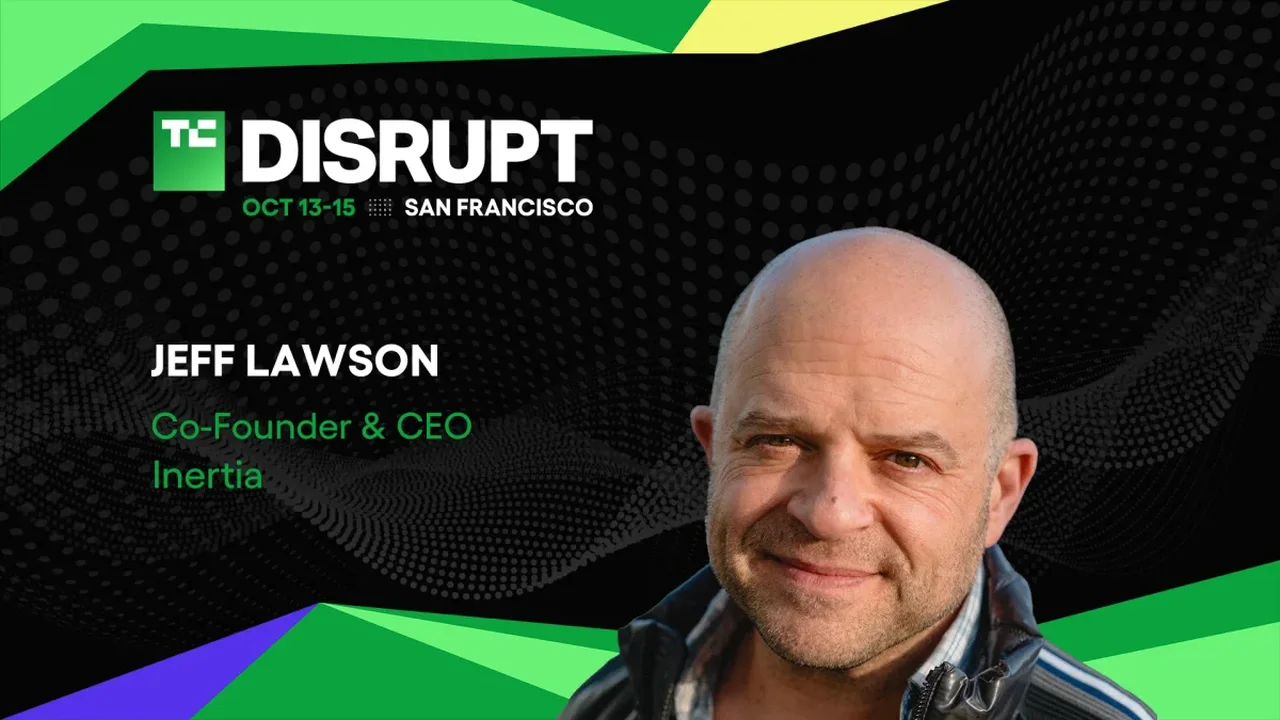
After helping build Twilio into a global cloud communications company, entrepreneur Jeff Lawson is taking on a new challenge: advancing fusion energy through Inertia, where he serves as co-founder and CEO.
Lawson will discuss the transition from software entrepreneurship to deep technology at TechCrunch Disrupt 2026, taking place October 13-15 in San Francisco. The conversation will focus on what changes when company-building depends not only on digital products, but also on laser systems, advanced manufacturing and complex engineering milestones.
From software platforms to energy infrastructure
Inertia is developing technologies designed to help move fusion power from scientific research toward grid-scale electricity. In February, the company announced a $450 million Series A financing round led by Bessemer Venture Partners, with participation from GV and other investors.
The capital is intended to support the creation of high-power laser systems and the large-scale production of fusion fuel targets. Both areas are central to Inertia's effort to establish the industrial capabilities needed for a future fusion energy system.
In July, the company opened a 50,000-square-foot headquarters in Livermore, California. The site includes facilities focused on fuel-target manufacturing processes and laser technology development. Inertia has also expanded its leadership team with professionals experienced in manufacturing, supply chains and large-scale technology operations.
A new test of entrepreneurial leadership
Lawson's background includes early product leadership at Amazon Web Services, the founding CTO role at StubHub and the growth of Twilio into a public company serving hundreds of thousands of customers. His move into fusion highlights the distinct demands of capital-intensive innovation, where scientific validation, production capacity and long-term execution must progress together.
The discussion is expected to explore how leaders recruit specialized talent, define credible technical milestones and balance ambitious missions with practical operating decisions. It also offers a wider view of how experience from software can inform, but not fully dictate, the path of a hardware and science-driven company.
As more founders enter climate and energy technology, Inertia's progress could illustrate how entrepreneurial discipline and industrial science may work together to shape the next generation of clean power infrastructure.