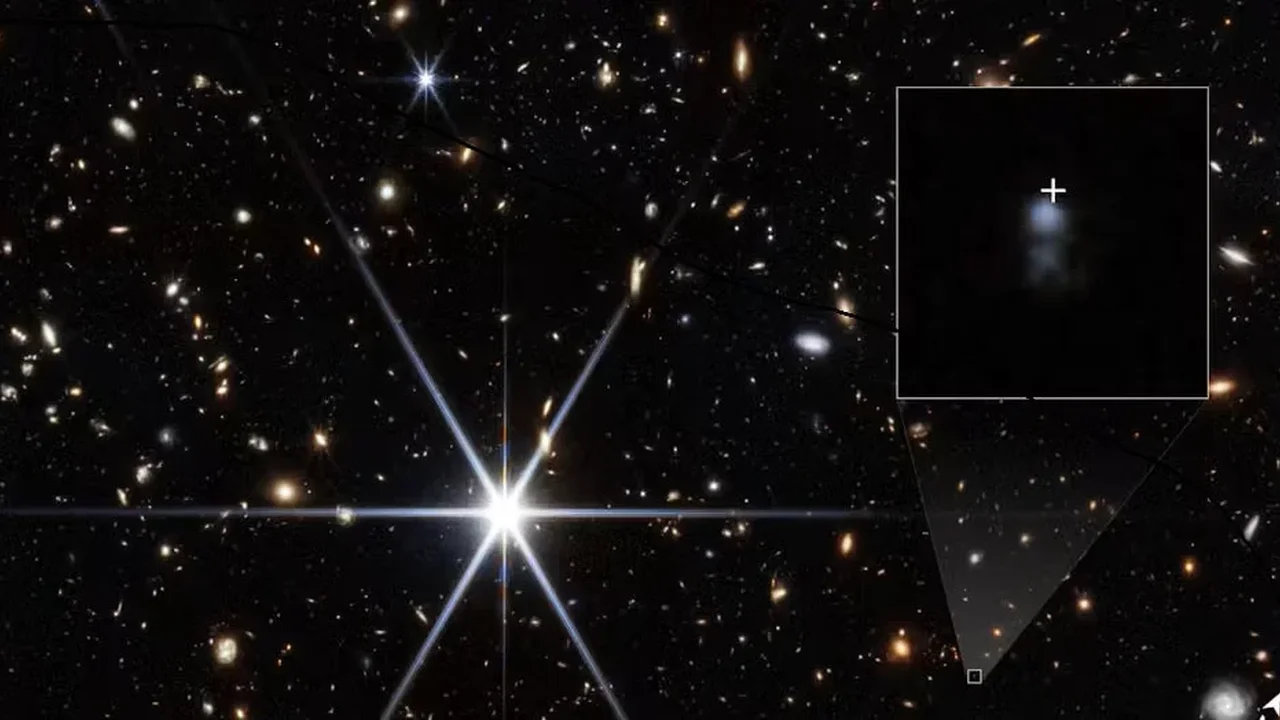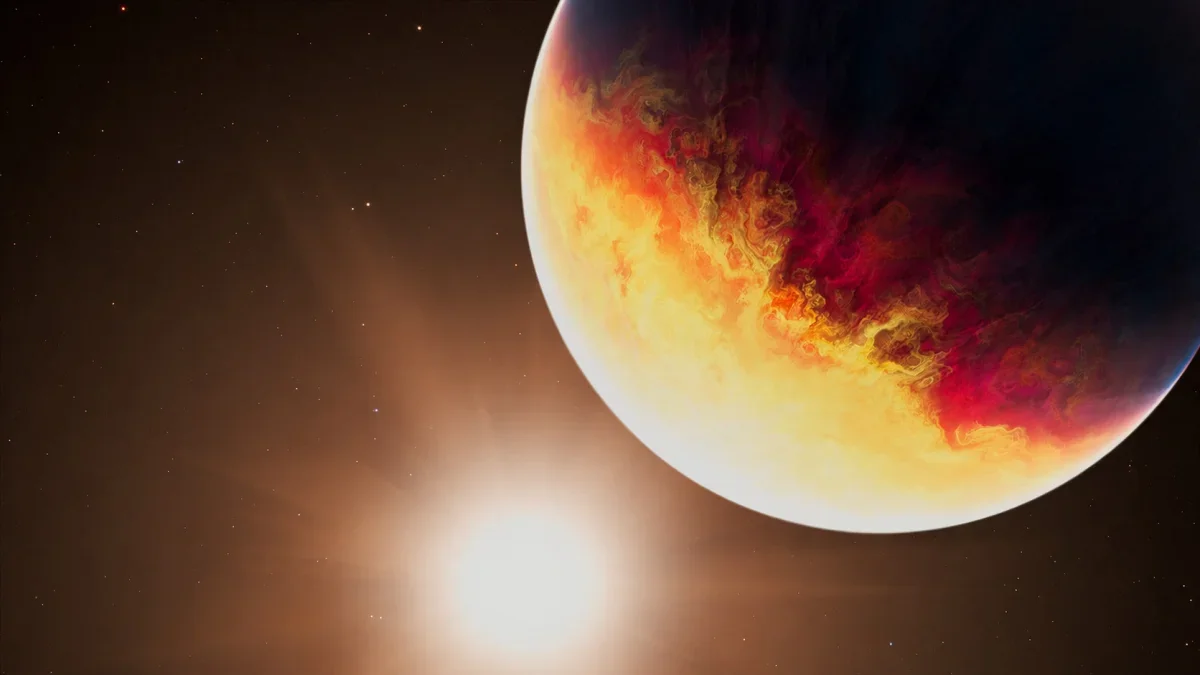
NASA's James Webb Space Telescope has captured a striking view of HD 80606 b, a giant exoplanet that undergoes one of the most dramatic temperature swings ever observed. Roughly four times the mass of Jupiter and located about 217 light-years from Earth, the planet follows a highly stretched 111-day orbit that takes it from distant calm to intense stellar heat.
A planet with an unusual orbit
Unlike typical hot Jupiters that stay locked close to their stars, HD 80606 b spends most of its journey far away before swinging in close at periastron, the point of nearest approach. That extreme path makes it a valuable natural laboratory for studying how a giant planet's atmosphere reacts when radiation suddenly intensifies.
Using Webb's Mid-Infrared Instrument, researchers observed the planet before, during, and after its closest pass. The timing was especially useful because the planet also slipped behind its star from Webb's perspective, creating a secondary eclipse that allowed scientists to isolate the planet's own infrared glow.
Reading heat and chemistry
By applying spectroscopy, the team separated light into wavelengths to measure both temperature and atmospheric composition. The clearest result was a rapid heating event: Webb recorded the planet's atmosphere rising by about 611°C in a short span of time. That increase was even stronger than earlier expectations based on Spitzer observations.
Researchers are now examining whether molecules such as methane and carbon dioxide leave detectable signatures as the atmosphere warms and cools. Those chemical clues could help explain how clouds form, shift, or disappear during such a dramatic orbital pass.
The findings were presented at the 248th meeting of the American Astronomical Society in Pasadena and are still being analyzed. Even so, the dataset already shows how Webb is extending earlier work with far greater detail, turning one exoplanet into a dynamic case study of planetary weather in motion.
As Webb continues to refine exoplanet science, discoveries like this may reshape how future missions study distant worlds and their evolving atmospheres.