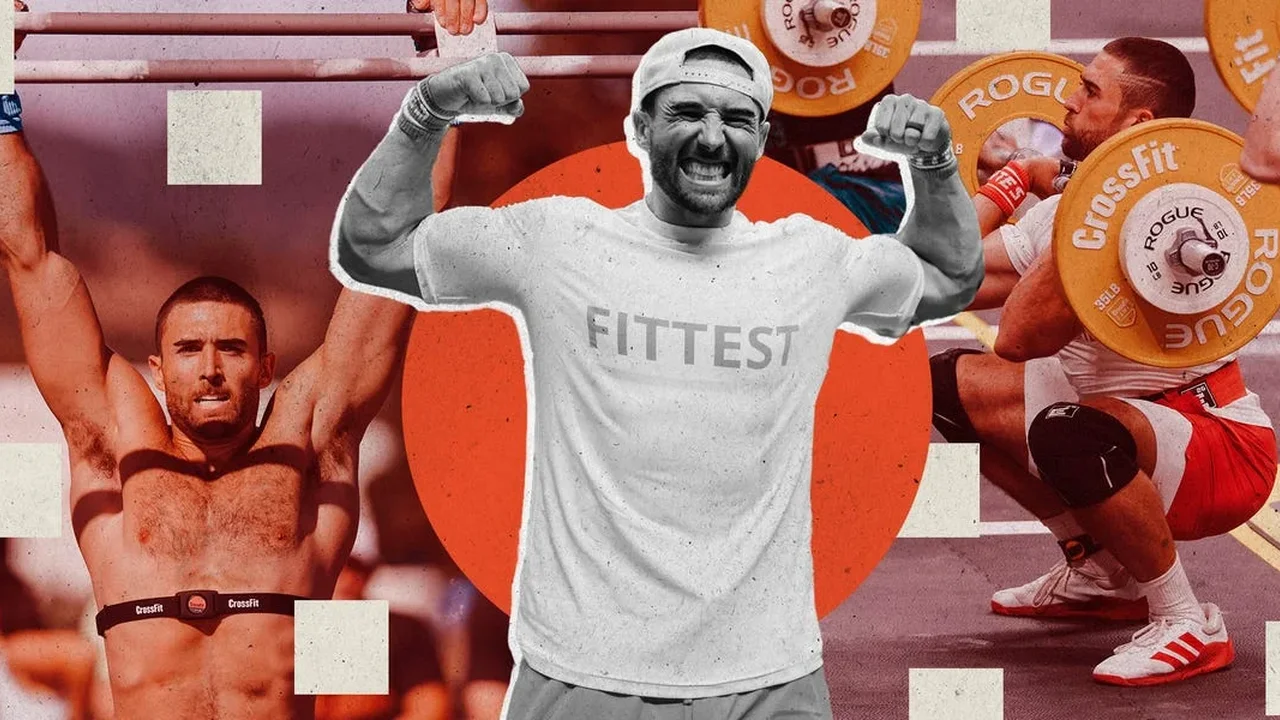
At just 24, James Sprague has already reached a rare milestone in elite fitness: two CrossFit Games titles. His latest victory came at the 2026 Games in San Jose, California, where he finished with 1,318 points and edged Dallin Pepper by 27 points after four days of testing across strength, gymnastics, endurance, speed, and power.
Sprague's path to the top began at age 12, when he first discovered CrossFit. His first championship in 2024 marked a breakthrough, and his second title confirmed that his rise was no one-season story. This time, the win carried a different energy: a full competition environment, a broader field, and a format that demanded consistency across 20 scored events, the most expansive individual test in Games history.
Rather than relying on a single dominant performance, Sprague built his result through steady execution. He stayed near the top of the leaderboard throughout the weekend and protected his lead in the final event with a 10th-place finish. For him, the difference was not only physical preparation, but also mindset, confidence, and the ability to map out each workout before stepping onto the floor.
In his view, CrossFit's future depends on balance: preserving its demanding methodology while becoming more accessible to a wider audience. He sees the sport as part of a larger fitness movement shaped by hybrid racing, run clubs, and growing interest in measurable, scalable training. At the same time, he believes CrossFit's greatest strength remains its community, coaching culture, and ability to adapt workouts for different ages and abilities.
Sprague also pointed to the sport's evolution over 20 years, noting that today's athletes train with more strategy, detail, and precision than earlier generations. For him, the next chapter is about keeping the standard high while making the pathway clearer for athletes and everyday members alike. The future of CrossFit, he suggests, may be defined by both elite performance and broader participation.
As the sport continues to evolve, athletes like Sprague could help shape a more inclusive and performance-driven fitness landscape for the years ahead.