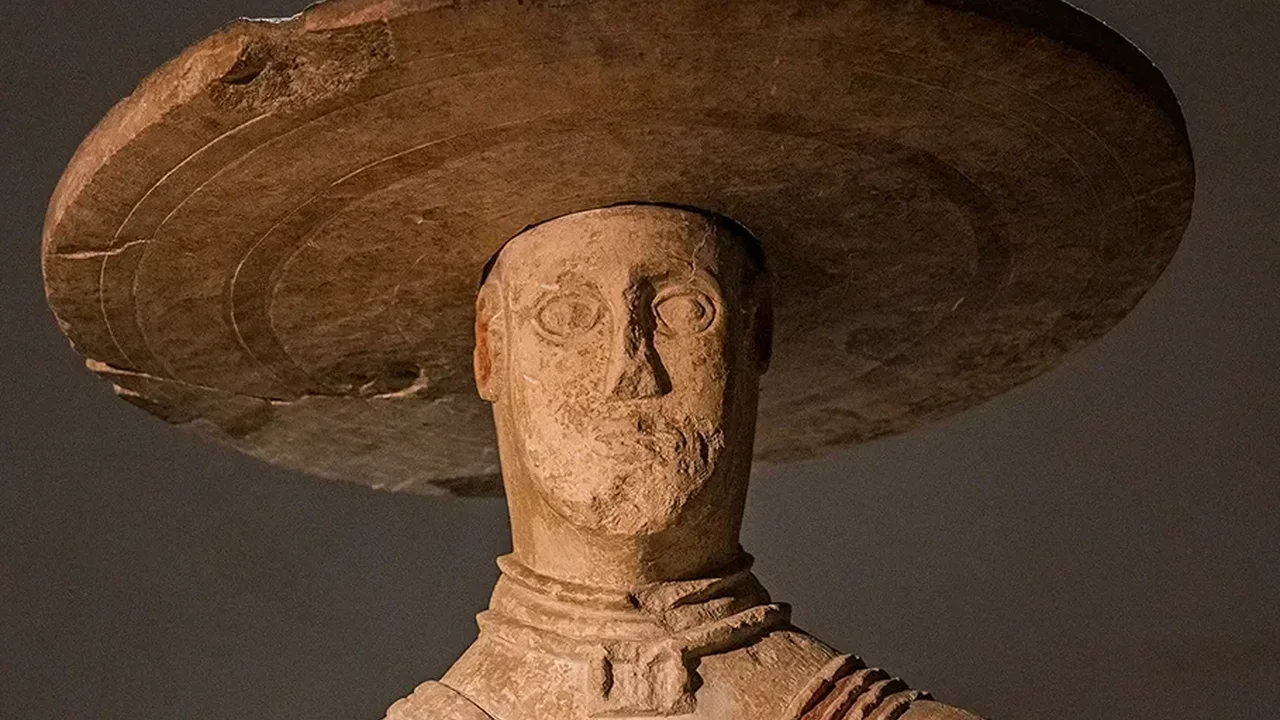
Italy's celebrated Warrior of Capestrano, the towering limestone statue linked to the 6th century BCE, is set for new scientific testing that could clarify long-running questions about its origin. The figure, housed in the National Archaeology Museum in Chieti, Abruzzo, has been a landmark of regional identity for decades.
Discovered in 1934 in an Abruzzo vineyard, the statue quickly became one of the most recognizable symbols of pre-Roman Italy. Archaeologists have traditionally associated it with the Piceni civilization, and its scale, carved armor, and distinctive hat have made it a standout piece in Italian heritage.
Now, filmmaker and science writer Alessio Consorte has pushed for a closer examination using non-invasive X-ray methods and an independent scientific team. He has argued that the statue may deserve renewed scrutiny, pointing to archival material and questions raised in his documentary work.
After court decisions in his favor, the Ministry of Culture approved the tests, though the process has included debate over how the findings may be shared. The upcoming analysis could help settle whether the statue is an authentic ancient masterpiece or a later reconstruction tied to a different historical context.
Whatever the results, the Warrior of Capestrano remains a powerful example of how archaeology, technology, and cultural memory can intersect to reshape historical understanding. Future discoveries may deepen the role of science in preserving and reinterpreting heritage.