Astronomers have long believed that a supermassive black hole is the anchor of the Milky Way galaxy. However, a recent theoretical exploration suggests an intriguing alternative: a dense cluster of dark matter that could mimic the characteristics of a black hole.
This innovative hypothesis, detailed in the Monthly Notices of the Royal Astronomical Society, aims to explain the rapid movements of stars near the galaxy's center alongside the slower rotation of material further out, all through a single structure composed of elusive dark matter particles.
Previous observations of stars, particularly a notable star named S2, orbiting around an unseen mass indicate an object with a mass around four million times that of the Sun. Traditionally, this has been interpreted as the black hole known as Sagittarius A*. The new research raises an intriguing question: could dark matter alone generate the same gravitational influence?
Dark Matter's Potential
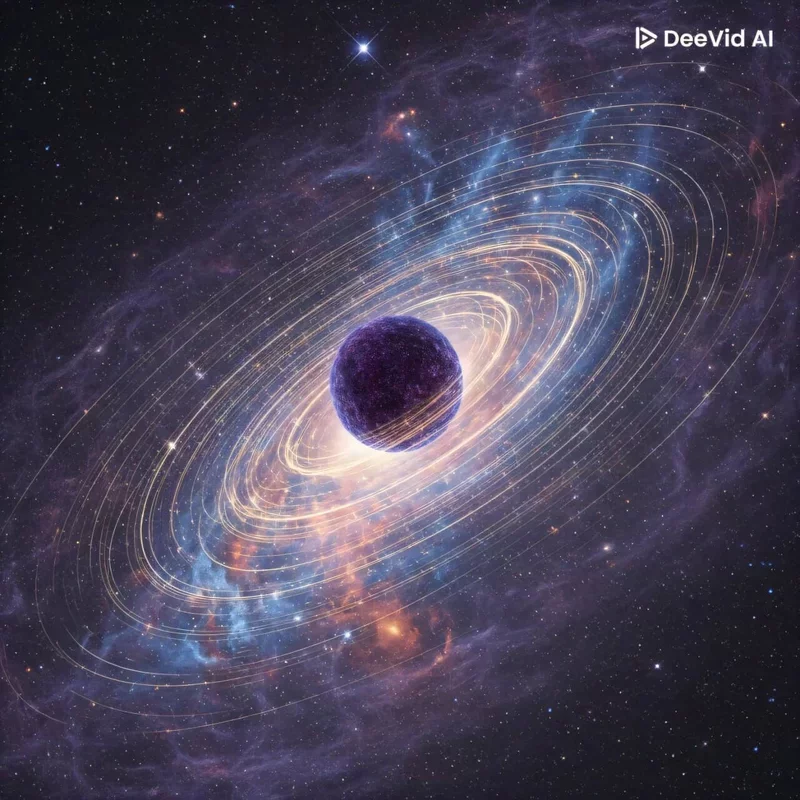
The researchers proposed modeling the dark matter concentration as a collection of lightweight particles known as fermions. Under the influence of gravity, these particles could coalesce into a compact core, surrounded by a vast halo that extends throughout the galaxy.
This configuration would behave similarly to a black hole from a distance. The dense core could guide nearby stars along the tight, rapid orbits observed, while the extensive halo would influence the overall rotation of the Milky Way--two phenomena that are typically viewed separately.
"This is the first instance where a dark matter model has effectively unified these different scales and various orbital paths," stated Carlos Argüelles, a co-author of the study from the Institute of Astrophysics La Plata.
To validate their theory, the team assessed how well their model could replicate the orbits of S-stars and a set of dusty objects known as G-sources near the galactic center. Their statistical analysis revealed that the dark matter scenario closely matched observed motions, with predicted orbital parameters differing by less than one percent, well within the current observational uncertainties.
The model also aligns with data from the European Space Agency's Gaia mission, which tracks stellar movements across the Milky Way. Gaia's findings indicate a subtle deceleration in the galaxy's outer rotation, a feature that the dark matter halo could replicate when combined with ordinary matter in the galaxy's disk and bulge.
Shadow of a Black Hole
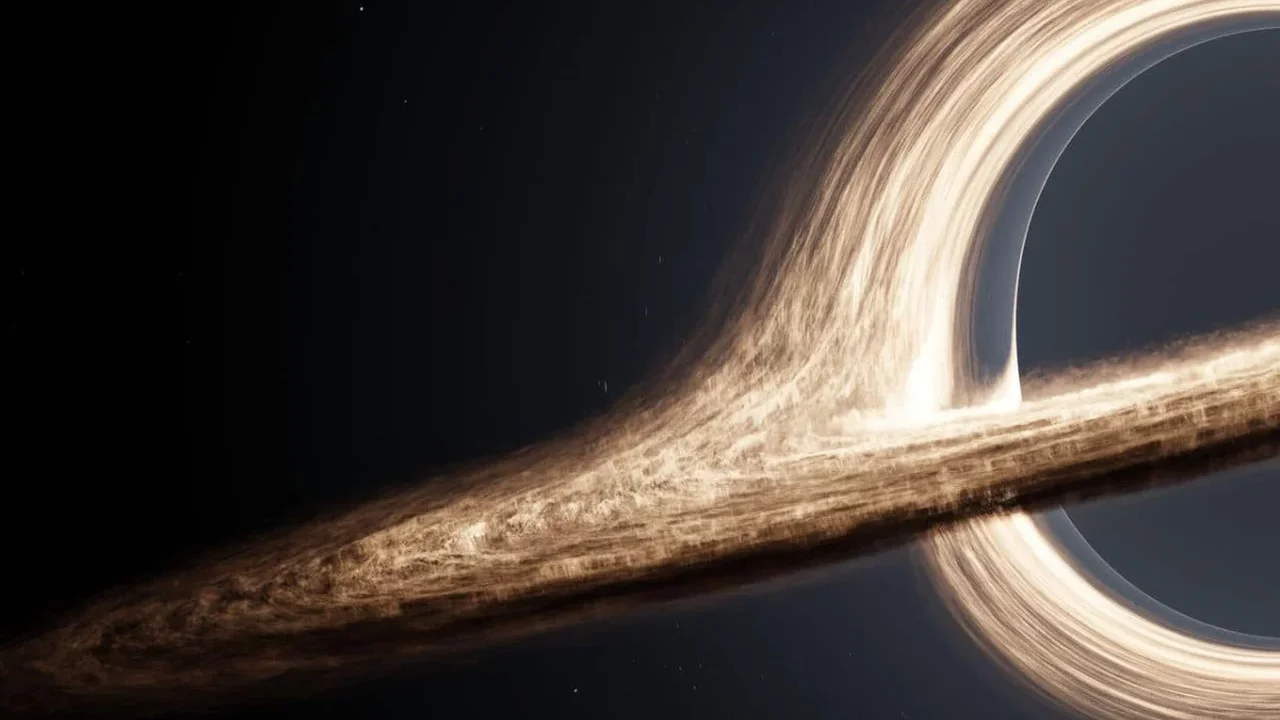
Any alternative to a black hole must also account for a significant astronomical observation: the glowing ring surrounding Sagittarius A*, captured by the Event Horizon Telescope in 2022. This ring is widely interpreted as emissions from hot plasma encircling a black hole's event horizon.
However, prior theoretical work indicated that a dense dark matter core illuminated by an accretion disk could produce a similar shadow. The current study builds upon this concept.
"This is a crucial development," remarked Valentina Crespi, the lead author from the Institute of Astrophysics La Plata. "Our model not only clarifies star orbits and the galaxy's rotation but also aligns with the renowned 'black hole shadow' image. The dense dark matter core can replicate the shadow effect by bending light significantly, resulting in a central darkness surrounded by a bright ring."
Nevertheless, the researchers caution that existing observations do not definitively favor one model over the other. Stellar motion measurements are consistent with both a black hole and a compact dark matter core.
Future observations may provide clarity. Instruments such as the GRAVITY interferometer in Chile could detect subtle relativistic effects in stellar orbits, while upcoming Event Horizon Telescope studies may investigate photon-ring structures--features expected around genuine black holes but absent in the dark matter scenario.
Evidence for supermassive black holes exists at the core of nearly every large galaxy studied thus far, and their development appears interconnected with galaxy evolution itself.
Given this deep connection, substituting the Milky Way's black hole with dark matter would significantly impact astrophysics, potentially altering how scientists perceive galaxy formation, matter under extreme gravity, and the nature of dark matter.
Ultimately, extraordinary claims necessitate extraordinary proof. This new research does not definitively rule out the existence of a black hole but highlights the uncertainties that remain in a region scrutinized for decades with advanced telescopes.