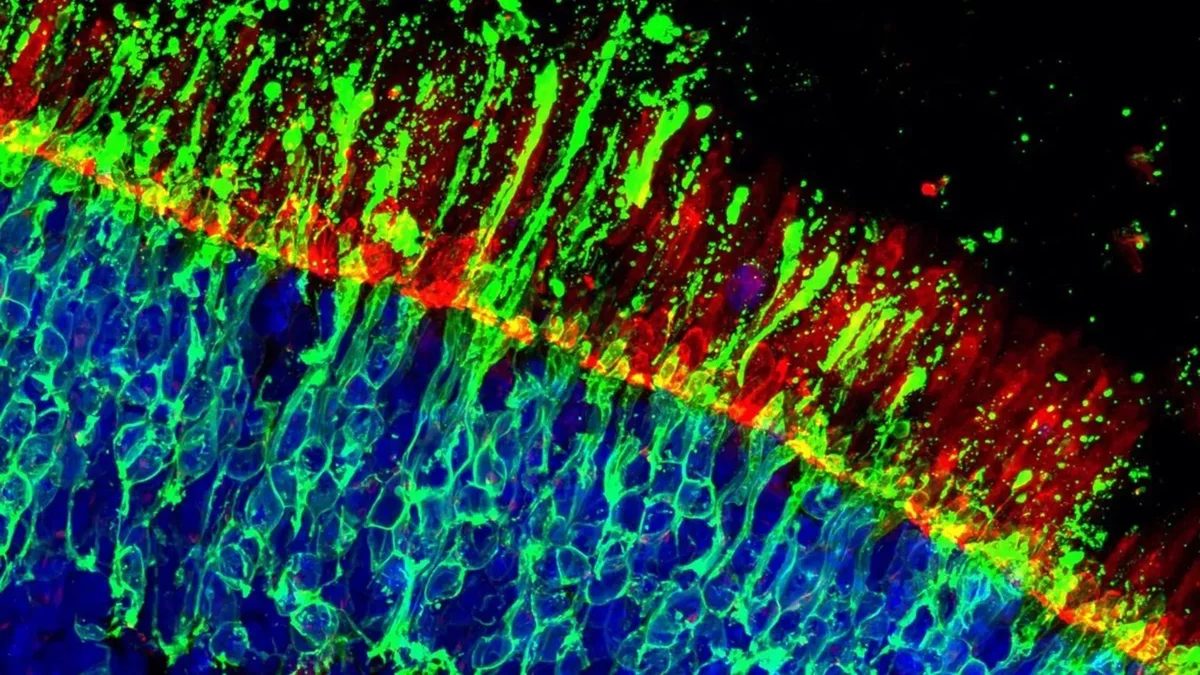
Cone photoreceptors, primarily located in the macula, play a crucial role in enabling us to read, recognize faces, and perceive color. The loss of these cells, which occurs in various inherited retinal disorders and macular degeneration, leads to a significant decline in central vision. Despite extensive research efforts over the years, effective treatments to halt this degeneration have remained elusive. A recent study, spearheaded by researchers including Stefan Spirig and Alvaro Herrero Navarro, aims to bridge this gap using an experimental system based on human biology.
Extensive Screening of Compounds in Human Retinal Models
In their quest for viable treatments, the team evaluated over 2,700 compounds within 20,000 human retinal organoids. This large-scale screening yielded both encouraging candidates and critical safety insights:
- Some compound classes were found to harm cone cells, indicating potential risks.
- Several molecules demonstrated the ability to safeguard cone photoreceptors from degeneration.
- Inhibiting casein kinase 1 emerged as a vital protective approach.
By selectively marking cone photoreceptors, scientists could monitor their responses over time under controlled stress conditions that mimic disease environments. This methodology allowed for a thorough evaluation of compounds with established molecular targets.
Confirmed Protective Mechanisms
The study identified consistent protective patterns, with two kinase inhibitors showing remarkable efficacy in prolonging the survival of cone cells. These positive effects were observed under various stress conditions and were corroborated in a mouse model of retinal degeneration, suggesting broader applicability of the findings.
Moreover, the research team has made available a comprehensive dataset detailing all tested compounds, their molecular targets, and their effects on the survival of cone cells in human tissue. This valuable resource is expected to facilitate the development of therapies aimed at preserving central vision while enabling researchers to systematically evaluate potential retinal toxicity.
A Step Forward in Preventing Vision Loss
By integrating retinal biology, organoid technology, and extensive compound screening, this research lays a robust groundwork for future therapeutic strategies. It moves us closer to achieving a long-sought goal in ophthalmology: safeguarding the essential cells that enable vision.