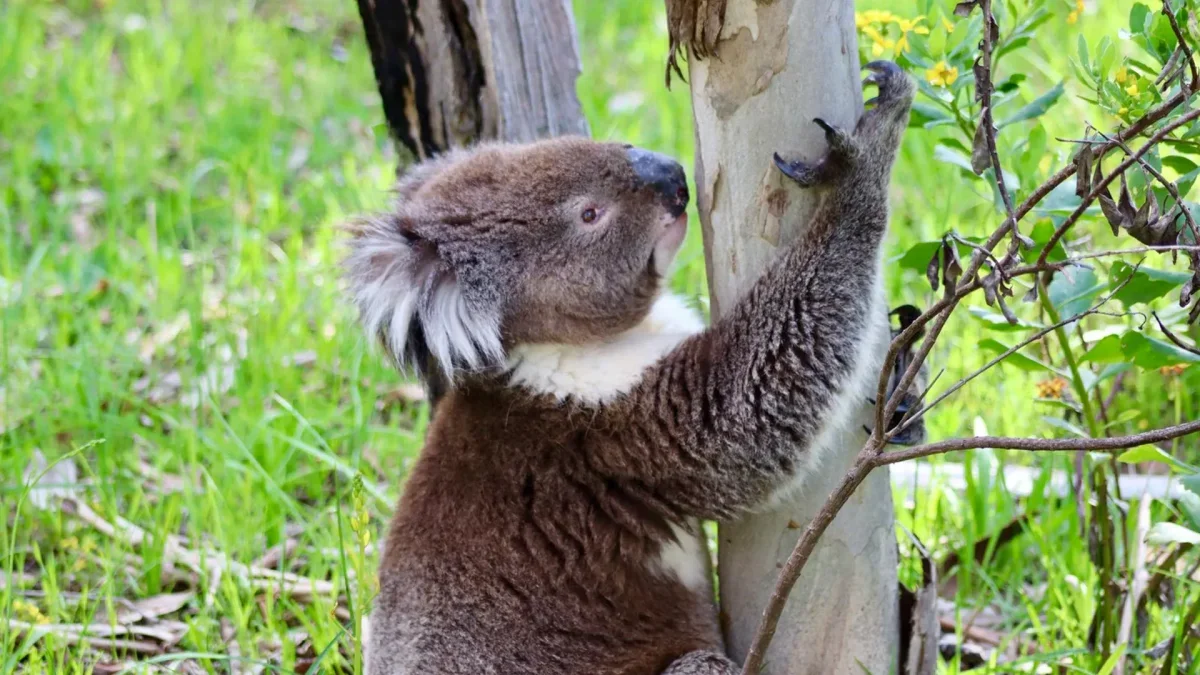
Recent research published in Ecology and Evolution sheds light on the burgeoning koala population in South Australia's Mount Lofty Ranges, led by Dr. Frédérik Saltré, a Research Scientist at the Australian Museum and Senior Lecturer at the University of Technology Sydney (UTS). Collaborating institutions include Flinders University and the University of Wollongong.
Understanding the Koala Population Surge
The study reveals that the koala population in this region now represents approximately 10% of Australia's total koala numbers. While this growth appears promising, researchers caution that the population density has reached critical levels that could jeopardize its long-term viability.
Projections indicate a potential increase of 17% to 25% in the koala population over the next 25 years if no intervention occurs. This growth poses significant risks to food supplies, native vegetation, and the overall ecosystem.
Dr. Saltré highlights the paradox: "While koalas are declining in many parts of eastern Australia, the Mount Lofty Ranges is witnessing an explosion in their numbers. This situation, however, raises concerns about sustainability."
He warns that excessive koala populations may lead to severe overbrowsing, threatening the very forests that provide their sustenance, potentially resulting in widespread starvation.
Utilizing Advanced Modeling Techniques
To grasp the implications of this population boom, researchers employed sophisticated spatial modeling alongside thousands of citizen science observations. Their findings indicate that many areas within the Mount Lofty Ranges already host koala densities that surpass sustainable levels.
This situation presents a formidable challenge for conservation managers. Traditional methods, such as culling and relocation, often provoke public backlash and may not be suitable for an iconic species like the koala.
Dr. Katharina Peters, a co-author from the University of Wollongong, emphasizes the ethical complexities: "We are confronted with a conservation dilemma, as managing a species threatened by its own abundance requires a delicate balance between animal welfare and ecosystem health."
Exploring Humane Population Management Solutions
The research team explored various management strategies through computer simulations. Their results indicate that a targeted fertility control program could effectively stabilize koala populations.
Specifically, the most promising approach involves sterilizing about 22% of adult female koalas annually in areas experiencing the highest population densities. This program is projected to cost around $34 million over 25 years.
Dr. Saltré notes the innovative nature of this proactive strategy: "Rather than implementing a conservation plan without certainty of its success, we utilize simulations to identify the most effective and cost-efficient strategies."
Looking Ahead: The Future of Koala Conservation
The researchers advocate for proactive, evidence-based planning as climate change continues to reshape habitats and species distributions. They argue that scientific forecasting tools will be essential for balancing ecological needs with public concerns, particularly for well-loved species like the koala.
This study builds on previous Australian Museum research that sequenced approximately 20,000 koala genes, enhancing medical research opportunities and deepening our understanding of koala evolution and conservation.