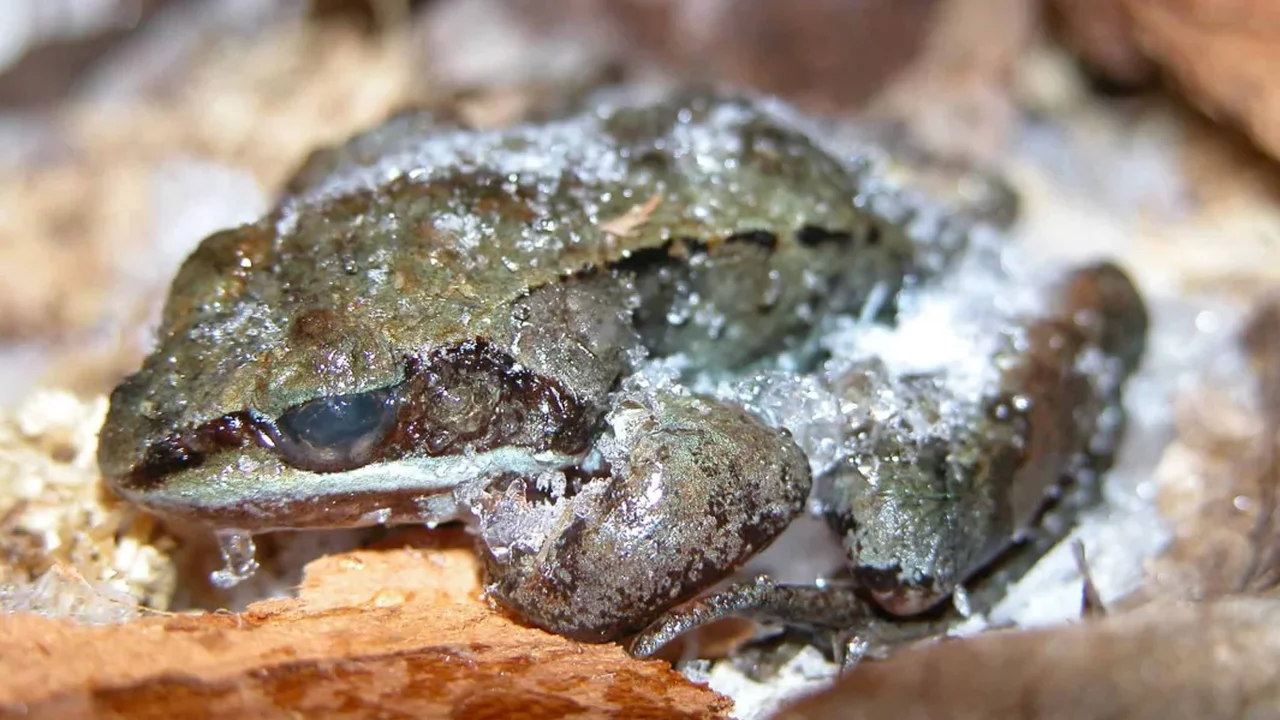
Each winter, the wood frog performs one of nature's most remarkable survival feats. As temperatures fall, much of the water in its body freezes, its heartbeat and breathing pause, and it remains still beneath forest leaf litter. When spring arrives, it thaws and resumes normal activity.
Nature's precision freezing system
Wood frogs, scientifically known as Lithobates sylvaticus, can survive with around 65 to 70 percent of their body water frozen. Their resilience depends on a highly coordinated biological response that prevents destructive ice crystals from forming inside cells.
Before freezing, the frogs release large amounts of glucose from the liver while allowing urea to accumulate in the bloodstream. These natural cryoprotectants help stabilize cells, manage water movement and reduce damage during freezing and thawing cycles.
Other freeze-tolerant amphibians use related strategies. Cope's gray tree frog, for example, relies heavily on glycerol, another compound with cell-protective properties. Together, these species offer researchers a living blueprint for understanding how tissues might endure extreme cold without losing function.
Lessons for organ storage
The insights are especially relevant to organ preservation. Donated organs currently have limited storage windows, which shapes how quickly they must be transported, matched and transplanted.
Research teams at institutions including Massachusetts General Hospital are studying how frogs control ice formation, regulate metabolism and deploy protective molecules. The goal is not to replicate the amphibian process directly in humans, but to develop safer methods for preserving organs outside the body.
Experimental approaches include controlled cooling, ice formation outside cells and modified sugar-based compounds that protect tissue without disrupting normal cellular activity. Studies with animal organs have already explored longer preservation periods than conventional cold storage allows.
A blueprint from winter biology
The wood frog's survival strategy shows that successful cryopreservation is not based on a single molecule, but on a carefully timed sequence of biological changes. By learning from this natural system, medicine may eventually gain more flexibility in transporting, storing and matching donor organs.
As research advances, winter-adapted wildlife could help shape technologies that make future transplant care more precise, accessible and globally connected.