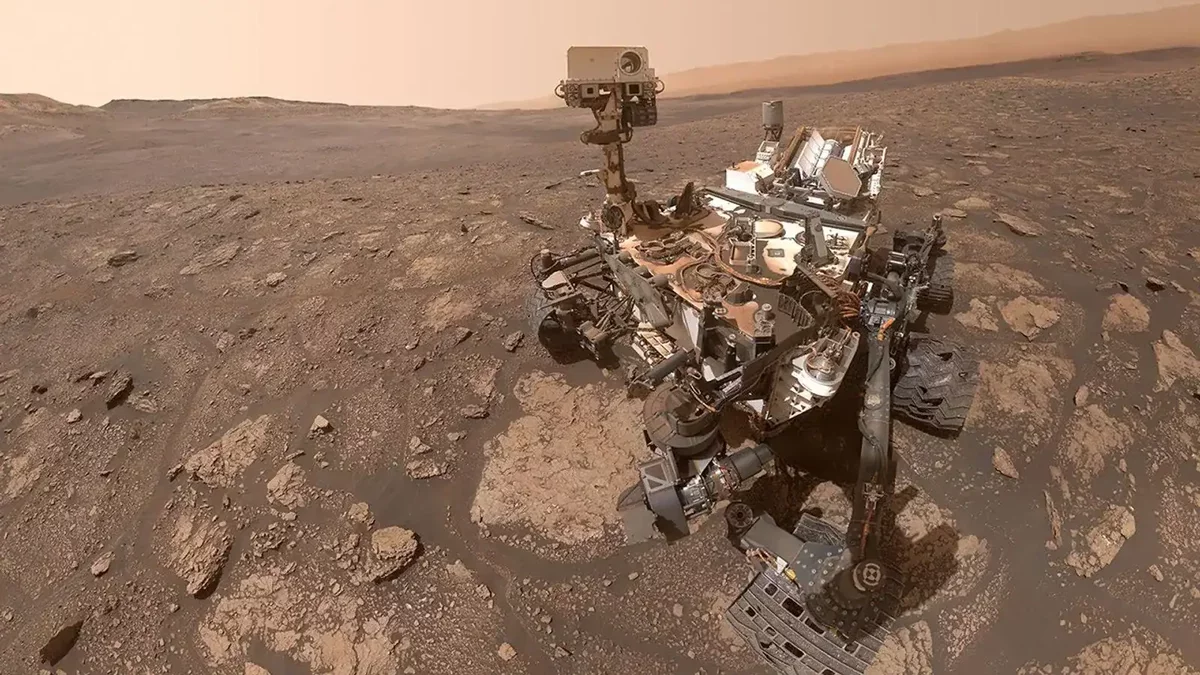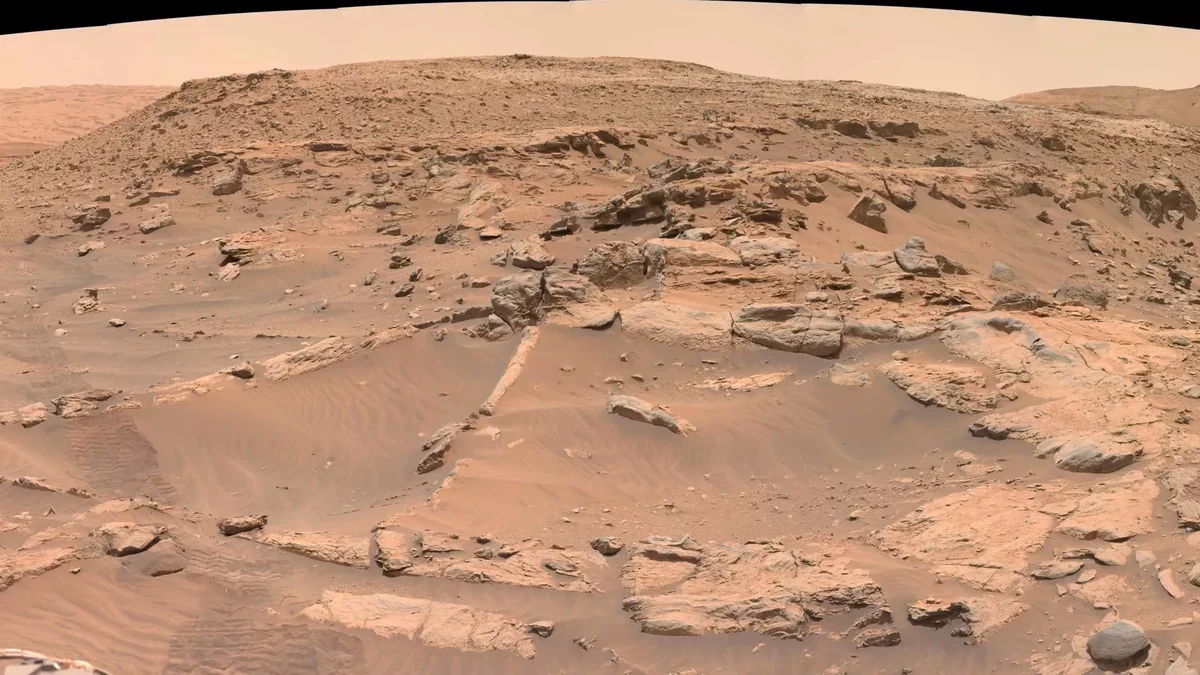
Recent research published in the Journal of Geophysical Research - Planets has unveiled fascinating insights about ancient sand dunes situated in Gale Crater, an area previously explored by NASA's Curiosity rover. This study indicates that these dunes solidified into rock billions of years ago, influenced by groundwater flowing beneath the Martian surface.
Examining Curiosity Rover Data and Earthly Desert Analogues
Led by Dimitra Atri, Principal Investigator at NYUAD's Space Exploration Laboratory, the research team, including assistant Vignesh Krishnamoorthy, conducted a comparative analysis between the Curiosity rover's observations and similar rock formations in the deserts of the United Arab Emirates, formed under analogous conditions.
Their findings suggest that water from a nearby Martian mountain gradually permeated the dunes through minute fractures. As this moisture ascended through the sand, it deposited minerals like gypsum, which are prevalent in Earth's desert landscapes. These minerals are crucial for scientists because they can trap and preserve organic material, making these deposits promising sites for future missions aimed at uncovering evidence of ancient life.
Subsurface Water's Role in Potential Microbial Life
Atri noted, "Our findings demonstrate that Mars didn't simply transition from a wet to a dry state. Even after its lakes and rivers vanished, small quantities of water persisted underground, creating sheltered environments that might have supported microscopic life."
Insights into Mars' Evolution and Habitability
This discovery enhances our understanding of Mars' transformation over billions of years and reinforces the notion that subsurface environments could be among the most promising locations to search for signs of past life on the planet.
The research was supported by the NYUAD Research Institute and conducted at NYUAD's Center for Astrophysics and Space Science, which focuses on advancing scientific knowledge of the universe while bolstering the United Arab Emirates' growing influence in global space exploration. The project also involved collaboration with James Weston from NYUAD's Core Technology Platform and Panče Naumov's research group.