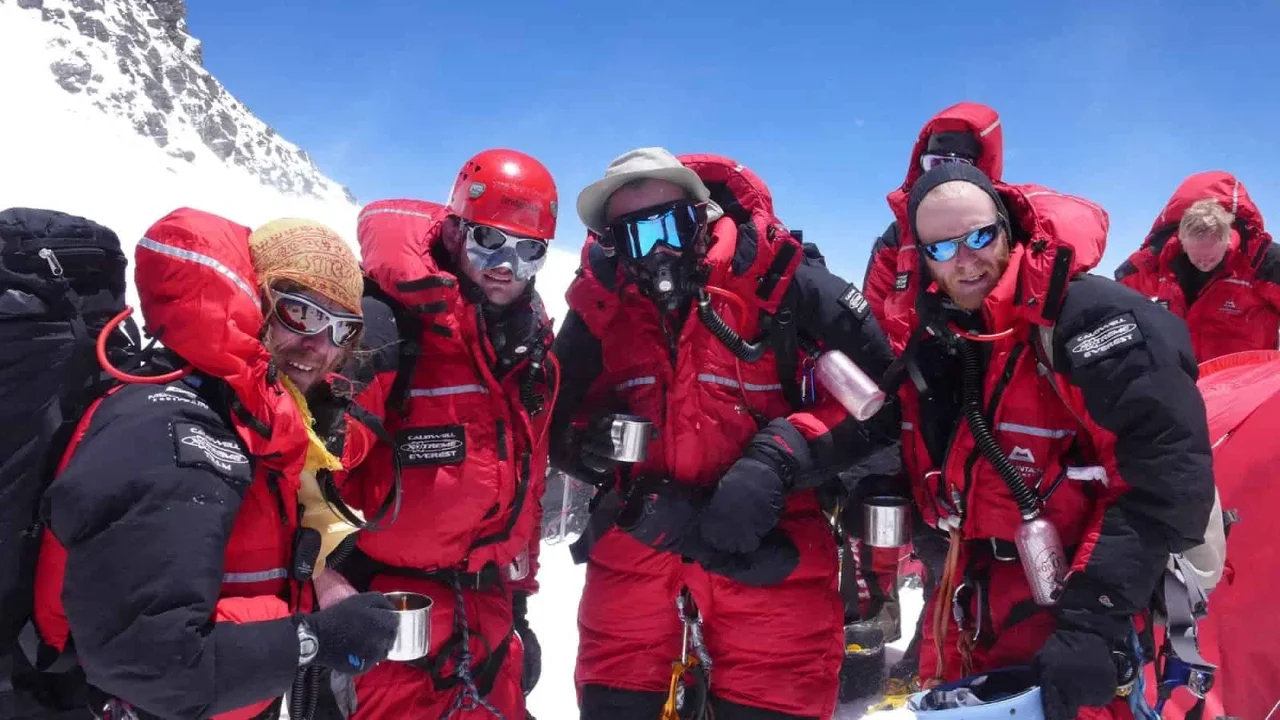
On the slopes of Mount Everest, a research team turned one of the planet's harshest environments into a living laboratory. At altitudes above 8,000 meters, scientists collected arterial blood from climbers to understand how the body responds when oxygen becomes scarce.
Everest as a natural science lab
The Caudwell Xtreme Everest expedition was designed to answer a key medical question: why do some people tolerate severe oxygen shortage better than others? Led by Hugh Montgomery of University College London, the project followed healthy volunteers as they climbed from Kathmandu to Everest Base Camp and beyond, allowing researchers to observe gradual physiological change in real time.
In total, 198 trekkers and 24 investigators joined the expedition. As the team moved higher, the mountain became a test of endurance, circulation and metabolism. At the South Col, researchers even set up a field laboratory with exercise bikes and monitoring equipment to measure how the body performed under extreme low-pressure conditions.
What the measurements showed
The findings highlighted a two-stage response. Up to about 7,100 meters, the body can partly compensate by increasing hemoglobin and maintaining oxygen content in the blood. Beyond that point, however, the strategy weakens. By 8,400 meters, arterial oxygen content had fallen sharply, showing that survival at extreme altitude depends less on delivering more oxygen and more on using it efficiently.
That efficiency shift includes reducing energy-intensive processes, changing fuel use, and conserving resources. The trade-off is visible in the body itself: muscle mass can decline as the system prioritizes what is essential for function.
Later work with Sherpa participants added another layer to the picture. Their physiology suggested not just adaptation, but refinement--more effective oxygen use, stronger muscle energy maintenance, and greater resilience at altitude. The research points to a broader lesson: human biology can re-engineer itself when conditions demand it.
Beyond mountaineering, these insights may inform future approaches in intensive care and human performance research. They also show how extreme environments can unlock knowledge that is relevant far beyond the mountain. In the years ahead, this kind of science may help shape new strategies for health, resilience and adaptation in a changing world.