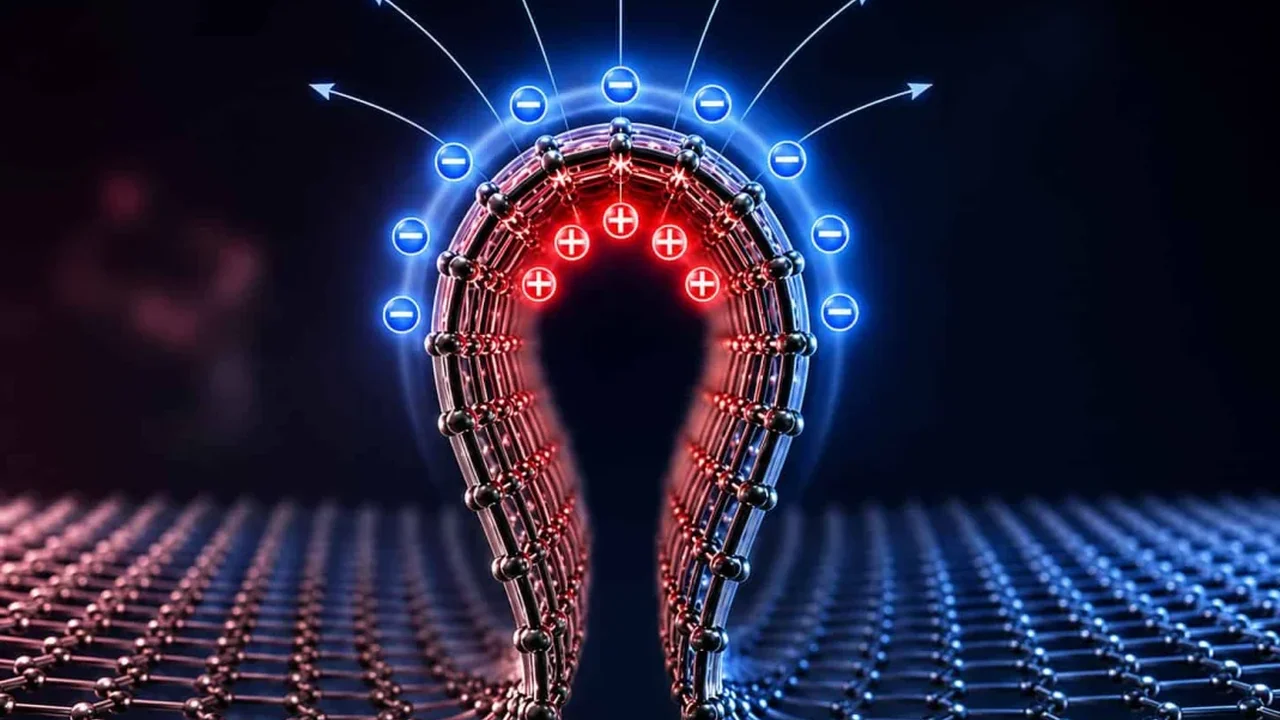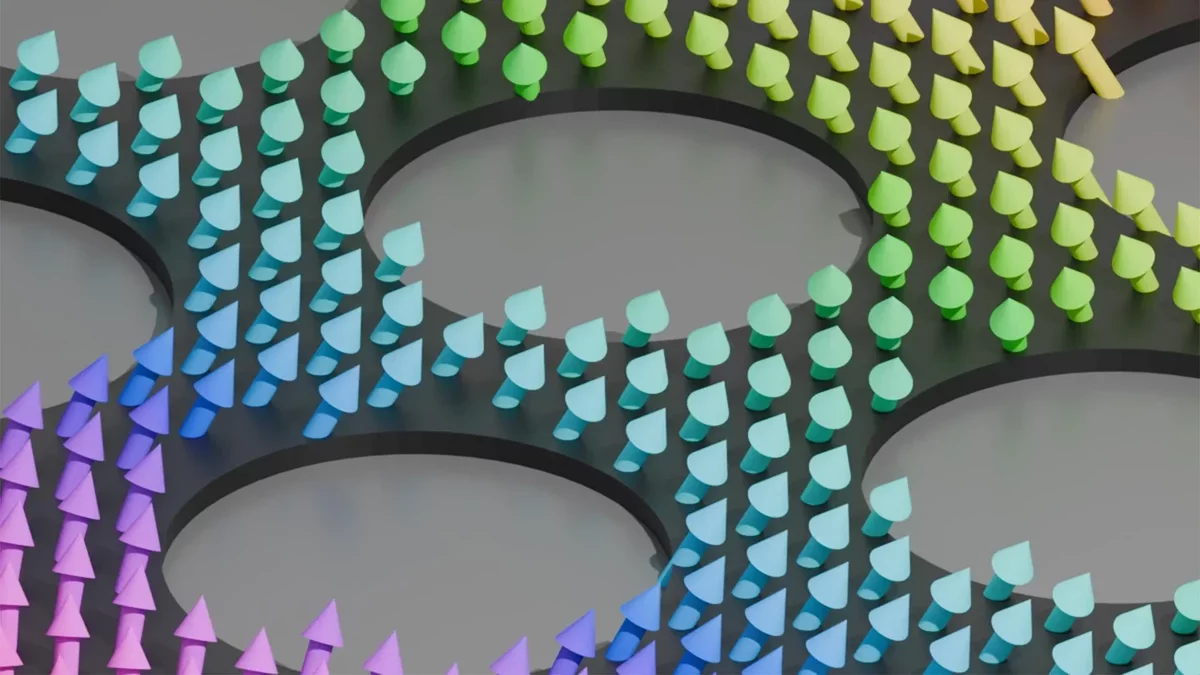
Researchers at The Grainger College of Engineering, University of Illinois Urbana Champaign, have made significant strides in understanding magnetic systems by demonstrating that specially designed two-dimensional magnetic materials can emulate the equations governing mobile electrons in graphene. This groundbreaking discovery, detailed in the journal Physical Review X, has the potential to transform the development of radiofrequency devices and offers a novel framework for material analysis and engineering.
Bobby Kaman, the lead author of the study, expressed his astonishment at the correlation between two-dimensional electronics and magnetic behaviors. He noted, "The analogy between these systems is not immediately apparent, yet our findings reveal a remarkable similarity." The established knowledge surrounding 2D electronics, particularly due to graphene, has paved the way for this new understanding of less explored materials.
Inspiration from Metamaterials
The research stems from Kaman's exploration of metamaterials, which are engineered to exhibit behaviors not seen in their natural forms. Kaman, a graduate student in materials science and engineering, observed that both electrons in graphene and magnetic excitations in magnonic materials exhibit wave-like characteristics. This observation prompted the idea that a magnetic system could be engineered to mimic graphene's behavior.
"Graphene's conduction electrons form massless waves, so I was intrigued to see if modifying the geometry of a magnonic material to resemble graphene would yield similar properties," Kaman explained. The results exceeded his expectations, revealing a deeper analogy than initially anticipated.
Engineering a Magnetic System
The research team developed a model of a thin magnetic film with hexagonally arranged holes. Within this design, microscopic magnetic moments, or "spins," interact to create traveling disturbances known as spin waves. Upon analyzing these spin waves, the researchers found their mathematical behavior closely aligned with that of electrons in graphene.
The findings unveiled a complex system with nine distinct energy bands, allowing various behaviors to manifest simultaneously. This includes massless spin waves akin to graphene's electron waves and low dispersion bands associated with localized states and topological effects.
"Bobby's work is exceptional as it bridges an engineered spin system with fundamental physics," said Professor Axel Hoffmann, who leads the research group. "Magnonic crystals are known for their diverse phenomena, and this graphene analogy provides clarity to the observed behaviors."
Implications for Microwave Technology
This research not only advances theoretical physics but also holds promise for practical applications. The team envisions utilizing this system in microwave technology, particularly in wireless and cellular communications.
The research group has already initiated a patent application for their microwave device innovations, marking a significant step forward in both technology and materials science.