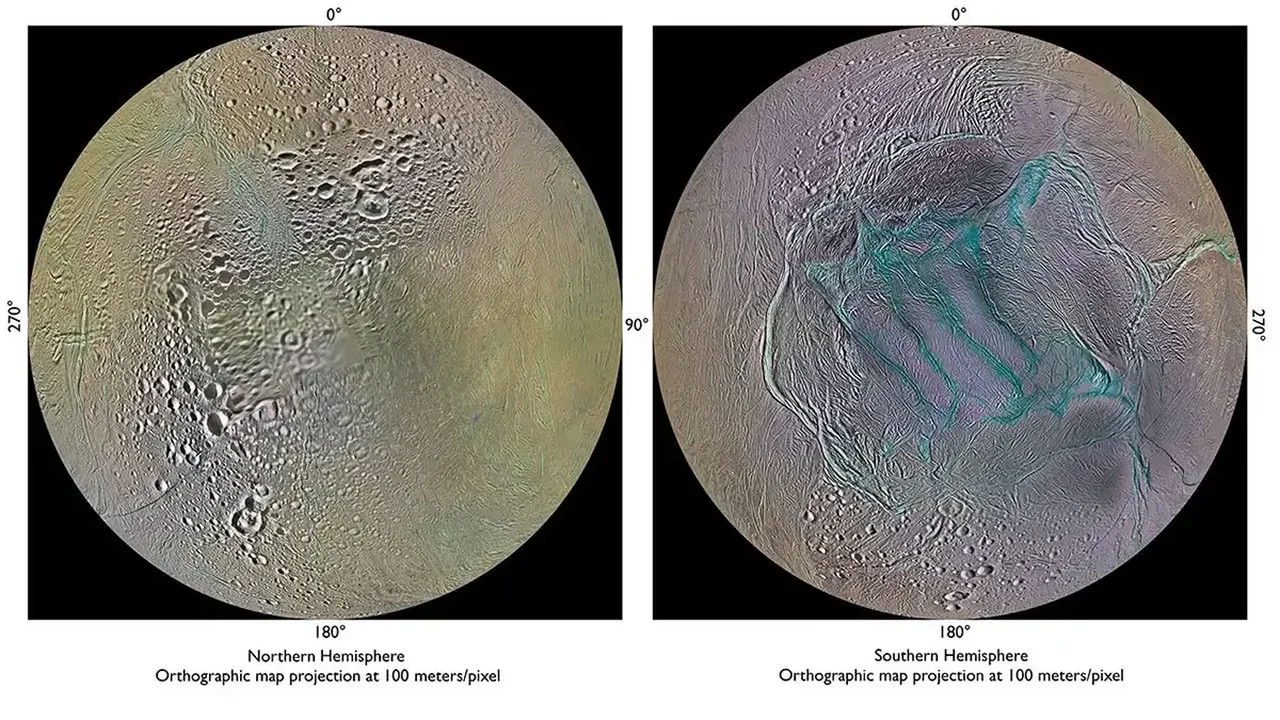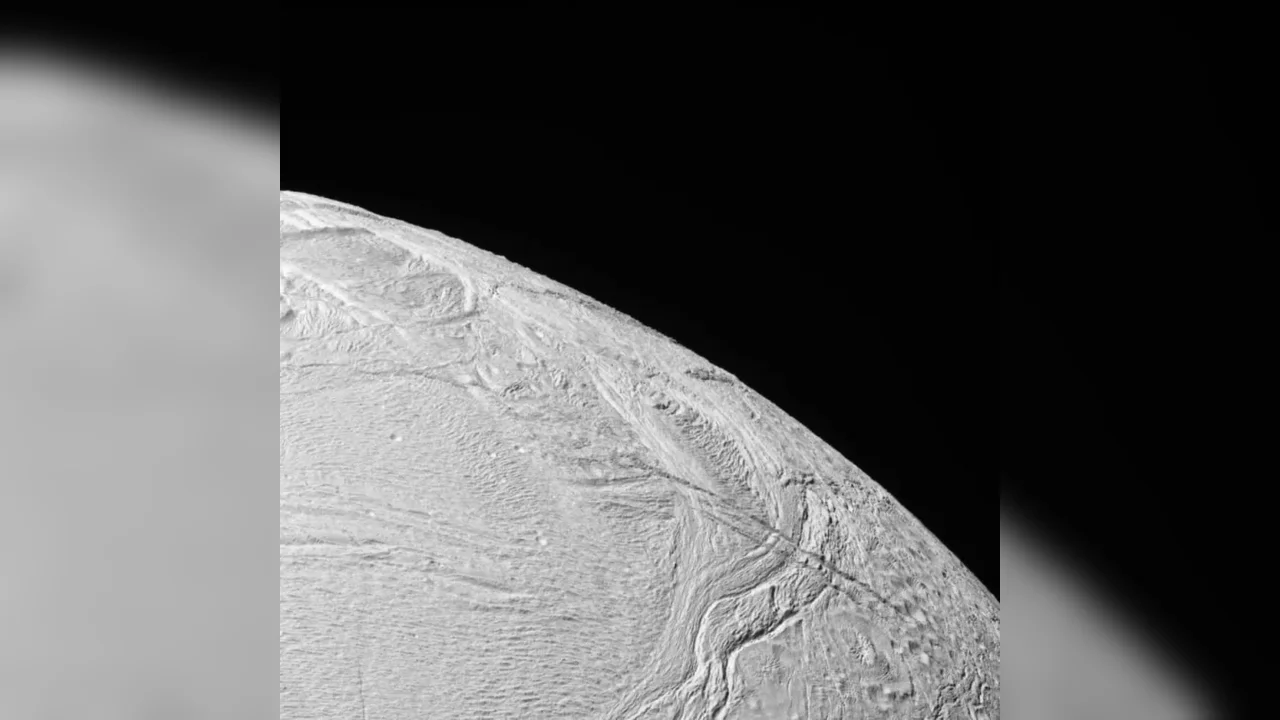
Saturn's icy moon Enceladus is emerging as one of the Solar System's most compelling environments for astrobiology. Beneath its frozen shell lies a global, salty ocean, while active plumes near its south pole release material from that hidden water world into space.
A laboratory test for extreme ocean chemistry
Scientists at Ludwig-Maximilians-Universität Munich recreated key chemical conditions thought to exist on Enceladus, including highly alkaline water, scarce carbon dioxide and interactions between minerals and liquid water.
They examined Methanothermococcus okinawensis, a methane-producing microorganism associated with hydrothermal environments on Earth. Although it struggled in standard high-alkalinity conditions, it continued to grow in the Enceladus-like environment.
The result suggests that reactions between warm rock and ocean water could generate hydrogen, providing energy for methane-producing microbes even where freely available carbon dioxide is limited. The research does not confirm life on Enceladus, but it broadens the range of conditions considered potentially compatible with microbial metabolism.
Ice grains could concentrate useful clues
A second study, published in Science Advances, examined 961 salt-rich ice grains previously measured during Cassini's exploration of Enceladus. The analysis found notable differences in the grains' chemical compositions, including sodium chloride, carbonates, phosphates and potassium salts.
Laboratory work indicates that slowly freezing ocean droplets may separate compounds into distinct regions before breaking into tiny ice particles within Enceladus's vents. This process could create individual grains unusually rich in organic compounds or other potential biosignatures.
That possibility is significant for future missions: spacecraft flying through Enceladus's plumes may be able to inspect samples from its subsurface ocean without drilling through kilometers of ice. By naturally sorting materials into separate particles, the moon could make rare chemical signals more detectable.
Enceladus may help reshape future planetary exploration by showing how distant ocean worlds can reveal their hidden chemistry through accessible spaceborne samples.